
 E-Paper



Halfway through paddy arrivals, Punjab mandis already hit by glut
At least 92 lakh tonnes of paddy have arrived in the state’s mandis so far since procurement began on October 1, about half of the Centre’s procurement target of 180 lakh tonnes

 Prefer HTon Google


As paddy harvesting gathers pace in Punjab, mandis are coming under mounting pressure, with slow lifting and a storage crunch leaving heaps of grain piling up.
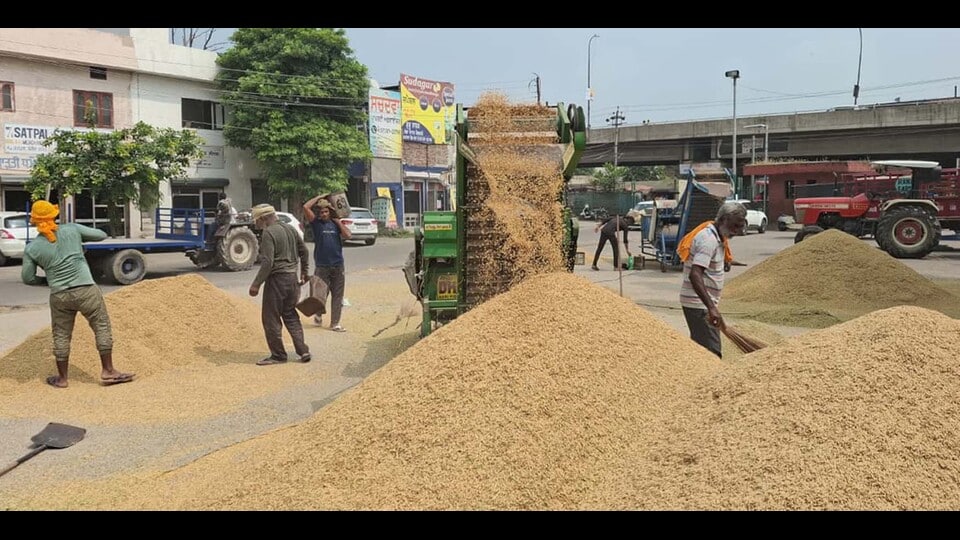
At least 92 lakh tonnes of paddy have arrived in the state’s mandis so far since procurement began on October 1, about half of the Centre’s procurement target of 180 lakh tonnes. Of this, one-third or 30 lakh tonnes are awaiting lifting.
Procurement is expected to continue until mid-November, with a total of 1,872 mandis and 761 temporary procurement centres handling arrivals across the state.
According to Nek Singh, a farmer from Khokh village near Nabha, little space is left to unload paddy in the mandis as lifting has slowed down. “The paddy piles are extending on the roads leading to the mandi. The scenario is getting bad to worse with every passing day,” he said.
The pressure is particularly evident in the Majha districts of Tarn Taran, Amritsar and Gurdaspur, where arrivals are at an advanced stage due to early sowing, while it is relatively slow in the Malwa belt, comprising Patiala, Fatehgarh Sahib, Sangrur, Barnala, Mansa, Muktsar and Bathinda.
With state godowns already burdened with stocks from previous seasons, paddy is also being stored on the premises of rice mills. Of the state’s 5,000 rice mills, 4,500 have been allocated paddy stocks, while the remaining 500 are in the process of signing contracts with the state food and civil supplies department.
Bal Kishan Binta, president of the Rice Millers Association, said heaps of produce had accumulated in mandis across the state amid slow lifting. “The food and civil supplies department is pressuring the millers to take away freshly procured paddy to be stored in their mills, but the entire system is choked because godowns are full of milled rice from the previous three years,” he said.
Milling starts Dec 1, rice godowns already choked
Milling of the paddy procured during the current season is scheduled to begin on December 1, after which the rice produced will be stored in covered godowns.
However, the state godowns are already holding at least 150 lakh tonnes of rice and 110 lakh tonnes of wheat from previous three seasons, choking the state’s combined storage capacity of 250 lakh tonnes, managed jointly by the Food Corporation of India (FCI) and state agencies.
Officials in the state food and civil supplies department said the foodgrain stocks in the godowns belonged to the FCI, the Centre’s agency responsible for moving stocks to consuming states. “The department has repeatedly requested the Centre to evacuate the old stocks, but their movement has been slower than assured by the Union ministry of consumer affairs, food and public distribution,” an official said.
“We can store paddy on rice mill premises in proportion to their milling capacity and subsequently store the rice produced after milling in covered godowns,” a senior department official said, requesting anonymity.
The official added that at least 1.5 lakh tonnes of paddy from the previous season was also awaiting milling.
Department begins shutting mandis
Facing pressure to keep procurement within the Centre’s target of 180 lakh tonnes, the state food and civil supplies department has begun shutting mandis where arrivals have receded.
At least 50 mandis in Amritsar, Tarn Taran and Kapurthala districts have been declared closed by the Punjab State Agricultural Marketing Board (Mandi Board) on the food and civil supplies department’s directions.
However, paddy continues to arrive at some of these mandis, with farmers wanting their produce to be accepted.
Binta said while the department was taking these steps to restrict procurement to the target set by the Centre, total arrivals would most likely exceed it because the overall yield had increased.
A senior official in the state food and civil supplies department, not wishing to be named, explained that closing mandis where grain arrivals had stopped was a routine process. The official expressed hope that total paddy arrivals would not exceed the procurement target.


