E-Paper



Haryana worth praising for containing farm fires effectively: ICAR director
Jat was at the ICAR-Central Soil Salinity Research Institute (CSSRI), Karnal to chair a curtain-raiser and media interaction for the Emerging Science, Technology and Innovation Conclave (ESTIC) 2026

 Prefer HTon Google


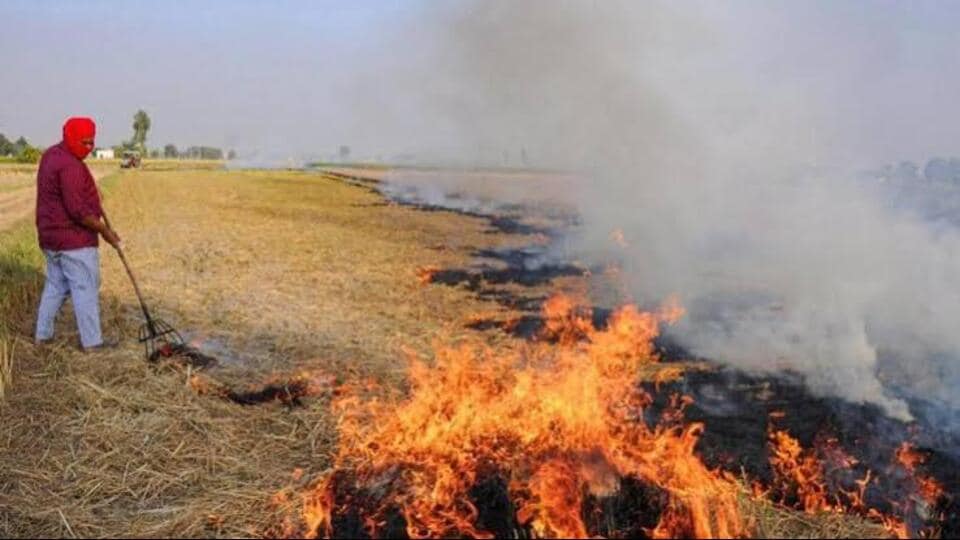
Director general of the Indian Council of Agricultural Research (ICAR), Dr Mangi Lal Jat on Thursday praised Haryana for introducing various sustainable and strict measures to control stubble burning cases, which have drastically reduced in the last five years.
Jat was at the ICAR-Central Soil Salinity Research Institute (CSSRI), Karnal to chair a curtain-raiser and media interaction for the Emerging Science, Technology and Innovation Conclave (ESTIC) 2026. The national conclave is scheduled for October 27th to 29th at Bharat Mandapam, New Delhi and will be attended by Prime Minister Narendra Modi.
Interacting with the media after the program, Jat spoke on key issues such as agricultural research, crop diversification, crop residue management, digital agriculture, and increasing farmers’ income.
Expressing satisfaction with stubble management, he commended the farmers of Haryana for their commendable work in managing stubble over the past five years, which has led to a significant decline in incidents of stubble burning.
Citing the example of Punjab, he pointed out that the number of stubble-burning incidents there—which once reached as high as 90,000—has dropped to around 5,000 over the last five years.
He clarified that the peak period for stubble burning in the current season is yet to arrive, therefore, it would be premature to draw final conclusions based on these initial figures.
Nevertheless, the objective remains clear— to completely eliminate stubble burning incidents, he said.
Jat questioned why stubble should be burned when it can be put to productive use. In line with the government’s ‘Waste to Wealth’ initiative, agricultural residues should be utilised as a new source of income.
The ‘GOBARdhan’ scheme, he suggested that farmers could leverage such programs to foster agriculture-based entrepreneurship. Instead of limiting themselves solely to crop production, farmers should explore utilizing agricultural residues to create value-added products.
As per the Thursday bulletin of paddy residue burning issued by the Indian Agricultural Research Institute’s (IARI) division of agricultural physics, the state has so far reported just eight cases since September 15, which is much less than the 18 recorded last year during the same period.
While two each cases were witnessed in Palwal and Sonepat, Faridabad, Hansi, Panchkula and Sirsa have logged one case each.
The data also shows that 517 cases were reported in 2024, 415 in 2023, 132 in 2022, 487 in 2021 and 596 in 2020 during the same period.
The state provides farmers with an incentive of ₹1200 per acre for in-situ management of paddy residue, while a penalty ranging from ₹5000 to ₹30,000 is imposed for burning stubble, along with an FIR and a red entry on the Meri Fasal Mera Byora (MFMB) portal.
On a query by Hindustan Times regarding his instructions to universities across the country to start courses in natural farming, Jat said that so far seven universities in various states have started the courses according to the norms of the New Education Policy (NEP).
He said that currently only BSc is being taught and soon MSc. as well as PhD will be introduced.