
 E-Paper



In absence of rules, illegal path labs flourish outside Bathinda AIIMS in Punjab
Rules in Punjab do not bind a person to register himself before starting a path lab. Government should regulate medical institutes for greater transparency, says TS Dhillon, Bathinda civil surgeon

 Prefer HTon Google


BATHINDA
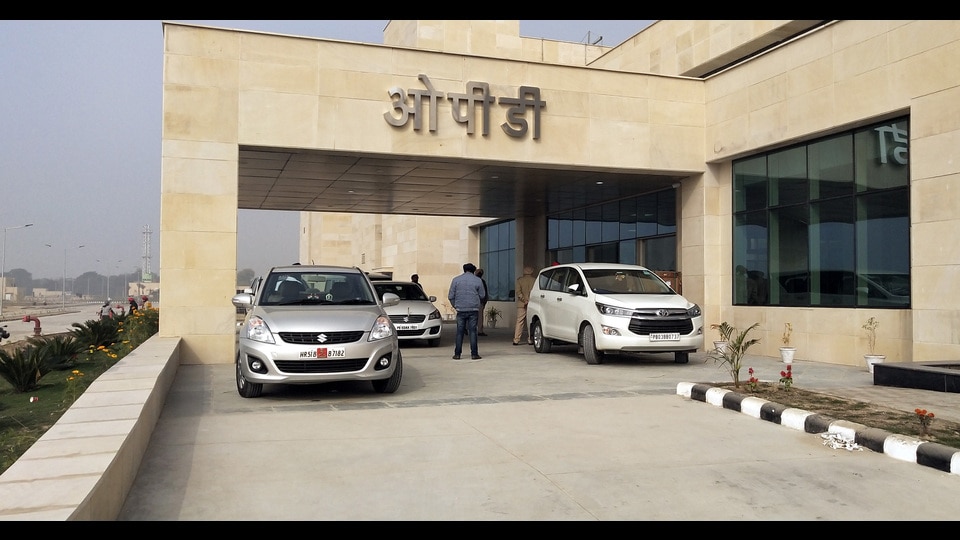
In the absence of definitive rules in Punjab, pathological labs being run by unqualified persons have sprung up outside All India Institute of Medical Science (AIIMS), Bathinda.
A cross-section of medical experts at AIIMS raise concerns over unchecked activities of the unscrupulous private diagnostic centres. According to the Supreme Court’s 2017 ruling, only an MD pathologist or MD microbiologist doctor can examine, authorise and sign pathology laboratory reports.
There are seven laboratories located outside the AIIMS campus and housed in private pharmacy shops.
Bathinda civil surgeon TS Dhillon said the prevalent rules do not bind a person to register himself before starting a pathological laboratory. “It is the domain of the state government to empower the health department to regulate medical institutes for greater transparency and ensuring fair practice,” he added.
Officials in the state health department say their hands are tied as in the absence of rules in Punjab, diagnostic laboratories remain unregulated even as patients end up getting wrong analysis of samples, thus hampering diagnosis.
A senior faculty member of the central institute shared a report of HPCL (high-performance liquid chromatography), a technique for the accurate diagnosis of the blood sample, of a 56-year-old patient. He said only AIIMS conducts the sensitive test in Bathinda but a private laboratory which runs like a sample collection centre, issued a report.
“Instead of going to the in-house laboratory, the patient somehow went to one of these labs outside the campus. His test report was a complete contrast to the detailed clinical examination. The owner of the pharmacy claimed complete accuracy of the blood sample. When I insisted for the contact number of the pathologist, who had signed the report for a detailed discussion of the patient, he stopped taking my phone calls,” said the doctor.
Sharing a similar experience, another doctor said some of these laboratories are issuing reports in violation of protocols where the name and medical registration number of the expert with the Punjab Medical Council (PMC) are mandatory on the reports.
“Thyroid function test report of one of my patients was issued without any signature of the pathologist. In another case, the laboratory manager claimed the correct analysis of the samples by a pathologist based in Amritsar and Noida. It is a highly suspected practice if experts from distant places visit Bathinda for supervision and analysis,” said another senior faculty member at AIIMS on the condition of anonymity.
Doctors said the patients prefer visiting private laboratories to avoid rush at AIIMS or whenever the test facility is not available at the institute.
“Patients are asked strictly to get their tests done at the AIIMS. But at times, they end up landing at the pharmacy where they get lured by the agents for conducting medical tests by offering prices lower than the market rates and speedy reports. We discourage such reports due to the doubtful functioning of the labs,” said an assistant professor.
A senior department functionary said it is well known that people who do not have any academic background of the medical field are owning and managing pathological labs.
“But in the want of rules and specific complaint, it is impossible to take action,” he added.
President of the Bathinda chapter of the Association of Pathologists and Microbiologists Anita Mitttal said the state government should focus on the burning issue of path labs being run by unauthorised persons.
“Our association has 25 active members from the public and private sector in the district whereas there are about 500 labs engaged in medical testing. Correct analysis of samples is the key to right treatment and involvement of unscrupulous elements is a cause of concern,” she added.


