
 E-Paper



Metro best answer to Chandigarh tricity’s mounting traffic woes: RITES
The recommendation by RITES comes five years after the Union home ministry had rejected Metro project in Chandigarh, terming it unviable

 Prefer HTon Google


Over five years after the Union home ministry had put a stop to the metro rail project in Chandigarh, terming it unviable, RITES has once again proposed it as the best mass rapid transport system (MRTS) to tackle tricity’s growing traffic congestion.
Rail India Technical and Economic Services (RITES), which is working on a comprehensive mobility plan for the tricity, had also recommended metro in its first report readied in 2009.
But eight years later, the Union home ministry had rejected the project in 2017 and asked the UT administration to look for alternative models of transport. The ministry’s contention was that metro was not viable in Chandigarh due to the city’s size. Also, its ₹14,000-crore cost was not financially feasible. Besides, neither Punjab nor Haryana had given their consent in writing.
For the project to be viable, the MRTS needs to be used by 40,000-70,000 passengers at the peak hour in peak traffic to ensure viability, which is expected to be achieved only by 2051, the ministry had stated.
But since the metro rail plans were shelved, the administration has not been able to opt for any other alternative, such as monorail, skybus or metrolite.
A flyover, underpass and an elevated rotary at the Tribune Chowk, approved and funded by the Union government, has been stuck in legal wrangles, while the ring roads around the tricity have also yet to see light of the day.
64.3-km metro network proposed across tricity
Now, in its latest report, submitted to the UT administration on Thursday, RITES has proposed a 64.3-km metro network spread across Chandigarh, Mohali and Panchkula.
As per the report, the metro system is proposed to be implemented in two phases. The first phase consists of three corridors totalling 44.5 km, including 16 km underground, in Chandigarh, while in the second phase, the network will be extended to Mohali and Panchkula.
The metro rail project was first proposed for Chandigarh in 2009 and the detailed project report was prepared in 2012 after spending ₹1.5 crore. Surveys were conducted and the first phase was to begin in 2013. But in 2014, member of Parliament (MP) Kirron Kher opposed it, stating that it will uproot the city, before it was ultimately rejected by the home ministry in 2017.
After years in cold storage, the MRTS plans were revived in August 2021, with the UT administration deciding to go in for a fresh comprehensive mobility plan.
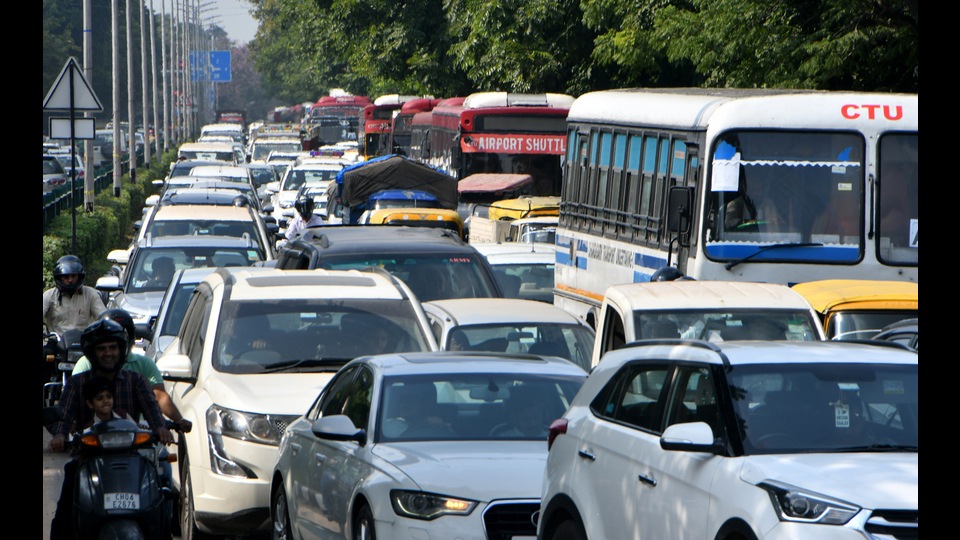
With 14 lakh registered vehicles among a population of over 12 lakh, Chandigarh has the highest density of vehicles per household in the country, leading to traffic congestion and snarls. In addition to these, over two lakh vehicles on interstate routes cross the city daily.
The comprehensive mobility plan, allotted to RITES Limited in December last year, is aimed at resolving this burgeoning problem.
RITES was tasked with updating the data of its 2009 report, preparing the plan as per the latest guidelines of the Union ministry of road, transport and highways (MoRTH) and suggesting the best-suited MRTS for the tricity.
Other recommendations to tackle congestion
Earlier in June, RITES had also proposed vehicular underpasses at nine junctions in Chandigarh that see heavy traffic.
It had also said that a major contributor to Chandigarh’s worsening traffic woes was the transit traffic entering it from the neighbouring cities. Nearly 50% of the total traffic in Chandigarh is in transit and originates from outside the city. Around 46% of this traffic arrives in Chandigarh daily to either reach a destination in the city or pass through it to reach other locations in the wider tricity area, RITES had stated.
RITES, through a survey, had also found that around 88% people in the tricity were ready to forego travelling by their private vehicles if a robust MRTS was available, even if it entailed paying more.


