
 E-Paper



Roundabout: Sagar Sarhadi’s denunciation of barriers lives on
The angst of having to flee the hills and rivers of the Suba Sarhad and become a refugee always haunted this hill-boy of the North-Indian Frontier Province of British India; his struggles find echo in his scholarship, scores of short stories and plays in the Urdu language


For many, the first reaction on hearing of the passing away of writer and director Sagar Sarhadi (1933-2021) this week was surprise that he had still been alive all these years. Many thought that he had passed away several decades ago. Such is the exceedingly short memory of the glitz and glamour of the film world where there is a constant tussle to make news and money.
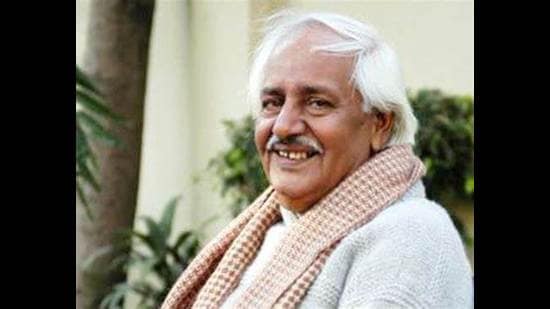
For this refugee boy, Ganga Sagar Talwar, born in Baffla village near Abbottabad, it was a happy life exploring the hills, bathing in the river, learning Urdu in school and at times helping his liquor contractor father in the shop. It was a big village home with plenty of grains. But it all came to an end and the family fled during the Partition. In an interview, a couple of years ago, he had said: “There was a lot of anger inside me at forces that drove people away from their homes and made them refugees. That angst never really left me.”
Moving on with life
It was this displacement and anger that made him question the world and turn to writing to resolve this chaos around him. Dismayed by the communal politics and violence in the name of religion, he turned to the leftist ideology.
After completing his schooling in old Delhi where the family lived in a small house in Mori gate, he moved to Mumbai where his brother had found work. As a first-year student in Khalsa College, Mumbai, Sarhadi was greatly enamoured by poet Gulzar’s resounding voice, in which he would recite couplets of Mir and Ghalib. Realizing that he was not well-versed in literature, he started reading furiously and this was a habit he adhered to till the very end. In the final year of college, he moved to St. Xavier’s to hone his skills in English so that he could read the world classics that were easily available then in English translation.
In his youth, he allied himself with the Indian Progressive Writers Union and as a regular at their meetings he came into contact with some of the well-known Urdu writers of the time such as Sajjad Zaheer, Kaifi Azmi, Ismat Chughtai and others. Sarhadi emerged as a talented writer of short fiction and a playwright who staged his pro-people’s plays. Praising his contribution to literature and cinema, poet and lyricist Javed Akhtar said: “Sagar Sarhadi a veteran theatre and film writer who wrote films like Kabhie Kabhie , Noori and directed Baazaar has passed away. My heartfelt condolences to the late bachelor’s nephew Ramesh Talwar”.
Pen name for a new world
The story of his pen name for the changed world is an interesting one. Sarhadi was to recall later, “I did away with Ganga and retained the Sagar. The reason for adding Sarhadi was to retain the identity of the Suba Sarhad that was home for me.” It was with this name that he emerged as a writer choosing theatre as a medium for reaching out with his social messages. The first film that Sarhadi wrote dialogues for was Basu Bhattacharya’s offbeat venture ‘Anubhav’ featuring Sanjeev Kumar, released in 1971.
A few years later Sarhadi’s nephew, filmmaker Ramesh Talwar, who was then assistant director to Yash Chopra, invited the latter to see his uncle’s play ‘Mirza Sahiban’ based on a dilemma of an Indo-Pak war. Yash was so impressed by the soulful and terse dialogues of the play that he offered his next film to Sarhadi for screenplay and dialogues.
The film was the multi-starrer Kabhie Kabhie with Amitabh Bachchan, Rakhee, Shashi Kapoor, Rishi Kapoor and Neetu Singh, which proved to be a blockbuster winning as many as 24 awards and the lone Filmfare award to Sarhadi for its classic romantic dialogues. The films that followed with the unmistakable Sarhadi touch included Noorie(1979), Silsila (1981), Chandni (1989), Rang (1993) and Hrithik Roshan’s first film Kaho Na Pyar Hai (2000).
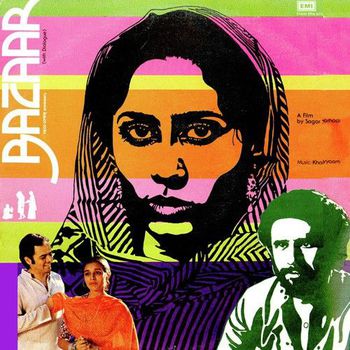
The cult classic film Bazaar
Sarhadi was hailed as the master of romance but the writer in him yearned for something more meaningful. And this happened with the cult classic film Bazaar (1982), in which Sarhadi chose to don the director’s cap. It was also Sarhadi’s first introduction to the city of Chandigarh when he came here for its trial run in KC Cinema, long demolished now.
A director had arrived telling a heart-wrenching story of the plight of young girls in the lost splendour of the Nawabi city of Hyderabad, who were golden hens for poor homes and married to ageing Arabs for money. Starring Naseeruddin Shah, Smita Patil, Farooq Sheikh and Supriya Pathak, it stood its ground amid the new wave films of Shyam Benegal and Govind Nihalani. Sarhadi picked the best of Urdu ghazals for the film, including Mir Taki Mir, Makhdoom Mohinuddin and others and Khyayyam’s soulful musical score was to subvert the romance of the Urdu ghazal in the face of sad social reality. The film is still looked back with love.
A greater acquaintance was made with Sarhadi through the film scriptwriter Amrik Gill, a friend from the Punjab University days in the mid-seventies. Amrik worked with Sarhadi in ‘Tere Shehar Mein’ and ‘Agla Mausam’ that were never released and ‘Chausar’ (2005), in which he had given the lead role to Nawazuddin Siddiqui in his days of struggle. Remembering him, Gill says: “I learned much working with Sarhadi,whose was a rare talent amidst the commerce of Bollywood. Even the one Bazaar he made makes him immortal and he will be remembered for all times.”


