
 E-Paper



Snag halts Gulmarg Gondola, scores of tourists rescued after mid-air panic
Joint rescue operation launched by NDRF, SDRF, army, and CRPF after suspected system overload freezes Asia’s highest cable car.

 Prefer HTon Google


A technical malfunction abruptly halted operations across both phases of the Gulmarg cable car system on Monday afternoon, leaving scores of tourists stranded mid-air and sparking widespread panic at the high-altitude resort.
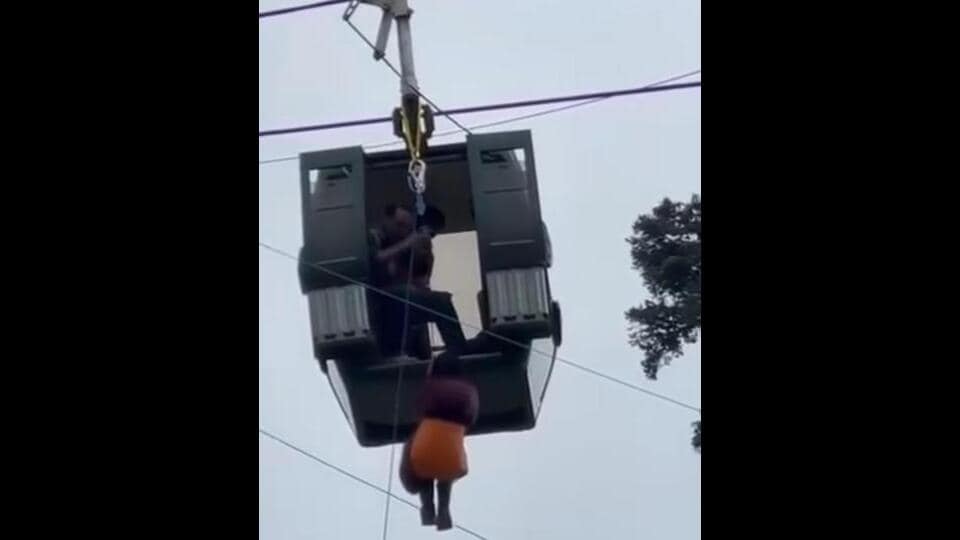
The breakdown immobilised cabins suspended high above the ground, causing distress among those trapped inside. Eyewitnesses reported emotional scenes, with onboard tourists seen crying and pleading for help as the system remained frozen.
Emergency protocols were activated, mobilising teams from the army, State Disaster Response Force (SDRF), the National Disaster Response Force (NDRF), and local police to execute a swift evacuation.
All passengers were successfully brought down without any reported injuries.
Both transit phases stall
The incident occurred during peak hours, forcing an immediate shutdown of both Phase I (Gulmarg base to Kongdori) and Phase II (ascending to Afarwat Peak at 3,950 metres). While officials have yet to confirm the exact cause of the breakdown, initial reports from the site suggest that a system overload may have triggered the sudden malfunction.
After the snag took place in Phase I, the ropeway’s automated safety mechanisms instantly froze the cable alignment to prevent further risk.
Technical teams and engineering experts were deployed to the site immediately after the shutdown to conduct a comprehensive diagnostic assessment. Both phases of the Gondola remain closed to the public while investigators determine whether mechanical strain or an electronic trip caused the system to fail.
Coordinated vertical rescue
Because the cabins were stranded over steep, forested terrain, rescue teams launched a specialised vertical evacuation operation to reach the trapped passengers.
Utilising advanced rope systems, harnesses, and all-terrain gear, SDRF and NDRF personnel systematically accessed the cabins to lower the anxious tourists to safety.
Local administration officials and medical teams were stationed at the base stations to provide immediate psychological and physical support to the rescued passengers, many of whom were shaken by the ordeal.
Following the successful evacuation of the final tourist, the authorities confirmed the situation was entirely under control and stated that operations will only resume once the cable car passes a rigorous structural safety audit.


