
 E-Paper



Tear gas, water cannons: Quami Insaaf Morcha march to Governor House dispersed in Chandigarh
Some protesters were seen standing on overturned barricades and confronting the water cannons, carrying lathis and attempting to cross the police barricading.

 Prefer HTon Google


Chandigarh Police used tear gas and water cannons on Saturday to disperse protesters of the Quami Insaaf Morcha who were marching from Mohali towards the Governor House in Chandigarh to demand the release of long-incarcerated Sikh prisoners.
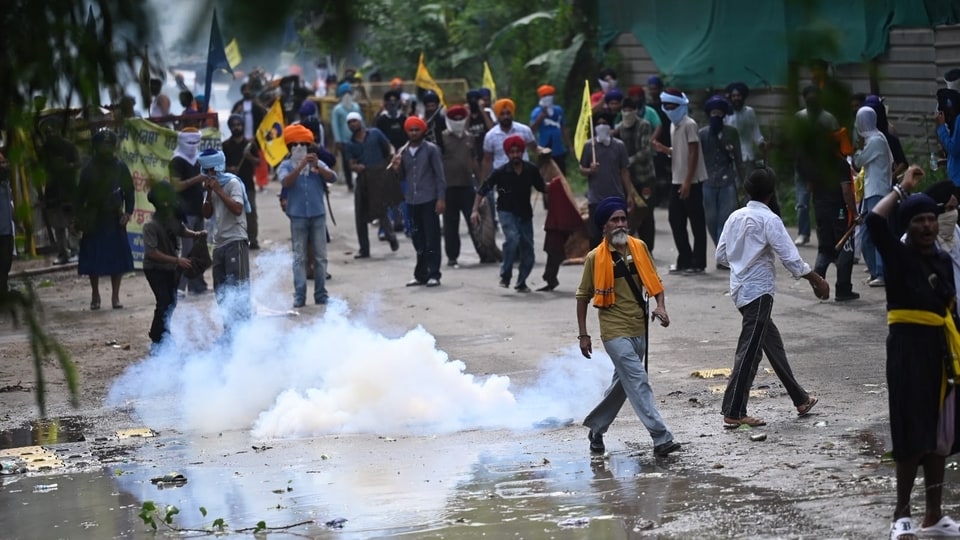
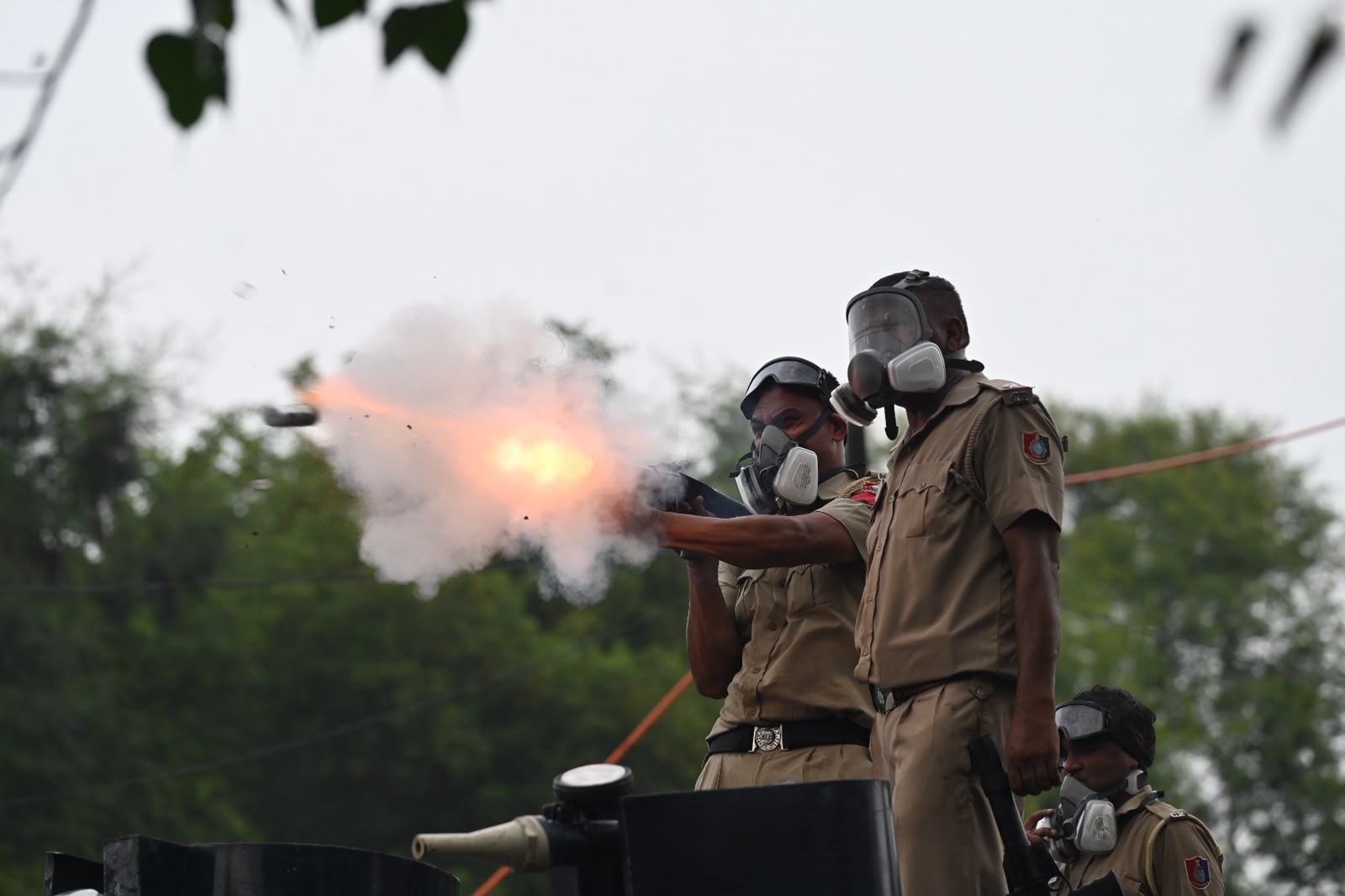
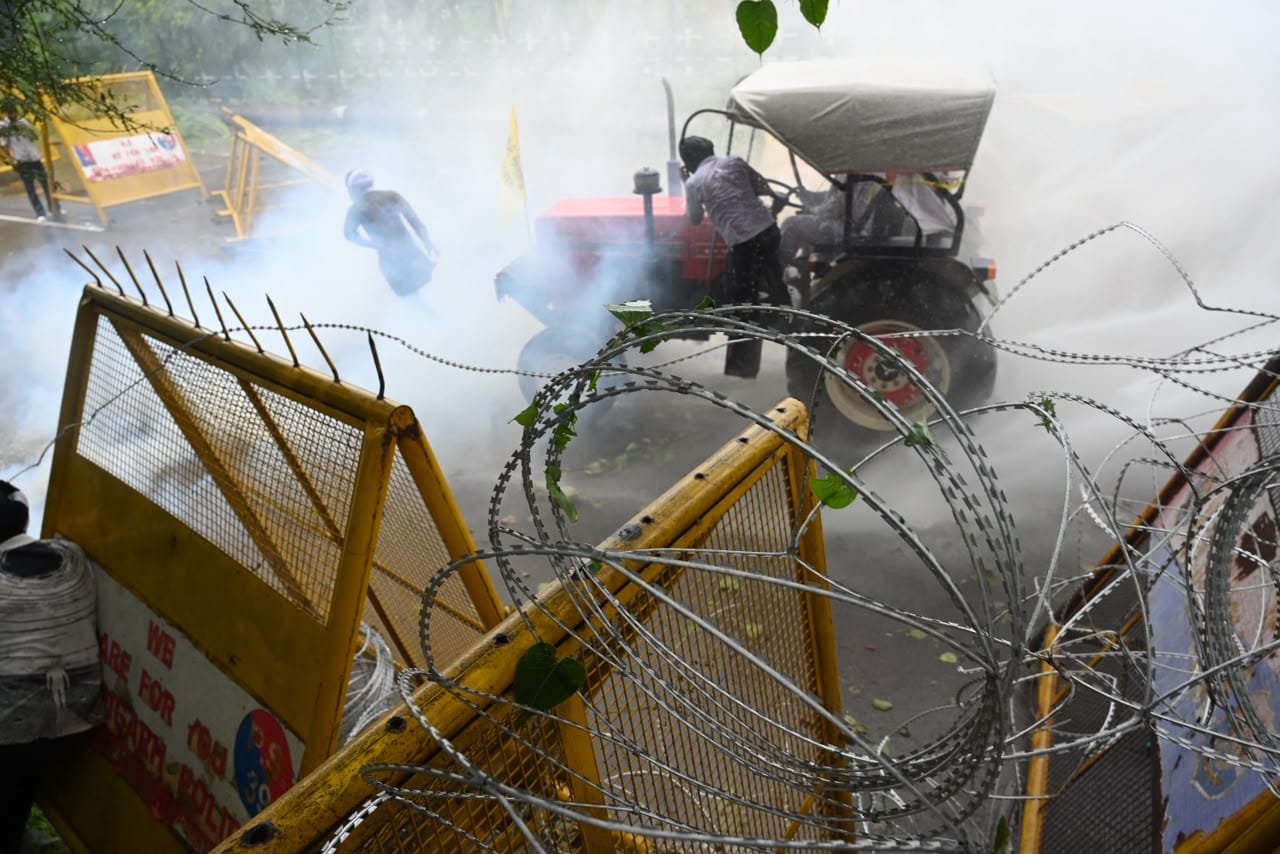
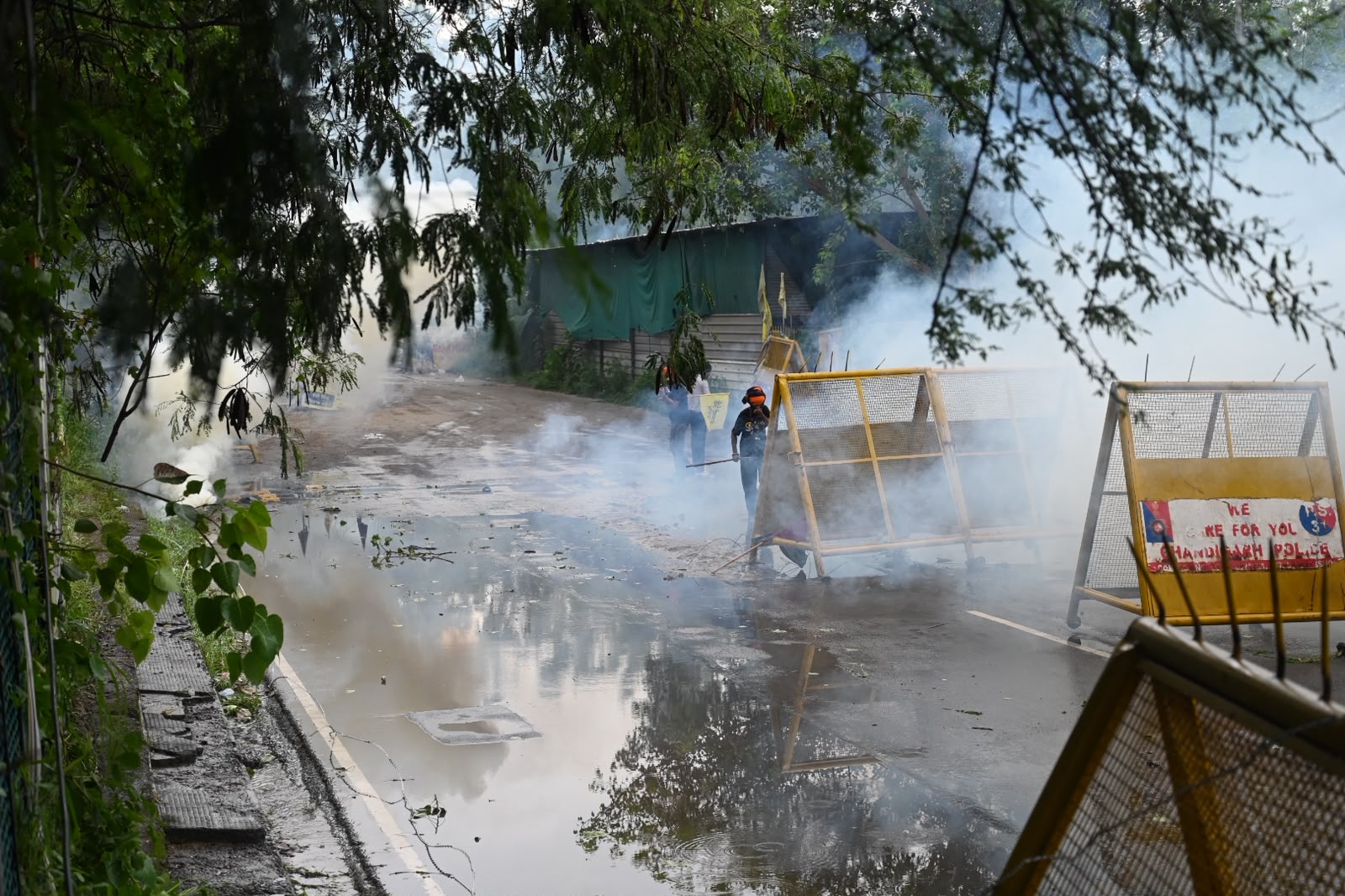
Several photos and videos from city's Sector 51/52 dividing road showed police firing tear gas shells and using water cannons as protesters gathered behind barricades.
Some protesters were seen standing on overturned barricades and confronting the water cannons, while one or two were seen carrying lathis and attempting to cross the police barricading.
Morcha seeks release of Sikh prisoners
The Quami Insaaf Morcha has been holding a protest demanding the release of Sikh prisoners who have remained in jail for prolonged periods, including some who, according to the protesters, have served terms exceeding their prescribed sentences.
Bapu Gurcharan Singh, father of Jagtar Singh Hawara, who is serving a life sentence for the assassination of former Punjab chief minister Beant Singh, said the march was intended to be peaceful.
“Peaceful protest is our fundamental right in a democracy. We have been sitting here peacefully for over three years, but the government has not been willing to give us justice. That is why, on Independence Day, we organised a peaceful march and protest carrying black flags.”
“We have never broken barricades. We are ready to cooperate with the police, but unnecessary barricading is creating tension and forcing us into a situation we do not want. Our main demand is the release of detained Sikhs. At present, we are also demanding 10 days of parole for one of them so that he can meet his mother, who has been seriously ill and bedridden for a long time,” he said while talking to news agency ANI.
Hawara appeals for peaceful protest
Ahead of the march, Jagtar Singh Hawara had released a video from Delhi's Mandoli Central Jail urging Sikh youth to participate in the protest peacefully.
“Qaumi Insaaf Morcha has given a call for August 15. I request everyone to take part in that protest peacefully. Many people will try to create violence in that protest, but let us be careful about such elements,” Hawara said in the video. The veracity of the video could not be independently verified by HT.
SGPC backs August 15 march
Shiromani Gurdwara Parbandhak Committee (SGPC) president Harjinder Singh Dhami on Friday extended support to the march from the Morcha's protest site in Mohali to the Governor House in Chandigarh.
Dhami said it was a matter of concern that Sikh prisoners who had already spent periods in jail far exceeding their prescribed sentences continued to remain incarcerated.
He cited the cases of Balwant Singh Rajoana, Jagtar Singh Hawara, Jagtar Singh Tara, Paramjit Singh Bheora, Davinderpal Singh Bhullar and Gurdeep Singh Khera.
Dhami also pointed to the continued uncertainty over the commutation of Rajoana's death sentence despite observations by the Supreme Court.
On Hawara, Dhami said his elderly mother was in critical health and that parole was being sought to allow him to meet her.
“The government should take a compassionate decision on humanitarian grounds and allow him to meet his mother after a prolonged separation,” he said.


