
 E-Paper



The boa without a boat
The eggs take about three weeks to hatch and the little lizards claw their way out of the soil to disperse in all directions; they predate on ants and termite remains without guidance or food provisioning from mummy


Torrents of monsoon water running down the gradients in the wilderness as well as the streets and drains of human inhabitation tend to displace serpents from accustomed habitats and hideouts. Last week, the rains finally granted a “darshan” to the tricity’s citizens tortured by the teasing humidity and left looking askance at deceptively dark skies. Everyone breathed a sigh of relief, reported the local media. However, a magnificent serpent may not have had cause for elation as it was flushed out of its hideout by the torrents and literally thrust down the mouth of ‘monsoon breaking news’!
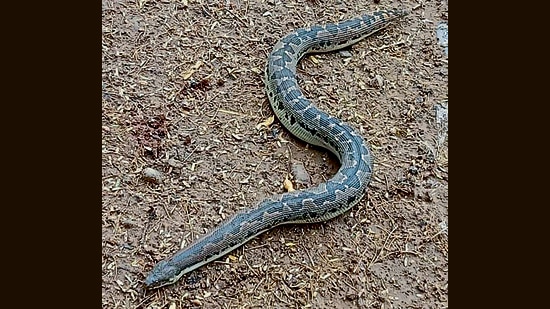
A common sand boa, more than three feet long and sporting a sizable girth, was rescued from inside the sprawling campus of a national English daily in Panchkula’s Sector 6. The dazed serpent was found near flower beds 15-20 ft from the main gate by the veteran snake rescue personnel, Salim Khan, who has undertaken thousands of such operations.
Khan figured out from the stranded boa’s location that it was a specimen displaced by torrents. It was out in the open and moving slowly. Had the office been its habitat since long, it would have been hiding in the dense foliage or garden wastes in a relatively undisturbed area of the campus. The bagged specimen was later rehabilitated near a water body in jungles proximate to the Ghaggar river.
The boa is a non-venomous species and kills rats, squirrels etc by constriction. Due to its girth and skin patterns, the boa is often confused with the rock python or the venomous russell’s viper.
Mother India of our gardens
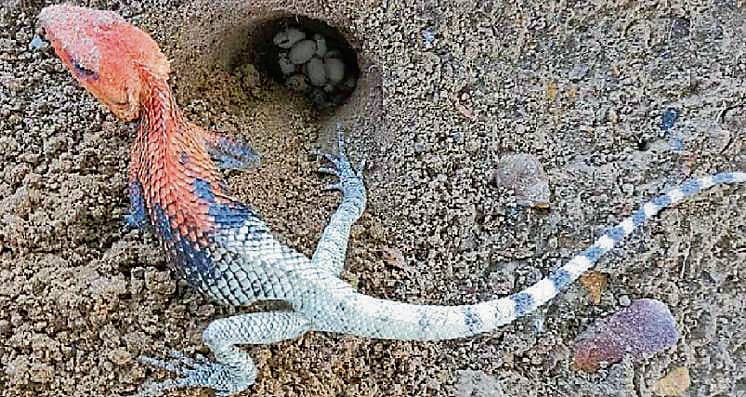
The monsoons usher in foliages of verdant hues. Among happy leaves, singing birds and flitting butterflies, a quintessential creature of our gardens assumes a blue and crimson dazzle of breeding colours. The “Korkirla” (garden lizard) is a typically under-studied and misunderstood creature that dwells right under our nose and suffers greatly from human ignorance and prejudice. However, patient observations of the female lizard’s nesting behaviour by the principal of SBK Government PG College, Jaisalmer, Rajasthan, and professor of zoology Shyam Meena, bring forth the marvels and fervour of an unsung motherhood.
Lizzie mum goes about her task with a measure of exactitude, guile and firm will. She digs a nest hole 6-8 inches deep after labouring continuously for three to four hours. She does it alone because the male mates with her and dashes off to find another female to sow some more of his wild oats.
“Head first into the deepening burrow, the female lizard flings out soil with her forelegs. Once the hole is to her satisfaction, the gravid female immediately commences laying of eggs. She manoeuvres her body over the hole opening and drops 20-22 eggs one by one. Then she starts to push the excavated soil back into the hole. She gently pushes in some soil and slithers into the nest burrow after that to pack the loose soil over her eggs with care and precision. She does this repeatedly until the soil is packed at the right pressure over her eggs. She drags leaves over the hole topped with soil as if they were scattered naturally to camouflage her nest from predators such as monitor lizards (Goh) that dig up nests and gobble eggs. Gohs keep a watch on lizards during breeding season and the mother is vigilant to such stalkers,” Meena told this writer.
Mum remains in the vicinity of her nest for a couple of days and then leaves. Her arduous task is undertaken with diligence and is characterised by a self-effacing maternalism. The eggs take about three weeks to hatch and the little lizards claw their way out of the soil to disperse in all directions. They predate on ants and termite remains without guidance or food provisioning from mummy. She may not ever sense or nuzzle or know it is her little creations dashing around, especially if more than one lizard’s clutch has hatched in proximity.
Mummy lizzie responded to the timeless urge, to the cosmic call of creation without great expectations or ‘love backs’. Once she turned her back to the nest, the selfless mum in her was done and dusted.


