
 E-Paper



Alai Darwaza, gateway to Qutub, set for facelift
The ASI will repair stone slabs and intricate carvings on the arched structure that have eroded over time and also conserve the archway at Quwwat-ul-Islam mosque.

 Prefer HTon Google


The Archaeological Survey of India (ASI) is likely to begin restoration work on Alai Darwaza -- the southern gateway to the Qutub complex -- by the end of March to repair stone slabs and intricate carvings on the arched structure that have eroded over time.
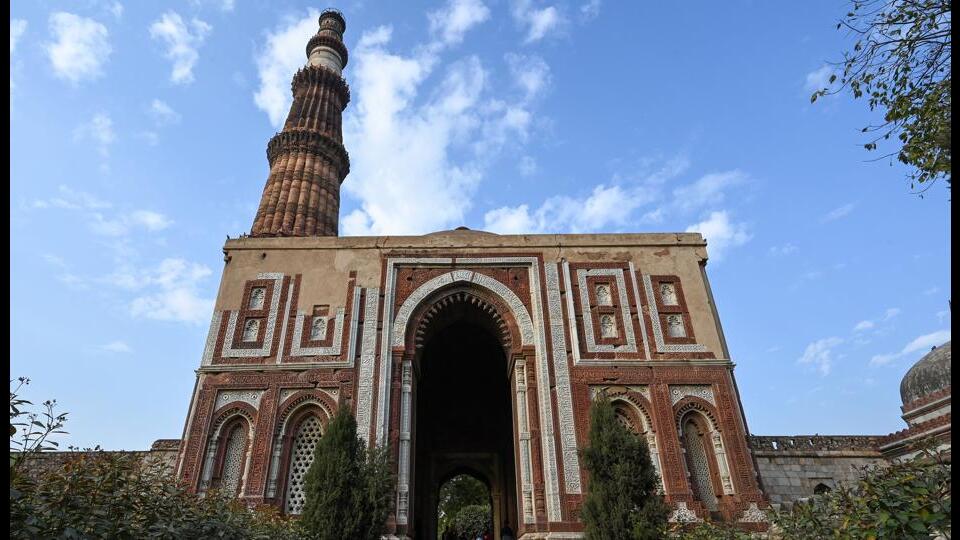
Praveen Singh, superintending archaeologist, ASI Delhi Circle, said they will also conserve the archway at Quwwat-ul-Islam mosque, which is also located in the Qutub complex.
“ASI’s mandate is the protection and conservation of monuments. There are a large number of sites and monuments under ASI protection. In such a situation, we have to prioritise and take up conservation at sites where the damage is significant. Core conservation is a slow and tedious process, and wherever possible, we are taking up monuments for conservation. Within the Qutub complex, ASI will be conserving the Alai Darwaza and the Quwwat-ul-Islam mosque’s archway so that the original features are not lost,” said Singh.
Alai Darwaza and the Quwwat-ul-Islam mosque are located to the south of Qutub Minar. The construction of the mosque was started in 1193 by Qutb-ud-din-Aibak, the founder of the Mamluk dynasty, and completed in 1196, according to the Gazetteer of the Delhi District (1883-84). The mosque was enlarged during the reign of subsequent rulers Iltutumish and Alaudding Khilji. It was during Khilji’s reign that the Alai Darwaza was constructed in the 14th century (1310 AD-11).
A UNESCO-world heritage site, the Qutub complex which includes the Qutub Minar and other monuments, is also likely to host delegates who will visit Delhi during the upcoming G-20 foreign ministers’ meet in March. “If delegates visit the complex, the ASI will give them an idea about the conservation process that we undertake at monuments under our watch,” said Singh.
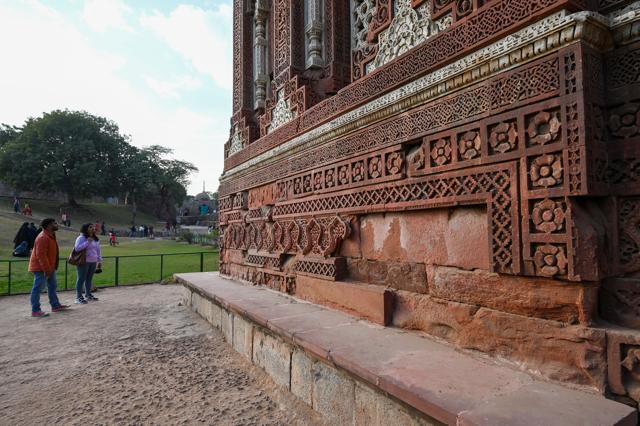
Conservation architect Misbah Noorie, who is the ASI in charge of the Qutub Complex, said that the thrust of conservation at Alai Darwaz will be on strengthening and creating carvings where the ornamental design has eroded.
Also read: CBI arrests Chandigarh Police ASI while accepting ₹25,000 bribe
“We will recreate the same design, with same stone. The ornamental design has disappeared in parts or stone slabs have been damaged due to weather over the years. Patches of the ornamental design needs to be recreated. We will replicate the original design using red sandstone. The structure is damaged due to the vagaries of nature and extreme weather conditions,” said Noorie.
The Darwaza is a square, domed building with intricate carvings in red sandstone and marble. “It also betrays certain Seljukian features dating to the Seljuk period (1038-1157) which had an influence over Khilji architecture. These Seljukuian influences came to India with the artists and artisans who came to India due to Mongol attacks in central and western Asia,” according to the ASI plaque installed outside the Alai Darwaza.
Maulvi Zafar Hasan, the ASI archaeologist who prepared the first list of monuments worthy of conservation in 1916, says in his listing that the walls of the gateway are decorated with elaborate carvings notable of Saracenic character (domes and decorated surfaces). Hasan adds that the gate was repaired by Major RE Smith, a British engineer, in 1829.
Noorie said that it was crucial to preserve deteriorating portions so that the original features of the structure are not lost, and it can serve as a template for conservation in the future.
“Corners and some slabs of the gateway are damaged which we will fix as part of the conservation process. It’s important to undertake conservation at this point so that the designs can be used as a template when conservation is undertaken by future generations when other portions having similar designs deteriorate,” said Noorie.
ASI usually engages craftsmen from Dholpur and Makrana in Rajasthan since they are familiar with detailed ornamentation work. “The work is delicate and will require an eye for detail. These skills are passed down generations,” said Noorie.


