
 E-Paper



Delhi begins enforcement of ban on older commercial vehicles to curb pollution
Enforcement teams detected 1,747 vehicles plying without valid pollution under control certificates and 207 interstate buses violating entry norms.

 Prefer HTon Google


The Delhi government on Saturday began enforcing the ban on the entry of older, polluting commercial vehicles into the national capital, deploying 46 teams for round-the-clock monitoring at 23 border points, officials said. The move comes as part of the Commission for Air Quality Management’s (CAQM) directive aimed at reducing vehicular emissions during the city’s peak pollution season.
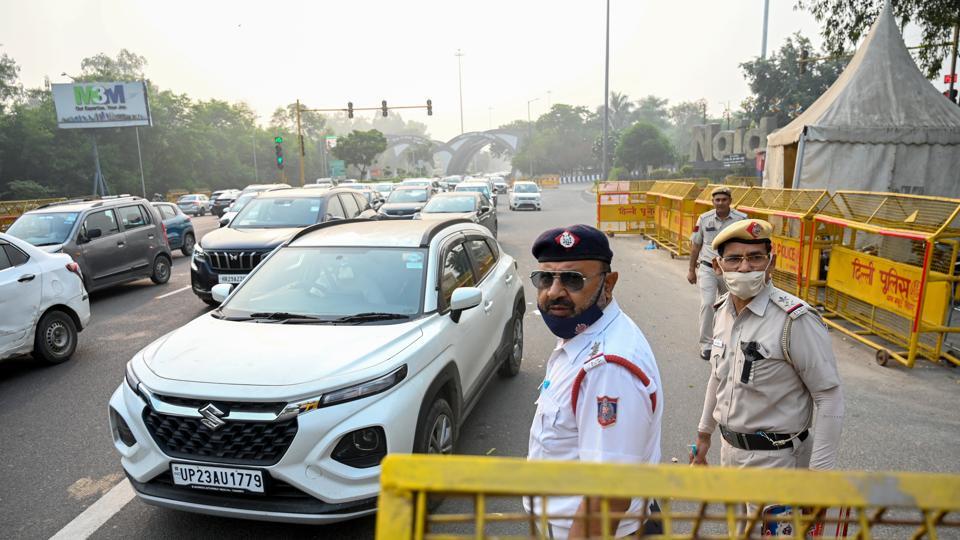
Officials said the deployed teams will monitor entry points 24 hours a day, while flying squads will conduct surprise checks at other borders and the city’s 13 identified pollution hotspots.
Enforcement teams on Saturday detected 1,747 vehicles plying without valid pollution under control (PUC) certificates and 207 interstate buses violating entry norms. Officials said 5,325 non-destined vehicles were inspected at Delhi’s borders, of which 256 were turned back for non-compliance.
Under the CAQM order, vehicles compliant with Bharat Stage III (BS-III) or older emission norms, and all commercial goods vehicles registered outside Delhi, have been prohibited from entering the city starting November 1. However, in what officials called a transitional arrangement, BS-IV compliant commercial vehicles will continue to be allowed until October 31, 2026.
According to officials, The key entry points under surveillance include Kundli border, Rajokri, Tikri, Aya Nagar, Kalindi Kunj, Auchandi, Mandoli, Kapashera, and Bajghera toll on Dwarka Expressway. These locations together account for roughly 90% of the goods-vehicle inflow into Delhi, they added.
At Sirhaul toll plaza on the Delhi-Gurugram border, about one kilometre from the last toll barrier, officials stopped 38 vehicles, of which three were found violating the ban and were sent back. Officials estimate that 50,000 to 70,000 vehicles in the National Capital Region (NCR) do not meet BS-IV standards, indicating the scale of the challenge in implementing the directive.
The ban follows a series of measures announced under the Centre’s air pollution control framework to combat the seasonal rise in particulate matter and nitrogen oxides caused by vehicular emissions, industrial activity, and crop residue burning. Officials said strict enforcement is necessary to prevent Delhi’s already “very poor” air quality from worsening in the coming weeks.


Stay updated with all top Cities including, Bengaluru, Delhi, Mumbai and more across India. Stay informed on the latest happenings in World News along with Delhi Election 2025 and Delhi Election Result 2025 Live, New Delhi Election Result Live, Kalkaji Election Result Live at Hindustan Times.


