
 E-Paper



Delhi: CAG flags GST lapses, untargeted power subsidy, wasteful expenditure
The Comptroller and Auditor General (CAG) has flagged revenue leakages, procedural lapses and avoidable expenditure across several Delhi government departments for 2022-23, identifying irregularities running into thousands of crores in taxes and raising concerns over electricity subsidies, public procurement and project execution

 Prefer HTon Google


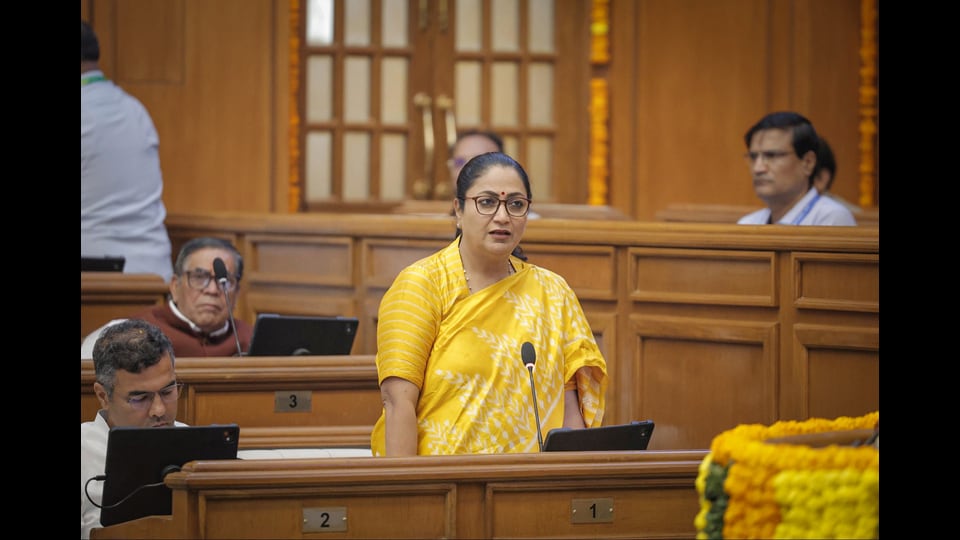
The Comptroller and Auditor General (CAG) has flagged revenue leakages, procedural lapses and avoidable expenditure across several Delhi government departments for 2022-23, identifying irregularities running into thousands of crores in taxes and raising concerns over electricity subsidies, public procurement and project execution. The report was tabled by chief minister Rekha Gupta in the Delhi Assembly on Friday.
The report said test checks detected tax and fee irregularities amounting to ₹220.59 crore in 145 cases, with none of the 22 departments submitting replies to the audit findings.
The report, comprising chapters on the revenue and economic, social and general sectors, said Delhi’s total revenue receipts rose from ₹43,112.60 crore in 2018-19 to ₹62,703 crore in 2022-23. Tax revenue contributed ₹47,363 crore, non-tax revenue ₹581 crore and grants-in-aid from the Centre ₹14,759 crore in 2022-23.
A performance audit of the Goods and Services Tax (GST) E-Way Bill system flagged “systemic weaknesses”, including ineligible taxpayers continuing under the composition scheme, taxpayers generating E-Way bills despite filing nil or no GST returns, multiple bills against the same invoices and transactions by cancelled taxpayers.
An E-Way Bill is a mandatory document generated on a central government portal before transporting consignments valued above ₹50,000.
“Five taxpayers generated 759 E-way bills but did not discharge tax liabilities of ₹4.68 crore on outward supplies worth ₹33.89 crore. Fifteen taxpayers generated 580 E-Way bills involving an assessable value of ₹252.66 crore and tax of ₹31.46 crore without filing returns… 28 cancelled taxpayers generated 3,629 E-Way bills involving ₹734.75 crore, with tax implications of ₹99.39 crore, but failed to file final returns,” the report states.
A separate GST compliance audit found 344 instances of non-compliance among 70 taxpayers, involving revenue implications of ₹3,071.92 crore and turnover mismatches of ₹3,710.17 crore. Another case involved irregular input tax credit claims of ₹89.35 lakh, with additional interest and penalty liabilities of ₹72.70 lakh each.
The audit also flagged irregularities across departments. It found ₹1.91 crore in short payment of stamp duty and registration fees due to incorrect application of agricultural rates, while DSSSB incurred ₹1.05 crore in wasteful expenditure by conducting a junior engineer examination after vacancies had been withdrawn.
GTB Hospital made an avoidable payment of ₹1.93 crore due to a deficient contract, while DSIIDC incurred ₹29.45 crore in unfruitful expenditure on the stalled Gems and Jewellery Park project, it stated.
The report added that PWD made avoidable payments of ₹5.63 crore on dewatering works, while the DTC Employees’ Provident Fund Trust suffered a potential interest loss of ₹5.50 crore. Delhi Jal Board incurred another ₹1.56 crore in avoidable expenditure after taking electricity connections under higher commercial tariff categories.
On electricity subsidies, the audit found that subsidy expenditure increased from ₹2,405.59 crore in 2019-20 to ₹3,161 crore in 2022-23. It stated that the policy “did not target the deserving and disadvantaged section of the population and paid it to nearly the entire domestic consumer base.” It also observed that over 50,000 consumers with zero electricity consumption for more than a year received ₹17.81 crore in subsidies, while regulatory assets of Delhi’s discoms rose from ₹9,063 crore in 2019-20 to ₹27,200.37 crore by March 31, 2021.
CAG also flagged deficiencies in Delhi’s e-procurement system. It found 1,185 tenders floated manually, offline collection of earnest money deposits, registrations without PAN details, multiple bidders using common PANs, email IDs and IP addresses, and incomplete contract data in the portal. It noted that only 5,363 of 155,000 tenders (3.47%) contained award-of-contract details.
The report recommended better targeting of electricity subsidies through billing data and consideration of direct benefit transfers, along with measures to assess rising regulatory assets and future tariff liabilities. It also called for operationalising all e-procurement modules, mandatory electronic tendering above prescribed thresholds, stronger validation controls, alerts for shared bidder credentials and improved internal checks to ensure transparency and data integrity.


Stay updated with all top Cities including, Bengaluru, Delhi, Mumbai and more across India. Stay informed on the latest happenings in World News along with Delhi Election 2025 and Delhi Election Result 2025 Live, New Delhi Election Result Live, Kalkaji Election Result Live at Hindustan Times.


