
 E-Paper



Delhi to double sewage treatment capacity, to clean Yamuna by 2028
For the first time, authorities are deploying drones to map and monitor the city’s drains. Monthly water quality testing at 47 identified hotspots has begun

 Prefer HTon Google


Chief minister Rekha Gupta said on Wednesday that the government is working in mission mode to restore the Yamuna to a clean and free-flowing state by 2028. In a multipronged approach, Delhi will double sewage treatment capacity, expand sewer connectivity, deploy drones for drain monitoring, and coordinate with neighbouring states to stop polluted waters from reaching Delhi drains, Gupta said.
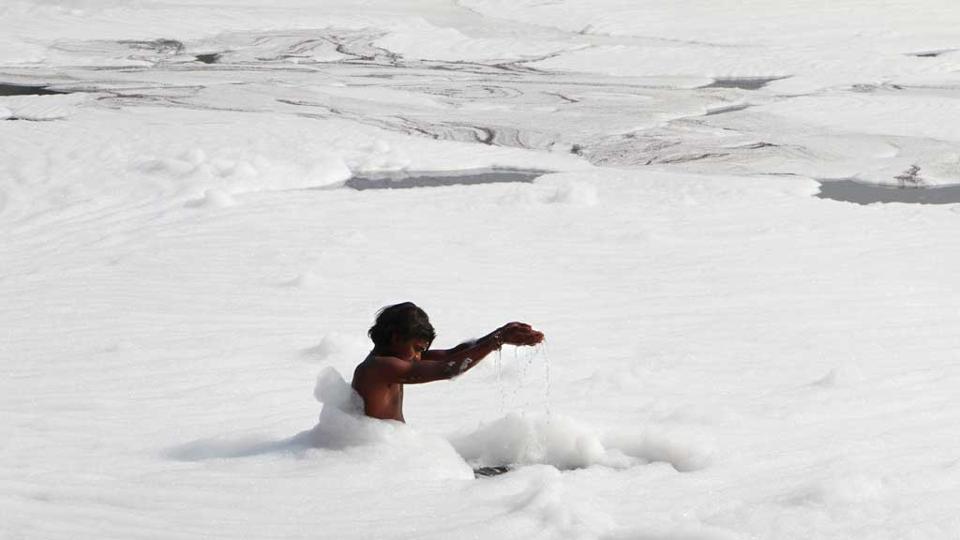
Chairing a high-level review meeting at the Delhi Secretariat, Gupta directed departments to accelerate work on sewage treatment, drain monitoring, sewer network expansion and industrial pollution control.
“Unless every household is connected to the sewer network and no untreated sewage enters the river, the Yamuna cannot be fully restored,” the chief minister said.
The government is planning a major scale-up of sewage treatment capacity. Delhi’s 37 sewage treatment plants (STPs) currently treat 814 million gallons per day (MGD) of wastewater. The government now plans to raise this to 1,500 MGD, nearly doubling capacity, officials said.
Around 56 MGD will be added by upgrading existing STPs by December 2027, while 35 decentralised sewage treatment plants will contribute another 170 MGD. Large new plants near major drains are expected to add 460 MGD by December 2028, ensuring that untreated wastewater no longer flows into the Yamuna.
A parallel push is underway to connect unauthorised colonies and JJ clusters to the sewer network. Work has been completed in 574 of Delhi’s 675 slum clusters, while single-point sewage collection is being arranged in 65 more. The government aims to connect all 1,799 unauthorised colonies to the sewer grid in phases between 2026 and 2028.
For the first time, authorities are deploying drones to map and monitor the city’s drains. Monthly water quality testing at 47 identified hotspots has begun, while drone surveys of minor drains feeding the Najafgarh and Shahdara drains are scheduled for completion this year. Officials said the mapping will help pinpoint pollution sources more accurately.
Recognising that a significant share of pollution enters Delhi’s drains from outside the state, Gupta said coordination with Haryana and Uttar Pradesh is essential.
“Six Haryana drains contribute nearly one-third of polluted flow into the Najafgarh drain, while four Uttar Pradesh drains account for 40% of pollution in the Shahdara drain. We will raise the issue with the neighbouring states,” said an official from the CM’s office.
The plan also includes setting up bio-mining and silt processing plants, developing permanent ghats along the Yamuna, and stricter inspections of industrial effluent treatment facilities.
PWD minister Pravesh Verma said all major drain and sewer network works will be completed by 2028, calling it a time-bound mission to return the Yamuna to Delhi.

Stay updated with all top Cities including, Bengaluru, Delhi, Mumbai and more across India. Stay informed on the latest happenings in World News along with Delhi Election 2025 and Delhi Election Result 2025 Live, New Delhi Election Result Live, Kalkaji Election Result Live at Hindustan Times.


