E-Paper



Delhi transport department seeks to curb bus accidents
The minister listed creation of a common pool of drivers to avoid hiring blacklisted workers, holding regular health check-ups and conducting breathalyser tests

 Prefer HTon Google


The transport department, in view of six fatal crashes involving cluster buses in July that left six dead, introduced a slew of measures, extending from simulator-based training of drivers to Aadhaar-based duty allocation to ensure they don’t work double shifts, to curb such instances, transport minister Kailash Gahlot said on Wednesday.
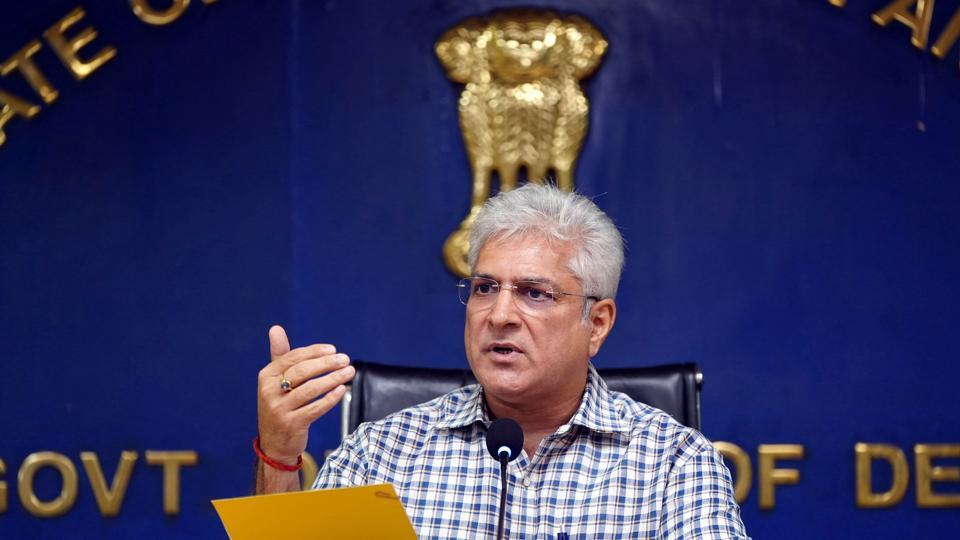
Among other measures, the minister listed the creation of a common pool of drivers to avoid hiring blacklisted workers, holding regular health check-ups and conducting breathalyser tests at depots. The measures were finalised and approved in a meeting on July 29.
“In the wake of recent mishaps and incidents involving Delhi government buses, we have decided to implement a series of precautionary measures aimed at preventing such occurrences in the future. Regular workshops will be held to sensitise drivers, with training provided at the time of induction and regular refresher courses thereafter,” Gahlot said, adding two simulators are being procured by the department for the purpose.
Delhi currently has 7,683 public buses, of which 1,970 are electric. There are nearly 20,000 drivers, most of whom are working on a contractual basis. The daily average passenger ridership in DTC buses was 2.5 million and 1.6 million in cluster buses in 2022-23. The Delhi government operates two kinds of city bus service, firstly the state-owned Delhi Transport Corporation (DTC) and secondly, the cluster bus service operated under Delhi Integrated Multi-Modal Transit System Limited (DIMTS) through private contractors.
Greater Noida: Six injured as roadway bus rams private bus from behind
A transport official said simulator training helps to check a driver’s speed, distance judgement, stress tolerance ability and driving skills. The official said that the training will be conducted at the DTC training centre at Nand Nagri depot.
“DTC drivers are trained at the Nand Nagri depot regularly. With an increase in crashes by electric bus drivers, four e-buses were added a couple of months ago for training. Now, these simulators will also be kept at Nand Nagri and new drivers, as well as currently employed ones, will be tested,” the official, requesting anonymity, said.
The department has decided on a six-day training module for new drivers and a two-day module for others.
Gahlot said a common pool of DTC drivers will be created, allowing concessionaires to appoint drivers as needed. “This pool will be linked with Aadhaar numbers to monitor driver activity across DTC and DIMTS. This measure will ensure that drivers blacklisted by one department or operator are not hired by another,” Gahlot said.
The transport department will also make regular medical check-ups mandatory for drivers. “In DTC, medical check-ups are conducted at the time of induction, every five years after the age of 45, and annually after the age of 55. The same criteria will be followed for cluster bus drivers. The health department has nominated six hospitals for these check-ups, and DTC and cluster bus drivers will be referred to these facilities for regular evaluations,” Gahlot said.

To reduce fatigue among drivers, Aadhaar-based duty allocation is being introduced.
“One bus runs a minimum of 200 kilometres daily. Driving the buses in traffic is a challenge and causes fatigue to the drivers; thus, rest for drivers after eight hours is necessary. Recent incidents have raised concerns that some drivers may be performing multiple duties in a day. A biometric face recognition system will also be installed at all depots to monitor drivers performing multiple shifts,” Gahlot said.
Residents said that frequent crashes and breakdowns have been disrupting traffic on arterial roads.
“Delhi roads are already saturated, and the traffic is always heavy. On top of that, if a bus breaks down or causes an accident, the travel time shoots up by a minimum of half an hour. Along some of the main roads, there is a stranded bus holding up traffic almost every single day,” Namita Sharma, a resident of Greater Kailash-2, said.
In June, DTC had taken over the training of drivers for electric buses from private agencies, as eight minor crashes were reported. Officials said that the recurring crashes were painting a poor picture of the electric bus service. Electric bus drivers are now trained at the Nand Nagri depot by 14 trainers, in batches of 120 for six days, and are awarded certificates.
Experts said that electric buses operate on batteries and are fundamentally different from traditional internal combustion engine (ICE) buses, necessitating different skill sets for both maintenance and operations.
“Electric buses are markedly different from traditional ICE buses in several ways, particularly in their operations. Unlike ICE buses, electric buses feature regenerative braking systems, which capture and store energy that would otherwise be lost during braking, further enhancing their efficiency. Additionally, considerations around battery capacity, charging technology and range are crucial to ensure they can complete their routes without interruptions,” Amit Bhatt, managing director (India), the International Council of Clean Transport (ICCT), said.
“These operational differences necessitate specialised training for the workforce to ensure efficient operations. Therefore, skilling the workforce is crucial to maximising the benefits of electric buses and ensuring a smooth transition from traditional ICE buses,” he said.