
Sign in

Delhi’s max temperature dips to 26°C after rain, strong winds

Delhi also breathed significantly cleaner air on Tuesday, when the AQI improved to 89 (in the “satisfactory” zone), from 207 (“poor”) a day ago

Updated on: Oct 18, 2023, 03:49:09 IST
Share
Share via
  • facebook
  • twitter
  • linkedin
  • whatsapp
Copy link
  • copy link

Rain and strong winds on Monday night and Tuesday morning pushed Delhi’s maximum temperature down seven degrees below normal, giving the Capital its first proper tryst with the day-time chill this season.
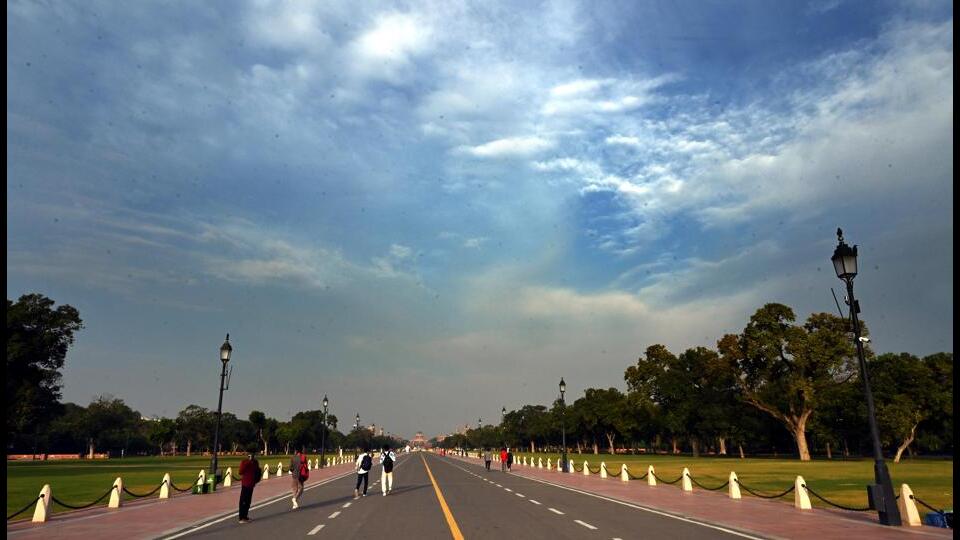
Blue sky over Kartavya Path in New Delhi on Tuesday. (Arvind Yadav/HT PHOTO)

The Capital on Tuesday clocked a maximum temperature of just 26.2°C, more than four degrees below Monday’s 30.5°C, and more than eight lower than 34.6°C on Sunday.

Delhi also breathed significantly cleaner air on Tuesday, when the air quality index (AQI) improved to 89 (in the “satisfactory” zone), from 207 (“poor”) a day ago. The Capital’s air quality was poor for five straight days before the rains, showed data from the Central Pollution Control Board (CPCB).

However, officials warned, the downturn in pollution will be temporary, with levels likely to springboard to even more toxic levels over the next few weeks.

Delhi also recorded a minimum temperature of 17.2°C on Tuesday, two degrees below normal.

Temperatures in the city were helped by gusty winds of speeds up to 55kmph, said IMD officials.

The minimum is now likely to remain below 20°C for the rest of the year, due to the impact of the cold northwesterly winds.

The gusty winds and lightning also impacted flight operations at the Delhi airport between 7pm to 11pm on Monday, with 13 flights being diverted to neighbouring airports.

  • Jasjeev Gandhiok
    ABOUT THE AUTHOR
    Jasjeev Gandhiok

    Jasjeev Gandhiok is an Assistant Editor with Hindustan Times, where he covers environment, climate change, the clean energy transition and wildlife at the National Bureau. Gandhiok has over a decade of experience in journalism and is based in Delhi. He has reported extensively on Delhi and the National Capital Region (NCR). This includes the region's air pollution woes, a polluted Yamuna and on urban wildlife still thriving in the region. He joined HT in October 2021. Prior to that, he had five-year stint at The Times of India in Delhi, where he also covered Delhi, with a focus on environment and wildlife. Gandhiok has covered some recent events around the Capital too, ranging from the farmers' protests, the northeast Delhi riots and the CAA-NRC protests, reporting from the ground on all of these. He also travels across the country to report on how environment and climate change impact everyday life, while also writing on endangered species. His reports in 2019 on toxic leachate from Delhi's landfills led to the National Green Tribunal (NGT) taking suo motu cognisance and ultimately asking the state government to start bio-mining to flatten and remove all three landfills in the capital. He also closely tracks the implementation of government policies on climate, renewable energy and environmental protection. His focus remains on impactful, public-interest journalism which explains how environmental decisions affect people's everyday lives.Read More