
 E-Paper



DU academic council okays CUET for PG admissions
The decision will now require a final stamp of approval from the university’s executive council, which is scheduled to meet on December 3.


The Delhi University’s academic council on Tuesday approved a resolution to introduce the Common University Entrance Test (CUET) for admissions to postgraduate (PG) admissions for the 2023-24 academic session.
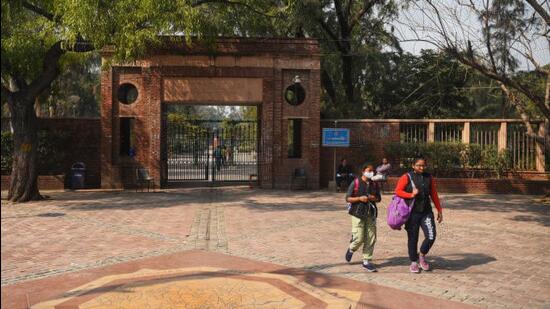
The decision will now require a final stamp of approval from the university’s executive council, which is scheduled to meet on December 3.
The decision to hold PG admissions through CUET was taken based on the recommendation of a 10-member committee. Under the current system, 50% of PG candidates who did their bachelors at DU get direct admission to the university, based on their merit in their qualifying examinations. The remaining 50% seats are filled on the basis of candidates’ ranks in the DU postgraduate entrance test.
The council also approved changes to classroom size for lectures and tutorials in both undergraduate (UG) and PG programmes, based on recommendations by a six-member committee headed by DU south campus director Prakash Singh, as well as the syllabi for the second semester of various undergraduate courses, and a hike in PhD thesis submission fee.
As part of the changes to classroom sizes, tutorial groups will now consist 30 students for UG courses and 25 for PG courses, and the size of practical classes will be 25 students in UG courses and 15-20 students in PG courses.
At least six members of the council registered their dissent against the change in classroom size, noting that the introduction of uniformity in the teacher-student ratio will have adverse consequences for the quality of teaching-learning processes, and that the university was increasing the student-teacher ratio instead of reducing the ratio.
DU registrar Vikas Gupta said, “The classroom size was already approved. Some members had concerns pertaining to the classroom size. We have sought suggestions and will consider them.”
The dissenting members of the council continued to protest at the meeting venue till late on Tuesday, after even after vice chancellor Yogesh Singh declared the agenda passed and left the meeting.
“This is going to create massive workload problems across colleges besides negatively impacting the teaching-learning process,” said Mithuraaj Dhusiya, a member of the council.
Abha Dev Habib, who teaches physics at Miranda House, said that the change in classroom size would have a fallout on small-group teaching. “Over 50% of students come from marginalized backgrounds and small group teaching plays a crucial role in providing mentorship… Instead of demanding additional teachers and infrastructure for the fourth year, the university is implementing an anti-student and anti-teacher policy, making the student-teacher ratio even more skewed,” said Habib.
The AC also approved a resolution to raise the fee for PhD thesis evaluation. Currently, the thesis submission fee is ₹5,000 for students with a fellowship, and ₹3,000 for students without a fellowship. As per the amended fee structure, students with fellowship will have to pay ₹7,500 while students without fellowship will have to pay ₹5,500.

Stay updated with all top Cities including, Bengaluru, Delhi, Mumbai and more across India. Stay informed on the latest happenings in World News along with Delhi Election 2025 and Delhi Election Result 2025 Live, New Delhi Election Result Live, Kalkaji Election Result Live at Hindustan Times.


