
 E-Paper



Ecological restoration workshop spotlights invasives in Delhi’s Ridge
The workshop included multiple sessions aimed at helping journalists better understand ecological restoration.

 Prefer HTon Google


Indian environmentalist, naturalist, and filmmaker Pradip Krishen on Friday delivered a lecture on Delhi’s Central Ridge Reserve Forest, stressing that the removal of invasive tree species is key to restoring its ecology. The session was part of a workshop on ecological restoration organised by the Ecological Restoration Alliance (ERA) in collaboration with Mongabay and Narrative Hub.
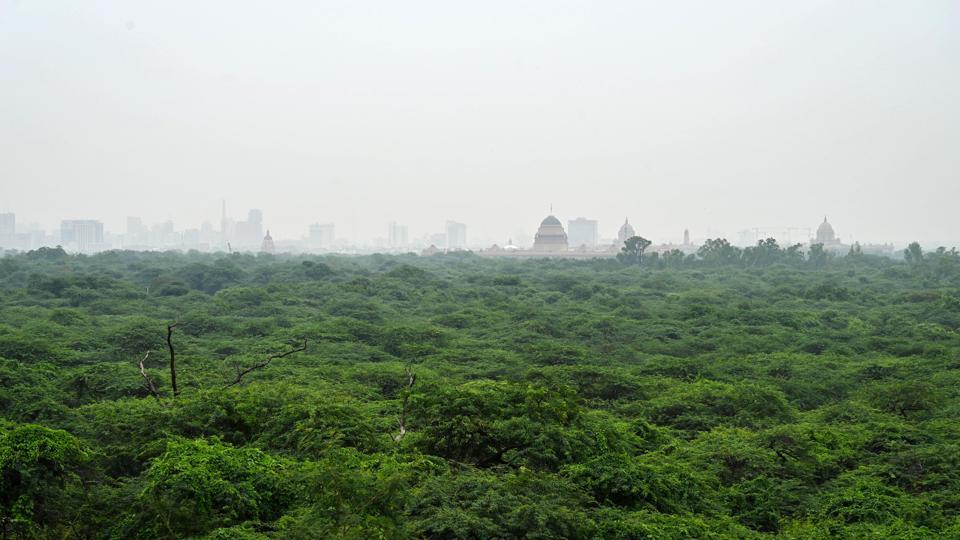
Tracing the history of the ridge, Krishen noted its afforestation under colonial rule and recalled how it had nearly been chosen as the site for the government house during the tenure of Charles Hardinge, Viceroy and Governor-General of India, between 1910 and 1916.
Krishen explained that invasive trees “outcompete everything else.” He said, “Invasive trees have chemical weapons in the form of alkaloids, which are secreted by the leaves and roots and inhibit other plants from growing very close to them. So unless you get rid of the invasive species, normal ones cannot thrive.” He identified Leucaena leucocephala and Neltuma juliflora as the two major invasive species currently threatening the ridge.
For restoration, Krishen said legislative reform and manual methods must work together. “First the tree act will have to change so that any tree which is identified as invasive can be cut, as the government has a legitimate fear of allowing all trees to be cut. Then, this should ideally be manual work, as heavy earth-moving machines will cause a lot of damage to the soil,” he said.
Krishen also highlighted missteps in past efforts. “When the forest department was restoring a part of the ridge, they were referring to their list of trees native to the area, which was 90% correct. However, since the work was outsourced to contractors, who could not find the right species and thought incorrect ones to be native, I found that 9 out of 12 trees being planted were exotic species,” he said.
The workshop included multiple sessions aimed at helping journalists better understand ecological restoration.
Stay updated with all top Cities including, Bengaluru, Delhi, Mumbai and more across India. Stay informed on the latest happenings in World News along with Delhi Election 2025 and Delhi Election Result 2025 Live, New Delhi Election Result Live, Kalkaji Election Result Live at Hindustan Times.


