
 E-Paper



Govt focuses on mapping Covid clusters as cases spike in city
"The current graph is too steep and suggests that variants of the virus are contributing to high transmission. So, such strategies are necessary," says Dr Lalit Kant, former head of the epidemiology and communicable diseases department in ICMR.


With Delhi now going through its fourth wave of the Covid-19 pandemic, the Delhi government has returned its focus on identifying and mapping potential clusters of the disease to scale up containment measures, even as authorities send swab samples for genome analysis to identify the spread of mutant variants of the Sars-CoV-2 virus.
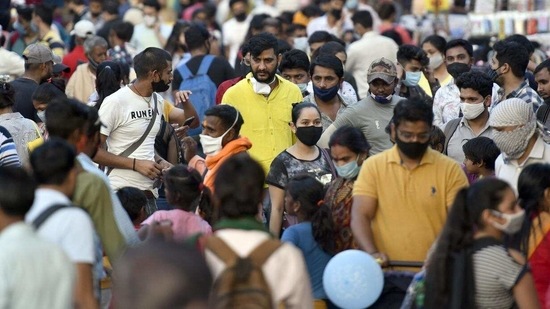
A senior government official said clusters are being identified to analyse Covid-19 spread patterns and to help districts develop strategies to counter them. Clusters, he explained, are geographic areas that are mapped by clubbing Covid-19 cases detected in close proximity. District surveillance teams formulate these with the help of geo-location tools.
Delhi recorded 1,881 new cases of the infection on Sunday, the highest single-day spike since December 13, when the city had logged 1,984 new cases. The number of active cases in Delhi has also surged over the past month, from 1,335 on February 28 to 7,545 on Sunday, government records showed.
Delhi’s chief secretary Vijay Dev said, “We are leaving no stone unturned in identifying and mapping potential clusters. To arrest the transmission of the virus, we are conducting random tests in and around such areas, scaling up containment efforts and collecting samples for genome sequencing, as per protocols of the Union health ministry.”
Also read | Delhi CM, L-G urge people to celebrate Holi indoors
While Delhi recorded 1,710 containment zones as on Sunday, the government didn’t have a consolidated list or total number of areas identified as clusters, potential clusters or hotspots as of now, said the first government official.
“Currently, the government has entrusted the revenue districts with identifying potential clusters – areas that may turn into actual clusters if testing, tracing, vaccination and surveillance efforts are not scaled up immediately. There are no actual clusters in the city as of now,” said the first government official.
An official with a district surveillance team said, “Each of the 11 revenue districts in the city has a surveillance team which takes calls on defining and mapping of potential clusters. They are used for chalking out micro-level strategies. Size of such areas and number of cases to be clubbed in each of them depend on several factors — like population density and living conditions in the concerned area.”
HT on Sunday spoke to officials in several districts and learnt that some pockets in areas like Rajouri Garden, Janakpuri, Tagore Garden, Paschim Vihar, West Punjabi Bagh, Mukherjee Nagar, Narela, Jungpura Extension, Dilshad Garden, Pitampura, Rani Khera, Rohini sectors 15, 16 and 24, Naraina, Vasundhara Enclave, Neb Sarai and Aya Nagar are currently being monitored as ‘potential clusters’.
Senior government officials said that health workers will conduct tests at random in these areas, alongside an intensified door-to-door drive to increase vaccine coverage. The officials added that containment efforts have been scaled up and swab samples are being sent for genome sequencing to identify variants of the virus.
This, however, is not the first time that the government is keeping a close eye on specific areas during a surge in Covid-19 case numbers.
As the third wave of the infection hit the Capital around September last year, the government prepared a list of 33 areas, identifying them as “emerging hot spots”.
When cases picked up again in November 2020, pockets in Pitampura, Ashok Vihar, Rohini sectors 14 to 18, Najafgarh and several sectors of Dwarka were identified as potential clusters. But the government did not prepare any consolidated list of hot spots at the time, the district official recalled.
Watch | Covid update: Putin vaccine side-effects; Maharashtra lockdown warning
Around the same time last year, the government had also adopted a new micro-containment zone strategy in an attempt to cause less convenience to people and also change perceptions surrounding the Covid-19 disease. “Such perception-related factors are considered when it comes to how micro-level strategies are to be pursued by the government,” said another district official.
In a Delhi Disaster Management Authority’s (DDMA) meeting on March 5, its chairman Lieutenant Governor Anil Baijal had directed officers to stress on “cluster-based surveillance, testing and genome sequencing” to arrest the ongoing spike in Covid-19 cases.
Dr Lalit Kant, former head of the epidemiology and communicable diseases department in the Indian Council of Medical Research (ICMR), said, “It is a good strategy to map clusters and focus not just on containment efforts but also on genome sequencing of samples. The current graph is too steep and suggests that variants of the virus and contributing to high transmission. So, such strategies are necessary.”

Stay updated with all top Cities including, Bengaluru, Delhi, Mumbai and more across India. Stay informed on the latest happenings in World News along with Delhi Election 2025 and Delhi Election Result 2025 Live, New Delhi Election Result Live, Kalkaji Election Result Live at Hindustan Times.


