
 E-Paper



HT interview: Women safety is my top priority, says Cong Gurgaon candidate
Mohit Grover, a member of the Punjabi community, secured the second-highest vote count of around 50,000 as an independent candidate in 2019 will contest from Gurgaon

 Prefer HTon Google


With less than a month to go for the assembly elections in Haryana, Mohit Grover — the Congress pick for the Gurgaon assembly seat — spoke to Leena Dhankhar and Abhishek Behl about his political journey, his vision for Gurugram, and about uniting Congress workers across the state.
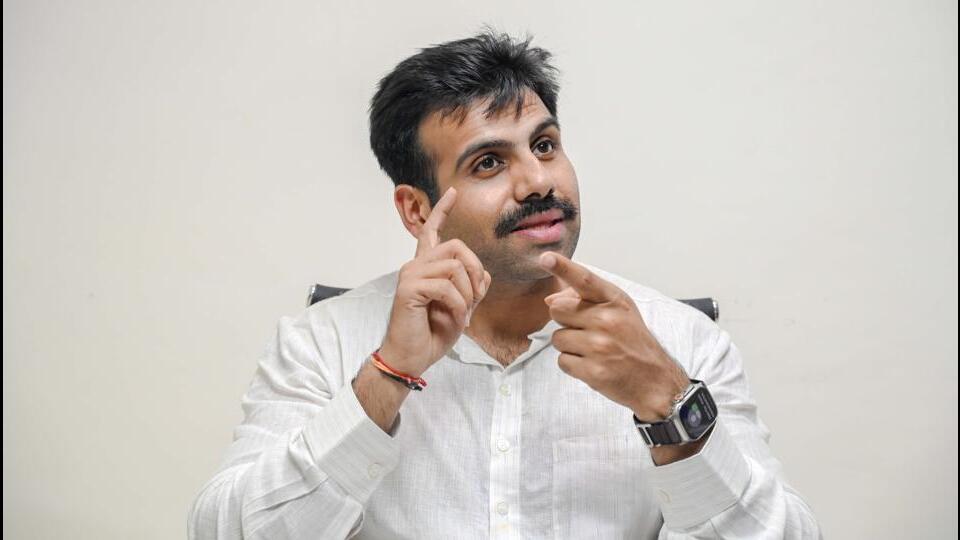
Edited excerpts:
A ticket for the Gurgaon seat was in great demand... How did you manage to convince the Congress high command that you are the right candidate?
Several leaders were in the race for the Gurgaon ticket, but the party leadership wanted to bet on a candidate who was young, connected with the local people, was tried-and-tested in electoral battles, and who had faith in the Congress ideology.
I fit all these criteria as I contested the 2019 elections as an independent candidate and managed to get 48,600 votes on my electoral debut.
I was born and brought up in Gurugram, and I have been actively involved in social work. I have developed a close relationship with the people of the city. I am thankful to the party leadership, including former chief minister Bhupinder Singh Hooda and MP Deepinder Hooda, for putting faith in me.
What is your agenda for Gurugram, and how do you plan to achieve it?
Gurugram is a young city which is evolving, and there is a need to integrate both the old and the new city as they complement each other. I have a personal stake in this city as my family business and future lies here. If the city grows and prospers, so do its residents, including me. There is a need for comprehensive planning and development of Gurugram as multiple agencies in the city have failed to deliver the goods. My goal is to ensure that there is a metric for development which includes better roads, adequate drinking water, good quality electricity supply, better transport and less congestion in the city.
What, according to you, are the major shortcomings of the present BJP government?
This government has failed on all fronts. It did not construct a single Metro pillar, the civil hospital remains on paper, the 24m sector roads remain incomplete, existing roads are potholed, waste management is in shambles…
Despite 10 years in power, the BJP government has begun very few projects (in the city), and those also have been built by NHAI. The people have no bus transportation, they are dependent on autos and private vehicles.
Where is the development to call Gurugram a Millennium City? The only thing the BJP did was to construct party offices across Haryana and nothing else.
But the Gurgaon seat has been a Congress bastion for decades…
It is true that the Congress used to win the Gurgaon seat in the 1980s and 90s. However, for the last 15 years, Gurgaon has had BJP MLAs, along with an independent…
I exhort Gurgaon voters to give me a chance this time… I will work for the people and ensure their voice is raised at the highest level. The Congress is going to form the government in Haryana and if I win from the Gurgaon seat, it would give a solid push to development of Gurugram as a whole.
Gurugram has evolved as a city of migrants. However, many of their demands and issues are not resolved, and several home buyers are stuck in failed projects. How do you plan to resolve their issues and also make housing affordable?
This is an important concern as during the last 10 years, many projects have gotten stuck or have failed. I will raise the voice of these homebuyers and ensure they get justice.
Most importantly, efforts will be made that government real estate agencies such as HSVP and the housing board launch real estate projects at a reasonable price to provide an alternative to homebuyers.
Also, the affordable housing policy which is now seeing no new projects, will be tweaked so that it becomes viable and developers again launch new projects for the common man in the city.
What did you learn from the 2019 elections?
I gained confidence to reach out to the people and exchange ideas... This time I am not starting from zero but I have the experience of the previous contest.
During the last elections, all communities in Gurgaon came out to support me, and it (getting 48,600 votes) was a pleasant surprise. The elections, no doubt, are physically and mentally a very tough contest but I am ready for them and the opposition.
Women’s safety and security are significant concerns in Gurugram. What measures do you plan to implement to ensure the safety of women?
Ensuring the safety and security of women is one of my top priorities. If elected, I will work closely with law enforcement agencies to increase the number of women police officers, especially in public places such as markets, schools, and transportation hubs.
We will also enhance the surveillance network across Gurugram, with more CCTV cameras installed in strategic locations to act as a deterrent to criminal activities.
Furthermore, I will push for the establishment of dedicated women’s help desks at every police station, staffed with trained officers who can respond quickly and sensitively to any reports of harassment or violence.
It is also crucial to invest in women-friendly infrastructure, such as well-lit streets, safe public transport options, and the construction of more public toilets for women. To create long-term change, I will launch awareness campaigns focused on educating society about respect, gender equality, and women’s rights.
Collaborating with schools, colleges, and workplaces to conduct safety workshops and self-defence training programs for women will also be a key component of our strategy. With a multi-pronged approach combining law enforcement, infrastructure development, and social awareness, I am committed to making Gurugram a safer place for women.


