
 E-Paper



In one year of BJP govt, how a reset of Centre-state dynamics have helped Delhi
From better financial integration and institutional ties to a shit in the tone of governance, Delhi has witnessed several changes in the past year.

 Prefer HTon Google


When the Bharatiya Janata Party (BJP) won the February 2025 Delhi assembly elections, it marked more than just a change of guard in the Capital. For the first time since 2013, the same party was in power both at the Centre and in Delhi, fundamentally altering the tone and mechanics of governance in the National Capital Territory (NCT) as city residents have experienced in recent history.
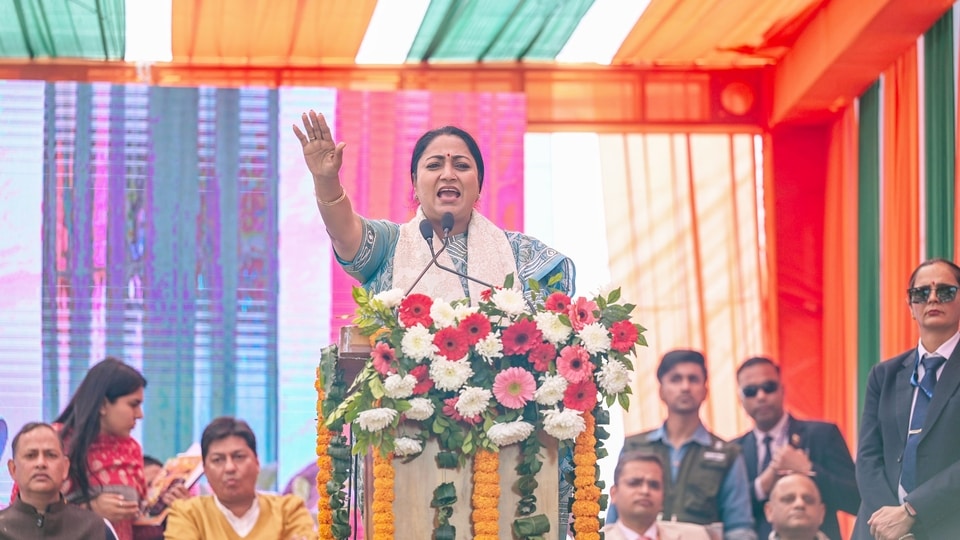
The past decade in particular, Delhi’s administration had been defined by friction between the elected government and the lieutenant governor (LG), who represents the Union government. With the BJP now governing both layers, officials and observers say the Capital has entered a phase of closer coordination, quicker decision-making and reduced political confrontation.
A reset in Centre–state dynamics
Delhi occupies a unique constitutional position. It is a Union Territory, where key powers – especially over services, land and police – rest with the Centre and are exercised through the LG. “At the same time, as the National Capital Territory, it has an elected chief minister and cabinet responsible for subjects such as health, education and transport. This dual structure makes alignment crucial,” said constitutional expert and former Delhi Assembly secretary SK Sharma. “It becomes critical for both governments to be on the same page.”
ALSO READ | BJP government marks one year in Delhi with largest e-bus fleet in the country
During the tenure of the Aam Aadmi Party (AAP), public disagreements with successive LGs were frequent, often spilling into courtrooms and press conferences. Disputes ranged from the implementation of pollution-control measures such as odd-even schemes and cloud seeding trials to foreign training visits for teachers.
Sharma argued that such confrontations slowed administrative processes. “We have seen a lot of friction and head-on collision between the Centre and Delhi government on several issues, ultimately affecting development work. Proposals took time for scrutiny and approval. Central schemes were not fully embraced. That affected delivery,” he said.
In contrast, the past year has seen fewer public flashpoints. Court cases initiated by the previous dispensation against the Centre and the LG have been withdrawn. Officials say routine files move faster, with less back-and-forth between departments and Lok Niwas. “I would say this is good for Delhi, as the government now has the freedom to act and gets authorisation for its work,” he said.
Financial integration and institutional ties
One of the clearest indicators of the reset has been financial coordination. On January 5, the Delhi government signed a memorandum of understanding with the Reserve Bank of India (RBI), enabling the central bank to act as Delhi’s banker, debt manager and financial agent.
The arrangement facilitates market borrowings through state development loans, professional cash management and automatic investment of surplus funds. Finance department officials said this reduces reliance on higher-cost borrowing and aligns Delhi’s treasury operations more closely with the national system.
ALSO READ | Delhi govt plans to launch multiple new projects to mark one-year anniversary
In the 2026–27 Union Budget, capital transfers to Union Territories with legislatures – Delhi, Jammu and Kashmir, and Puducherry – were more than doubled, from ₹6,275 crore to ₹15,380 crore. While Delhi’s final allocation is pending, officials expect a significant boost for infrastructure.

The Centre also expanded the Special Assistance to States for Capital Investment (SASCI) scheme from ₹1.5 lakh crore to ₹2 lakh crore. Delhi received ₹825 crore under the scheme this fiscal year for projects such as Metro Phase IV and road upgrades, and anticipates higher funding from the enlarged pool.
NCR alignment and inter-state coordination
Political alignment extends beyond Delhi’s borders. The BJP also governs neighbouring Haryana and Uttar Pradesh, as well as key National Capital Region (NCR) cities such as Gurugram, Noida, Faridabad and Ghaziabad.
Officials said that this has improved coordination on shared challenges including air pollution, transport integration and water management. During the winter session of the Delhi Assembly, minister Parvesh Verma said talks were underway with Uttar Pradesh and Haryana to exchange treated wastewater from Delhi’s sewage treatment plants for fresh raw water currently used for irrigation.
“Our STPs now produce high-quality treated water. In return for using it for irrigation, we have proposed that raw river water be made available to Delhi for drinking purposes,” he said.
ALSO READ | ‘Next year, we will perform even better,’ says Delhi CM Rekha Gupta
The Centre, meanwhile, has earmarked ₹1,368.88 crore in 2026–27 to improve Delhi’s water supply network, including ₹988.88 crore under externally aided projects in partnership with the Japan International Cooperation Agency (JICA) – more than double the previous year’s allocation.
Infrastructure support has also expanded. The National Highways Authority of India (NHAI) has taken over three key arterial stretches from Delhi’s Public Works Department (PWD) for redesign and maintenance: Mathura Road (Ashram to Badarpur Border), Old Delhi-Rohtak Road (Punjabi Bagh to Tikri Border) and Mehrauli-Gurugram Road (Mehrauli to Gurugram).
Transport, livelihoods and clean energy
Improved coordination has been particularly visible in transport and clean mobility. The induction of electric buses has accelerated. In its final two years, when electric buses had started getting added to Delhi’s fleet, the AAP government inducted around 800 e-buses. In contrast, the BJP has already brought in around 3,000 new buses in its first year.The government has submitted a proposal to procure 3,330 additional e-buses under Phase II of the Centre’s PM E-DRIVE scheme.
On livelihoods, Delhi signed an MoU with the Credit Guarantee Fund Trust for Micro and Small Enterprises (CGTMSE) to expand collateral-free loans for small entrepreneurs – a significant development in a city where informal trade and services form a large share of employment.
Yamuna rejuvenation has also gained momentum. Union home minister Amit Shah has reviewed progress in meetings with chief minister Rekha Gupta. In October, he inaugurated projects worth over ₹1,816 crore aimed at river cleaning and improving drinking water supply.
A tone of governance
The tonal shift is perhaps as important as the administrative one. Central health and welfare schemes have been adopted without disputes over jurisdiction or credit.
One of the BJP government’s first decisions was to implement Ayushman Bharat in Delhi, with a ₹5 lakh state-funded top-up, doubling coverage to ₹10 lakh per family.
CM Gupta recently told HT, “The Centre and the Delhi government are now working in sync. When the Centre provides direction and assistance on projects … work progresses smoothly and solutions move faster.”
Ramesh Negi, former Delhi chief secretary, said, “There is political synergy between the Centre and the state and both share responsibility for good governance… The central government projects are getting more impetus and public accountability is becoming deeper as there is no blame game.”



Stay updated with all top Cities including, Bengaluru, Delhi, Mumbai and more across India. Stay informed on the latest happenings in World News along with Delhi Election 2025 and Delhi Election Result 2025 Live, New Delhi Election Result Live, Kalkaji Election Result Live at Hindustan Times.


