
 E-Paper



Long queues, Aadhaar issues, confusion: Rocky rollout for BJP's Lakshmi Yojana for women in Delhi
Applicants have reported confusion over documentation, Aadhaar-related issues and lengthy registration procedures, slowing enrolment under the ₹2,500-a-month.

 Prefer HTon Google


For months, Anju – a 44-year-old woman employed as a domestic help in west Delhi’s Raghubir Nagar – has looked forward to the day she will start receiving a monthly sum of ₹2,500 that the Bharatiya Janata Party (BJP) had promised in the run-up to the 2025 Delhi assembly elections.
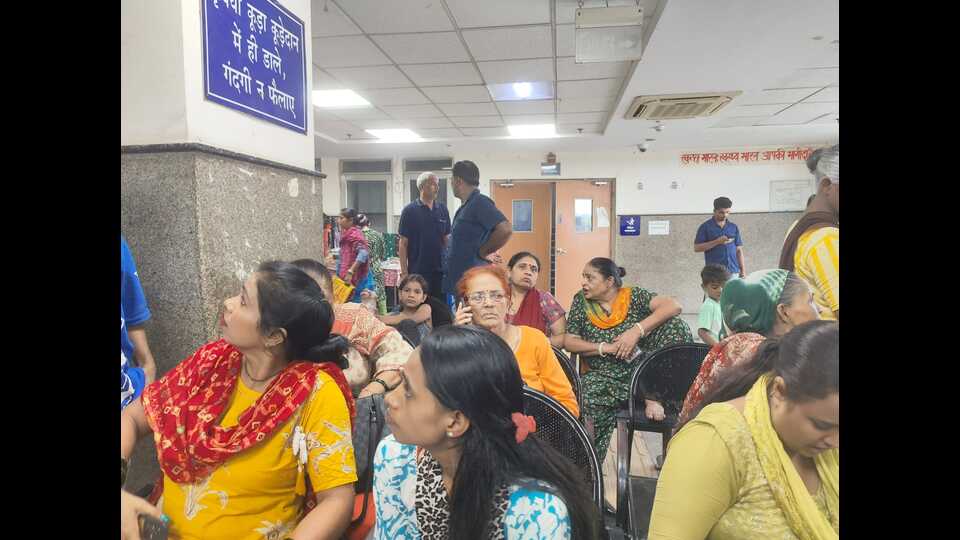
So when the Delhi Lakshmi Yojana was finally rolled out on August 1, she reworked her schedule, telling her employers she would be late to work on Wednesday. Armed with her Aadhaar card, voter ID, and a passport-size photograph, Anju reached the office of the district magistrate of West District in Rajouri Garden around 9am, where dozens of other women stood in a queue to register.
Also read: Delhi Lakshmi Yojana portal launched, 33.7K sign up
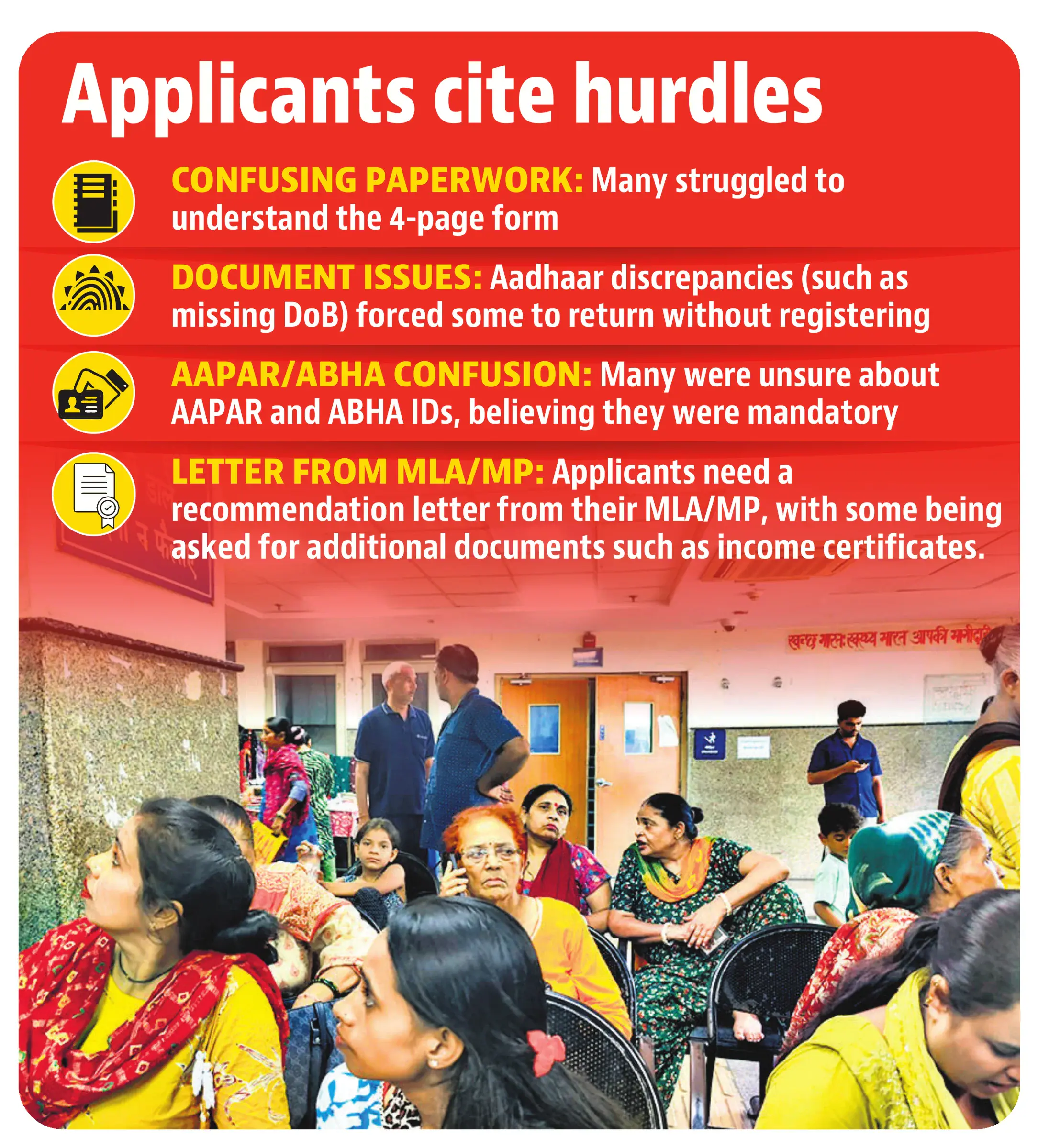
“I thought I would be able to fill the form today, but I have only been able to register myself. I have been given the form and have been told that I also have to fill in the details of my son’s AAPAR (Automated Permanent Academic Account Registry) ID. I don’t even know what that is or if he even has one,” said a flustered Anju, who lives in a one-room set with her husband and their two children.
The presence of AAPAR ID and Ayushman Bharat Health Account (ABHA) ID – which aren’t mandatory – on the form created confusion for many.
Lack of clarity, tedious form-filling, Aadhaar-related discrepancies, inadequate manpower and computers at DM offices, and demand for additional digital IDs have plagued the rollout of the much-awaited scheme.
Counters have been set up at DM offices to help women register apply for the scheme. While it is possible for applicants to register and submit forms on the portal on their own, lack of access to a computer is a challenge for many.
Restrictive eligibility criteria, along with these teething issues, may whittle down the potential pool of beneficiaries of the Delhi Lakshmi Yojana scheme from the 1.7 million initially estimated by the state government.
Eligibility and documents
The scheme entails a payout of ₹2,500 per month to the eldest woman between the age of 21 and 60 from a household whose total annual income is under ₹2.50 lakh. A beneficiary, or her husband or parents, must have been residents of Delhi for at least 10 years.
Women with more than that three children will not be eligible for the scheme, guidelines revealed after the scheme was approved by the Cabinet had showed. This would exclude 15% of women from the lowest income strata of Delhi’s households, an analysis by HT found.
Besides women already receiving financial assistance or pension under any other government scheme, those who pay income tax, file GST returns, are government employees, or belong to families with members employed by the Centre or state governments will be ineligible, according to the cabinet note approved on Tuesday. Also excluded are families owning a four-wheeler, annual household electricity consumption exceeding 2,400 units and women with a criminal record.
Among the mandatory documents are Aadhaar card, voter ID card, photograph and signature, along with one residence proof and one age proof document, and a letter of recommendation from the MP or MLA of their constituency as reported by HT on August 1. To be sure, AAPAR ID and Ayushman Bharat Health Account (ABHA) ID are not mandatory.
Also read: 15% women may lose out on Delhi's monthly payout scheme due to 3-child cap
Confusion over forms and IDs
According to the data released by the government 3,78,485 applicants had registered and 1,16,650 applicants had submitted the applications as of 9 pm on Wednesday – 30.8% women of those who had registered were able to submit the forms within four days of the rollout.
When HT visited the West DM’s office on Wednesday morning, women had queued up at the special station manned by three women, scrambling for information.
Registration involves submitting their Aadhaar and a valid phone number; after the official enters the details, the applicant receives an OTP, which confirms the process and generates a receipt.
After registration, women are given a four-page form to fill, then must obtain a letter from their MLA or MP, submit it online on the DLY portal, and return to the DM’s office to submit the receipt – a process many called laborious.
HT noticed that many women struggled to understand the many questions in the form, as well as the demands for the AAPAR and ABHA IDs.
Also read: Letter from MP or MLA to be mandatory for ₹2,500 payout scheme for Delhi women
Aadhaar issues, paperwork delay applications
Problem starts at stage 1 – submission for Aadhaar. Many like Gorakhi, 54, a housewife; and Sadhna Kaur, 35, unemployed, came hoping to finish the process on Wednesday itself.
While Kaur at least got registered, Gorakhi was sent back because her Aadhaar lacked a date of birth. “I wasted my day here, my husband’s too. I have been told to fix my Aadhaar first. That itself will take time,” she said.
Many said they expected officials to help fill the forms but found little assistance. An official from Delhi’s women and child development department told HT, “Women have to fill these forms themselves. It’s not our job.”
For 50-year-old Anita, Wednesday was her second visit in four days. After completing registration and filling the form, she claimed she was asked for an income certificate while seeking the mandatory recommendation letter from her the office of her MLA Harish Khurana.
Also read: Delhi Lakshmi Yojana: Criminal past, owning 4-wheeler can make women ineligible for ₹2.5k aid
“I don’t earn anything. I don’t even know what an income certificate is. I went to a cybercafé and they gave me a paper, but I don’t know whether that’s enough,” she said.
MLA Harish Khurana denied the claims and said, “We are not asking for any income certificate. There may be some discrepancy or confusion. I have signed over 800 forms in the last 24 hours”.
Despite the hurdles, many women said they were determined to complete the process.
For Anju, the monthly assistance could help meet household expenses. “I’ll find out what an APAAR ID is from my son’s school. I don’t know when I’ll finally be able to submit the form and get ₹2,500 a month. But I’ll do it. This money will help,” she said.
Frequently Asked Questions



Stay updated with all top Cities including, Bengaluru, Delhi, Mumbai and more across India. Stay informed on the latest happenings in World News along with Delhi Election 2025 and Delhi Election Result 2025 Live, New Delhi Election Result Live, Kalkaji Election Result Live at Hindustan Times.


