
 E-Paper



‘Medical device tag for air purifiers will disrupt the market’
The Centre warned that this would turn a freely available product into a tightly regulated one, raise compliance burdens and restrict market entry and participation.

 Prefer HTon Google


The Union government on Thursdayopposed before the Delhi High Court a plea to reclassify air purifiers as “medical devices” and reduce the Goods and Services Tax (GST) on them, arguing that such a change would disrupt market supply and result in creating a monopoly by restricting participation to a limited set of players.
In an affidavit filed on January 5, it said that treating air purifiers as medical devices would place them in the drugs category and subject their import, manufacture, sale, storage and distribution to the rules under the Drugs and Cosmetics Act (DCA) and the Medical Devices Rules (MDR). The court will consider the submissions on Friday.
In its 25-page affidavit, the Centre warned that this would turn a freely available product into a tightly regulated one, raise compliance burdens, restrict market entry and participation, and potentially create monopolistic conditions by favouring only a limited class of licensed entities.
“Once a device under section 3(b)(iv) is notified and consequently becomes a drug under the DCA Act and a medical device under the MDR Rules, the same is subjected to the additional regulatory framework of the said act and rules. Classification of air-purifiers as medical devices would subject their import, manufacture, sale, stocking, distribution, etc. to the DCA Act and the MDR Rules and likely further affect supply in a market already facing constraints,” the affidavit said.
It added, “What is presently freely available in the market would become regulated, market entry would be restricted, and compliance burdens would inevitably narrow participation. Such a regulatory shift would have the effect of favouring a limited class of entities possessing the requisite licences, registrations, and approvals, thereby creating conditions for monopoly rather than advancing public access.”
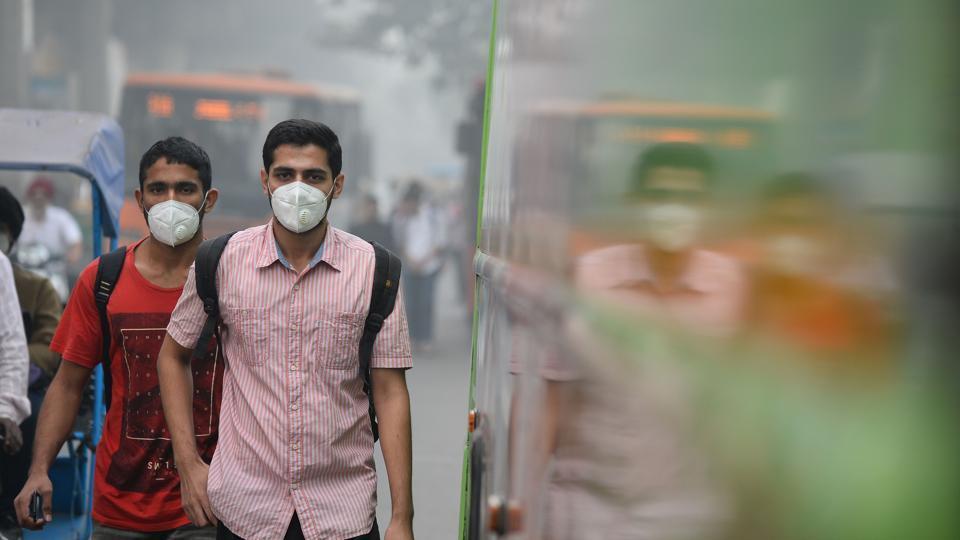
The affidavit has been filed in a petition preferred by advocate Kapil Madan. In the petition, argued by advocate Gurmukh Singh, said air purifiers cannot be treated as a luxury item, given the crisis caused by worsening air pollution in Delhi-NCR. It sought their categorisation as medical devices.
On December 24, 2025, the high court directed the GST Council to consider this on a temporary or permanent basis, in view of deteriorating air quality in the region.
On December 26, the Centre had told the high court that cutting GST on air purifiers would “open a Pandora’s box” and the decision required a long-drawn consultative process involving multiple ministries.
In its affidavit on Thursday, the Centre further said that the GST Council is a constitutional body, an instrument of cooperative federalism, not a mere administrative institution and judicial directions to alter rates or convene meetings would undermine the constitutional scheme by reducing it to a rubber stamp. “Any direction by the court to consider or adopt a particular outcome would amount to the hon’ble court stepping into the shoes of the GST council, thereby exercising functions that the Constitution has consciously and exclusively entrusted to the GST council,” the affidavit added.
It further said that the issue raised in the petition is already under consideration, as the Parliamentary Standing Committee on Science and Technology, Environment, Forest and Climate Change has recommended abolishing or reducing GST on air purifiers and HEPA (High-Efficiency Particulate Air) filters, and the recommendation has been tabled before both Houses of Parliament of India.

Stay updated with all top Cities including, Bengaluru, Delhi, Mumbai and more across India. Stay informed on the latest happenings in World News along with Delhi Election 2025 and Delhi Election Result 2025 Live, New Delhi Election Result Live, Kalkaji Election Result Live at Hindustan Times.


