
 E-Paper



Narela: From caravan serai to ghost town
Narela's rich history has never been pulled into one account. Hence, most people treat it as a “place with no past”.

 Prefer HTon Google


A watercolour currently held at the British Library, London, shows over dozen tents pitched on open ground. It is labelled “Begum Somroo’s Camp near Hansi” from the collection ‘Views by Seeta Ram from Gheen to Delhi Vol. VI’ produced for Lord Moira, the Marquess of Hastings.
The then governor-general of Bengal passed through this spot on 26 January 1815 on his way back to Delhi after a long march through Punjab. Begum Samru, a mighty queen who ran her own army and territory from Sardhana, hosted him for the night in her elegant and gallant caravan sarai camp full with cavalry and elephants. The place in the painting is Narela and this was not unusual for the place; It was typical.
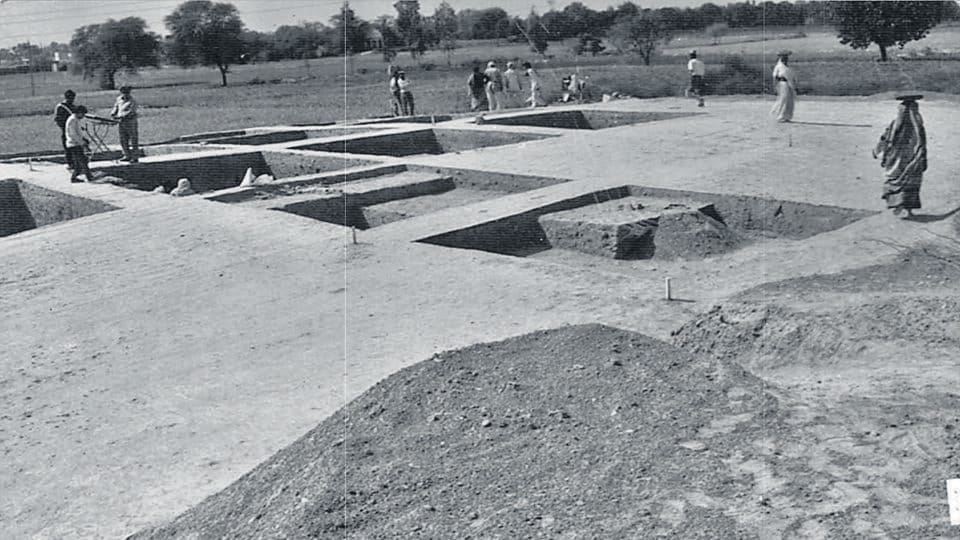
Go back further and the ground has even more history. At Bhorgarh, near present-day Narela, in the early 1990s, the Archaeological Survey of India (ASI) dug up Late Harappan pottery. They also found Painted Grey Ware from the Vedic period and material from the Kushan era. An inscription at the site links it to the Tomar rulers of Delhi. During the Delhi Sultanate, Narela was a halting point for armies moving to or from the Capital. Its sarai sat on the Grand Trunk Road, the highway that ran from Delhi to Lahore and Kabul.
Also Read I GenZ to GenAlpha, what explains the discontent?
A “place with no past”
The Mughal emperor Jahangir writes of staying a night there in 1605. In 1757, a Maratha force fought off part of Ahmad Shah Abdali’s army near Narela, four years before the two sides met again at Panipat. By the mid-1800s, Narela was already a flourishing market town, the nearest one to Delhi itself. Its grain market, civil hospital, and reformist schools came a little later, between 1913 and the 1920s.
None of this history is hidden. But it has never been pulled together into one account. So most people treat Narela as a place with no past. This happens across Delhi. Many neighbourhoods that look new or ordinary sit on ground that has been settled and fought over for centuries. Delhi keeps forgetting its own depth.
This forgetting matters more now because of what Narela has become.
Also Read I Growing poverty of a once-rich language
Narela now
In August this year, authorities carried out a controlled operation in Narela, destroying rocket launchers, rifles, and ammunition seized as part of a terror case elsewhere in the country. Narela was picked for a simple reason: the same emptiness that makes it hard to sell as a home.
In the 2011 census, the wider Narela sub-district, which stretches across some 28 revenue villages, had a population of about 810,000 people. But the Delhi Development Authority (DDA)’s own sub-city project, a separate and much smaller stretch of land within this area, tells a different story. It was meant to grow from roughly 180,000 residents in 2001 to a holding capacity of over 16,00,000 by 2021. That target was never close to met.
In Golden Apartment, one of Narela’s larger complexes, only about 600 of 1,600 flats are occupied. In 2021, the government told the Rajya Sabha that of nearly 57,000 DDA flats sold since 2014, around 15,500 had been returned by buyers. 79% of those returns came from Narela alone. One resident in Sector G-2 described the silence in his building as the silence of a graveyard. Delhi usually fills every housing gap fast, legally or not. In Narela, thousands of finished flats sit untouched by that same pressure. The reasons residents give are simple: no jobs nearby, no working metro yet, unreliable water, and a long commute into the rest of Delhi.
Also Read I Poor policy gives a good biofuel bad rep
The DDA’s response has been to rename the sub-city in 2025. It is now called Vindhyachal. In July this year, a new scheme offered a 25% discount on 1,200 ready-to-move flats. It leaned on the same promise: better roads, and a metro line still years away.
The name was never the real problem. Begum Samru’s camp did not stay either. It came down the next morning and moved on, because in 1815, as now, there was nothing at Narela yet worth staying for.

Stay updated with all top Cities including, Bengaluru, Delhi, Mumbai and more across India. Stay informed on the latest happenings in World News along with Delhi Election 2025 and Delhi Election Result 2025 Live, New Delhi Election Result Live, Kalkaji Election Result Live at Hindustan Times.


