
 E-Paper



Resident bodies help govt implement Covid measures as cases surge
Delhi on Monday witnessed 3,548 cases, at the back of 64,003 tests, at a positivity rate of 5.54%. Delhi’s positivity rate stayed below 5% for 124 days till it crossed that threshold on Monday.

 Prefer HTon Google


As the Covid graph of the Capital continues its steep northward surge, the Delhi government has fallen back on the help of resident welfare associations (RWA) across the city to help it in implementing containment measures to check the virus spread, senior state officials said on Monday.
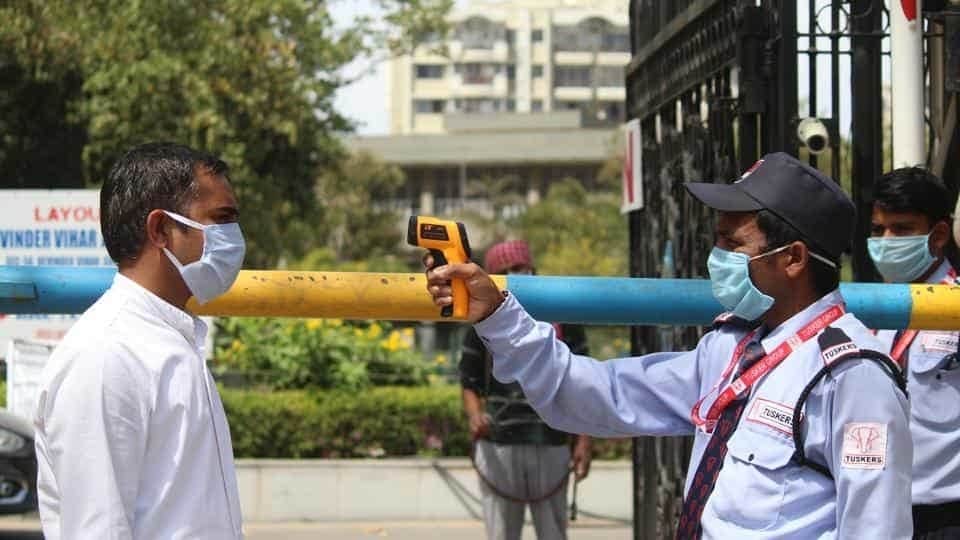
Delhi on Monday witnessed 3,548 cases, at the back of 64,003 tests, at a positivity rate of 5.54%. Delhi’s positivity rate stayed below 5% for 124 days till it crossed that threshold on Monday.
Officials said that RWAs across the city had started working in sync with various district administrations to help the government increase Covid vaccination coverage and ensuring delivery of essential goods at the doorsteps of patients in home isolation, the official added.
“The government has held hundreds of meetings with resident welfare groups across the city since the beginning of the pandemic, seeking their cooperation in Covid-19 management. Such groups have been immensely helpful in the fight against the virus on a wide range of areas – increasing tests, making home isolation and containment possible, implementing Covid-19 regulations — especially after lockdown restrictions were relaxed — and now in the vaccination drive,” said Delhi revenue minister Kailash Gahlot on Monday.
On April 1, when the vaccination drive opened for all individuals aged over 45 years, a few vaccine sites in north-east Delhi recorded unusually high turnouts.
“We witnessed a lot of people arriving from specific localities in large groups. On the first day, we first saw a bus full of beneficiaries arrive at the vaccine site. Then electric rickshaws full of beneficiaries started making rounds. When this phenomenon into the second day, we realised that the mass arrival of beneficiaries was a result of an initiative by local resident welfare groups. It helped speed up the vaccination drive,” said a medical officer in-charge of a vaccine site in north-east Delhi, who did not wish to be identified.
Since April 1, several vaccine sites across the city have witnessed a similar trend – large groups of people arriving to get their shots. Most of these beneficiaries often turn out to be neighbours from specific blocks and pockets of localities — like GTB Enclave, Keshavpuram, Model Town and Sarvapriya Vihar among others, said senior officials in the health and revenue departments of the government.
Senior government officials said that hundreds of resident welfare associations across the city have also been helping the district administrations in scaling up tests and delivering essential goods to the residence of home isolated patients. As on Sunday, Delhi had 7,144 individuals in home isolation.
“Delhi will not see a lockdown any time soon. So Covid-19 cases will fluctuate. This means that the government has to keep up its testing, tracing, isolation and vaccination efforts. And they cannot do it alone. Community involvement is vital. Our vaccination endorsement drives have so far been successful,” said BS Vohra, president of the East Delhi RWA front.
Saurabh Gandhi, general secretary of United Residents of Delhi – another umbrella body of RWAs in the city – said: “Other than helping with vaccination registration, test camps and distribution of face masks, several RWAs are now also ensuring the supply of essentials both to the residence of home isolated patients and in containment zones in their neighbourhoods. It is a bit easy now, compared to the situation last year, because containment zones are much smaller. There are no barricades. One can easily drop items outside the door.”
As on April 4, Delhi had nearly 3,000 micro-containment zones.
“Now that the vaccine drive will be open for people aged over 45 years, we will intensify our campaign. We have already arranged cars, for elderly people who register themselves in advance in slots between 9am and noon. We can extend the timings in the coming days,” said Atul Kapoor, president of the south Delhi RWA Federation.
Dr Jugal Kishore, head of community medicines department in Safdarjung Hospital, said: “Such community participation is extremely essential in the management of pandemics and disasters. It is good that a city like Delhi is witnessing more community participation at a time when cases are increasing again. The government should engage in more systematic ways to convert such community participation into an asset in the fight against Covid-19.”


