
 E-Paper



Residents welcome new ELV order as a ‘reasonable’ move
The Supreme Court temporarily halts coercive measures against owners of old vehicles in Delhi, allowing them to keep their cars pending further hearings.


Owners of so-called End-of-Life Vehicles (ELVs) vehicles in the Capital won temporary reprieve on Tuesday, as the Supreme Court barred coercive measures against them, pausing a decade-old policy that deregisters cars and two-wheelers solely by age.
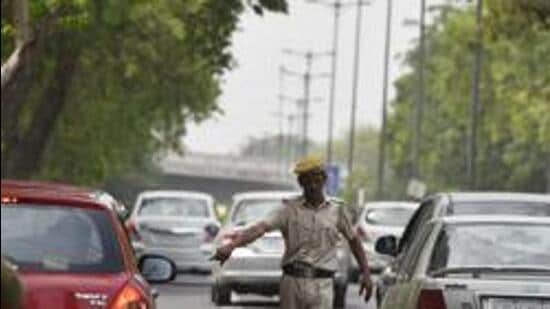
The interim order applies to ELVs – diesel vehicles over 10 years old and petrol vehicles over 15 years old – that were declared “unfit” for Delhi roads under a 2014 National Green Tribunal (NGT) order, which was later reinforced by the apex court. The Delhi government has deregistered more than 6.5 million such vehicles.
But for now, owners may keep their vehicles without fear of towing or forced scrapping, pending further hearings.
“The apex court’s order today, although only an interim order against coercive steps with regards to such vehicles, is a welcome deviation from the very unreasonable approach… In these 10 years, thousands of people, including myself and several of my clients, had their cherished cars seized and scrapped forcefully, without there being any scientific backing behind the decision. I hope, moving forward, a more reasoned approach will be taken towards vehicular pollution,” said Nikhil Jain, an ELV owner and lawyer.
Current ELV rules allow only three options for the owner of such vehicles: transfer vehicles to specified districts outside NCR where they can be used, scrap them, or store them off-road at a privately owned parking spot.
Petitioners argued the ban lacked clarity, especially for vehicles with valid fitness certificates. “There needs to be standard procedures and clarity… most people don’t just buy a car every other year,” said advocate Charu Mathur, representing two of the petitioners, Naga Lakshmi and Arun Kumar, whose cars were taken for scrapping.
Many welcomed the court’s move as a shift from blanket bans to emission-based checks.
Mechanic and vintage car restorer Kalim Khan, whose family’s 1948 Humber Hawk II was seized two years ago, said well-maintained vehicles can run cleanly. He alleged irregularities in the scrapping drive, with cars towed at dawn without receipts or compensation.
“It is not as simple as just stop using old cars. There is a whole economy that revolves around upkeep of vehicles too. There are mechanics, painters, electricians and drycleaners,” he said.
Deepak Kumar, another ELV owner, urged permanent removal of the age ban, replaced by annual or biennial emission tests. “Most developed countries have such rules,” he said.
The Delhi government’s transport department has in recent years towed ELVs for scrapping, while the Commission for Air Quality Management (CAQM) in July ordered fuel stations to deny fuel to them. The Delhi government later sought withdrawal of that order, saying it needed more clarity, and filed a plea to review the 2018 blanket ban.
Delhi chief minister lauded the apex court for accepting the Delhi government’s petition.
“Through a review petition, we had requested that vehicle evaluation be based not only on their age but also on their mileage and emission levels, so that only the vehicles that actually cause pollution are identified and acted upon…. This decision strengthens our resolve to maintain a balance between environmental protection and public convenience,” she said.
Environment minister Manjinder Sirsa called Tuesday’s ruling “much-needed relief” for millions of vehicle owners. “While we remain committed to cleaning Delhi’s air, we will also ensure that the rights of our citizens are safeguarded,” he said.
CAQM did not respond to queries. In a recent RTI reply, it admitted it had not conducted independent studies on pollution from diesel vehicles over 10 years old and petrol vehicles over 15 years old.
Policy experts said the ban’s intent was to enforce court orders protecting public health, but better enforcement tools exist. “While age-based rules are a starting point, the real solution lies in identifying high emitters through real-world monitoring and acting on actual emissions data,” said Amit Bhatt, managing director (India) at the International Council on Clean Transportation. “For lasting progress, Delhi and other NCR states must transition to zero tailpipe emission vehicles -- the only truly cleaner path forward.”

Stay updated with all top Cities including, Bengaluru, Delhi, Mumbai and more across India. Stay informed on the latest happenings in World News along with Delhi Election 2025 and Delhi Election Result 2025 Live, New Delhi Election Result Live, Kalkaji Election Result Live at Hindustan Times.


