
 E-Paper



SC signals rethink on crackers, allows production of green ones
On Friday, while continuing the ban on the sale and storage of firecrackers in the region, the court allowed licensed manufacturers in the region to resume production of certified green crackers.

 Prefer HTon Google


Will there be fireworks in Delhi this Diwali?
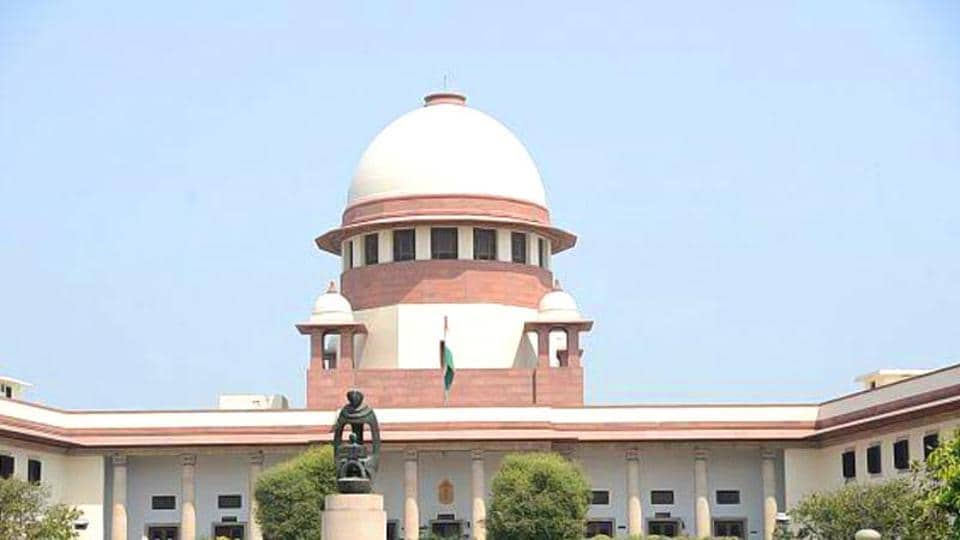
Ahead of Diwali, the Supreme Court and the Commission for Air Quality Management, have signalled a shift from their earlier stance on firecrackers in Delhi and the National Capital Region.
On Friday, while continuing the ban on the sale and storage of firecrackers in the region, the court allowed licensed manufacturers in the region to resume production of certified green crackers, though on the strict condition that they will not be sold in the national capital and adjoining areas.
And CAQM, which recommends and oversees the implementation of measures to reduce pollution in Delhi-NCR and adjoining areas, denied a conclusive link between firecrackers and pollution during the Friday hearing. With the Centre on Friday articulating its opposition to a complete ban on firecrackers, and the court asking the Union ministry of environment, forests and climate change to submit a concrete proposal by October 8, there could still be a change before Diwali.
Friday’s order, delivered by a bench led by Chief Justice Bhushan R Gavai and justices K Vinod Chandran and NV Anjaria, came on a clutch of applications filed by firecracker manufacturers challenging the top court’s April 3 blanket ban. That order, passed in view of Delhi’s “horrible” air quality, prohibited not only the bursting but also the manufacture, sale, and storage of crackers across Delhi and adjoining NCR districts in Uttar Pradesh, Haryana and Rajasthan.
The bench emphasised that “extreme orders create extreme situations,” stressing the need to balance the fundamental right to clean air with the livelihood concerns of thousands of workers dependent on the fireworks industry.
“In spite of there being a complete ban, it cannot be implemented… The ban is hardly implemented,” observed the bench, noting that prohibitions often drive activities underground, as seen in Bihar’s illegal mining mafia.
The court, therefore, stopped short of lifting the Delhi-NCR ban but asked the Centre to evolve a “workable solution” in consultation with the Delhi government, manufacturers, traders and other stakeholders. The Union ministry of environment, forests and climate change has been directed to submit a proposal by October 8.
“We find that it will be appropriate that the Union government comes out with a solution after taking all stakeholders, including the Delhi government, manufacturers and sellers of crackers,” stated the court order.
Senior advocates Balbir Singh and K Parmeshwar, appearing for firecracker manufacturers, urged that production be allowed since the festive season is the peak demand period. They highlighted that their clients hold dual certifications- -- from the National Environmental Engineering Research Institute (NEERI) for green formulations, and from the Petroleum and Explosives Safety Organisation (PESO) for explosives licenses. According to NEERI’s website, 1,403 manufacturers are registered across India, including 51 in Uttar Pradesh, 22 in Punjab and Haryana, and one in Delhi.
The bench eventually accepted the plea but made it conditional: “We permit manufacturers who have valid certification of green crackers…However, the same shall be subject to the undertaking that they will not sell their products in the prohibited area (Delhi-NCR).”
During the hearing, the Centre, represented by Additional Solicitor General Aishwarya Bhati, opposed a complete ban, recalling that in the 2018 Arjun Gopal ruling the Court had itself permitted community fireworks and green crackers. She stressed that “a complete ban is not a solution.”
But senior advocate and amicus curiae Aparajita Singh reminded the court that its April 3 ban was prompted precisely by such enforcement failures and by the capital’s “extraordinary pollution scenario” during the winter months, which poses severe health hazards to children, the elderly, and the infirm.
Singh further countered: “Citizens have a right to breathe. If the government cannot control what is made available in the market, the government has no face to say in court to remove the ban.”
The court, however, pointed out that the April 3 order “brushed aside” the 2018 Arjun Gopal order by merely saying a lot of water has since flown by.
“You have to balance things. You cannot have it one way. When we stopped construction activity in Delhi-NCR (as part of emergency measures to curb pollution), we received petitions from construction labourers who were not paid compensation by states. Extreme orders create extreme situations. These are persons who come from all parts of the country to earn a livelihood,” it remarked.
CAQM too, advised a middle path. Represented through senior advocate Ruchi Kohli, CAQM’s affidavit advocated a transparent, year-round monitoring mechanism, surprise inspections by PESO and state authorities, and sample checks at manufacturing and retail sites. The Commission also highlighted glaring gaps, citing irregularities, including the sale of QR codes (used to identify genuine green crackers) by licensed producers to unregistered ones, and the absence of any mechanism to verify whether products being sold truly meet emission standards after licensing.
But Kohli denied a conclusive link between firecrackers and pollution during the Friday hearing. “There is no study done on what is the contributory factor of firecrackers pre and post-Diwali. It is observed that after burning of crackers, the particles subside in 3-4 days.” When the bench sought a clear stand of CAQM, Kohli said: “A balance has to be struck between all interests. The green cracker formulation can be approved. Apart from this, we will abide by what the court directs.”
Notably, the Supreme Court’s rethink comes barely five months after another bench, led by Justice Abhay S Oka, reaffirmed the 2024 ban on firecrackers, insisting that unless green crackers caused “bare minimum” pollution, there was no scope for relaxation. At the time, neighbouring NCR states had followed Delhi’s year-round prohibition on the court’s nudge.
The matter will now return on October 8, when the Centre is expected to present its proposal for a “balanced” framework.


Stay updated with all top Cities including, Bengaluru, Delhi, Mumbai and more across India. Stay informed on the latest happenings in World News along with Delhi Election 2025 and Delhi Election Result 2025 Live, New Delhi Election Result Live, Kalkaji Election Result Live at Hindustan Times.


