E-Paper



Winds neutralise impact ofeffigy burning, air still ‘poor’ in Delhi
CPCB data also showed that post-Dussehra pollution this year was significantly higher compared to 2022

 Prefer HTon Google


Delhi’s air quality deteriorated on Wednesday to clock an air quality index (AQI) reading of 243 (poor), according to the Central Pollution Control Board’s national bulletin at 4pm. However, it remained in the same category as Tuesday, when the reading was 220 (poor), despite effigy burning during Dussehra festivities — the reason for which was largely attributed to an increase in wind speed and the subsequent dispersal of pollutants from 6am.
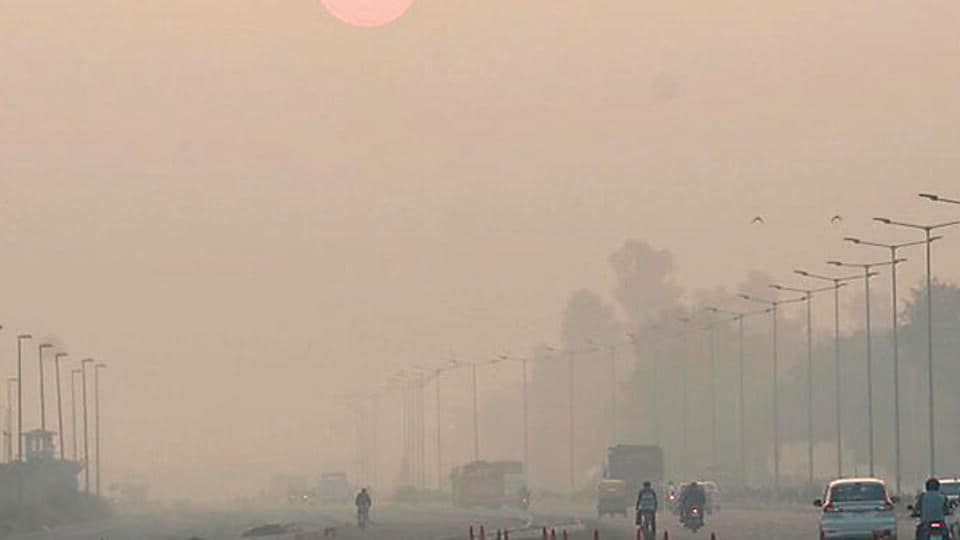
CPCB data also showed that post-Dussehra pollution this year was significantly higher compared to 2022 when the AQI was in the “satisfactory” zone (79) the next day due to very strong winds. However, this year was less polluted compared to post-Dussehra days in 2021 and 2020, when the readings were 284 (poor) and 353 (very poor), respectively.
The Early Warning System (EWS) for Delhi — a forecasting model under the ministry of earth sciences — had on Tuesday said the AQI will drop to “very poor” on Wednesday due to a combination of calm winds at night and the accumulation of pollutants post effigy burning.
The body on Wednesday said AQI will likely remain “poor” till Saturday with no significant changes in meteorological conditions.
Experts said Delhi was aided by good ventilation and an increase in wind speed from 6am which allowed pollutants to disperse easily and prevented the AQI from dropping to “very poor” (313) again. The Capital’s AQI dipped to the “very poor” on Sunday for the first time this season before it marginally improved to “poor” (263) on Monday.
“The average wind speed on Wednesday was 10-12 km/hour, during the day. We also saw clear skies during the day, which allowed significant ventilation and has helped Delhi’s pollution levels,” said Kuldeep Srivastava, scientist at India Meteorological Department.
“The air quality is likely to be in the ‘poor’ category on Thursday and Friday. It will then be in the upper end of the ‘poor’ category on Saturday. The outlook for the subsequent six days shows air quality will oscillate between ‘poor’ and ‘very poor’ categories,” EWS said.
The CPCB classifies an AQI between 0-50 as “good”, between 51 and 100 as “satisfactory”, between 101 and 200 as “moderate”, between 201 and 300 as “poor”, between 301 and 400 as “very poor”, and over 400 as “severe”.
Meanwhile, Delhi’s maximum temperature on Wednesday was 31.6 degrees Celsius (°C), which is around normal for this time of the year. The minimum temperature was recorded at 16°C, a degree below normal. The minimum is forecast to hover around 16°C till Saturday, before dipping to 15°C on Sunday. The maximum is forecast to hover between 31°C and 32°C during this period.
Last year, Delhi’s AQI on Dussehra (October 5) was 211 (poor). Despite effigy burning, it significantly improved to touch “satisfactory” the next day, recording an average AQI of just 79 — the lowest in the eight years before 2022 as strong winds of up to 30 km/hour were recorded in the Capital. Delhi-NCR at the time was under the influence of a western disturbance, which also brought rain to some parts of NCR on the day after Dussehra.