
 E-Paper



Yamuna flows above danger level in Delhi
According to the Central Water Commission (CWC), the water level in the river recorded at the Old Yamuna Bridge dropped from 206.57m at 4am to 205.94m at 10pm


The Yamuna continued to flow above the danger mark in Delhi even as city agencies stayed on alert, placing sand bags to prevent the river water from flowing into the low-lying areas with several localities situated on the floodplains continuing to be inundated and hundreds still living in relief camps set up on roads along the eastern banks of the river.
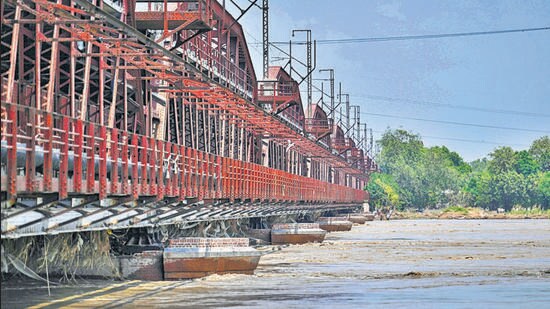
According to the Central Water Commission (CWC), the water level in the river recorded at the Old Yamuna Bridge dropped by a few points — from 206.57 metres at 4 am to 205.94m at 10pm — but it was yet to go down the danger level of 205.33m.With the water being released at the Hathinikund barrage dropping to 50,000 cusecs from 200,000 cusecs on Saturday, the commission has predicted that the river may go down to 205.75m by 2am on Tuesday.
Rail operations at the colonial Yamuna bridge, which were stopped on Sunday night in view of the rising water levels, resumed on Monday as the volume of water being released into the river went down, officials said.
Delhi development minister Gopal Rai said that all departments have been directed to ensure availability of essential items such as food, drinking water, toilets, and medical aid in the relief camps until the situation returns to normal. “The river once again crossed the danger mark due to the increase in flow at Hathinikund barrage... The water level of Yamuna is gradually declining now. If the flow of water at the barrage stays low, the Yamuna is expected to go below the danger mark by tonight,” he said.
CWC data showed that the water flow release from Hathinikund was around 36,000-44,000 cusecs throughout Monday. The maximum flow recorded on Monday was 57,671 cusecs at 3pm. An alert is sounded if the flow goes beyond 1 lakh cusecs.
According to the Delhi government, 27,389 people living in low-lying areas have evacuated so far, of which 15,576 were still staying in 40 relief camps.
During a spot check on Monday, HT saw that the river water entered residential areas in Yamuna Bazar while the backflow from sewage lines flooded the back lanes in Majnu Ka Tilla. Sand bags were being placed at vulnerable points to plug the sections from where water could overflow on the Outer Ring Road.
The traffic movement was also curtailed along one lane of the ITO barrage on Vikas Marg where operations to open the three jammed sluice gates continue. In an advisory on Monday, Delhi Traffic Police said vehicular movement will remain affected in one lane on Vikas Marg in the carriageway from ITO towards Laxmi Nagar due to ongoing work on Yamuna barrage. Later in the evening, the right turn towards Vikas Marg from the W-Point at ITO was closed between 5pm and 9pm.
Delhi Jal Board (DJB) officials said it was raising walls around its three water treatment plants but the debris and material floating in the flood water is impacting the water pumps at the plants. Three water plants — Wazirabad, Chandrawal and Okhla — were severely impacted during flood in the Yamuna affecting water supply to major parts in North, West, South and New Delhi areas on July 14. It took three days to DJB to restart supplies.
“We are using divers to keep the water pumps operational and carry out cleaning operations as far as possible. Apart from this factor, there is also very high turbidity in raw water which is leading to wastage of water ,” the official added.

Stay updated with all top Cities including, Bengaluru, Delhi, Mumbai and more across India. Stay informed on the latest happenings in World News along with Delhi Election 2025 and Delhi Election Result 2025 Live, New Delhi Election Result Live, Kalkaji Election Result Live at Hindustan Times.


