
 E-Paper



Activists allege Aravalli forest destruction under ‘Matri Van’ project
According to the Aravallis Bachao Citizens Movement, between eight and 10 earthmoving machines have been deployed since early Monday to flatten and clear an area equivalent to two football fields

 Prefer HTon Google


Environmental activists and local residents have alleged large-scale destruction of a thriving Aravalli forest patch behind Koliwale Baba Mandir and Sun City, Sector 54, under the Haryana government’s “Matri Van” reforestation initiative. The project, inaugurated by the chief minister on August 2, is being executed by a private developer authorised by the Forest Department, they said.
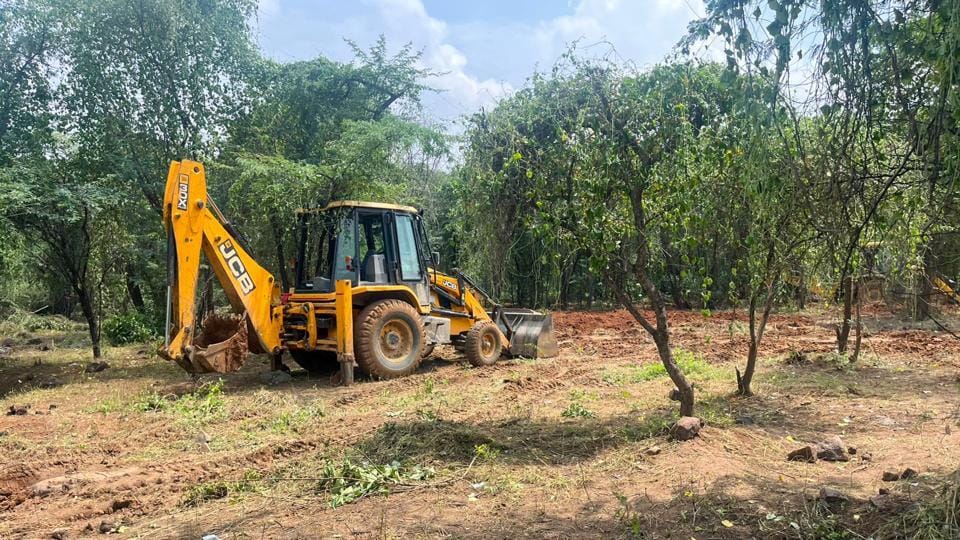
According to the Aravallis Bachao Citizens Movement, between eight and 10 earthmoving machines have been deployed since early Monday to flatten and clear an area equivalent to two football fields. While the patch is dominated by Vilayati Kikar, they claim it sustains diverse flora and fauna, including ground-nesting birds and reptiles, and that the use of heavy machinery is causing irreversible habitat destruction.
“This is not reforestation — this is habitat destruction,” said Vaishali Rana, trustee of the movement. “Introducing cycling tracks, yoga centres and recreational structures here is not conservation but an urban park plan to benefit nearby luxury apartments.”
The group has flagged potential violations of the Indian Forest Act, 1927; the Forest (Conservation) Act, 1980; and the Wildlife (Protection) Act, 1972, alleging ecological damage, misuse of heavy machinery in fragile terrain, and a conflict of interest in awarding the project to developers with a past record of environmental violations.
Col S.S. Oberoi, another trustee, said the choice of site was flawed. “If the aim is truly rewilding, why target a patch that already has a thick canopy? Restoration should focus on degraded and barren Aravalli stretches, not thriving forest land.
Kusum Sharma, chairperson of the Suncity RWA, alleged irregularities in the project’s execution. “I saw a developer’s horticulture team removing large logs and clearing trees. They could not show any paperwork or tender documents. If this is part of the Matri Van project, why use JCBs instead of manual labour? The same Forest Department that prohibits cutting even small stems during monsoon is now allowing large-scale clearing.”
In response, Forest officials denied the allegations. Divisional Forest Officer (DFO) Gurugram, Ramkumar Jangra, said, “As per the plan and directions of the forest minister, we are removing Kikar and planting native species such as pipal, jamun, and banyan to benefit wildlife. The work is being done by forest teams, not private contractors clearing for construction.”
Neelam Ahluwalia, a founding member of People for Aravallis, warned of long-term consequences. “In water-stressed, polluted Gurgaon, the Aravallis are our only water recharge zones and green lungs. Removing mature trees in such critical areas is beyond logic and threatens both residents and wildlife. We need a Green Charter and Liveability Index for the city.”
Activists have demanded an immediate halt to earthmoving operations, an independent ecological assessment, and an investigation into the project’s awarding process. “Destroying a forest to ‘create’ a forest is greenwashing and a betrayal of public trust,” said Rana.

Stay updated with all the Breaking News and Latest News from Mumbai. Click here for comprehensive coverage of top Cities including Bengaluru, Delhi, Hyderabad, and more across India along with Stay informed on the latest happenings in World News.


