
 E-Paper



BJP’s Rao Narbir Singh and Mukesh Sharma ramp up outreach
Ahead of Haryana elections, BJP candidates intensify outreach, focusing on civic issues and infrastructure while criticizing Congress's governance record.

 Prefer HTon Google


With just days to go for the Haryana assembly elections, BJP candidates Rao Narbir Singh from Badshahpur and Mukesh Sharma from Gurgaon have intensified their outreach efforts, prioritising civic issues affecting residents. Both leaders are connecting directly with voters through visits to condominiums, rallies, and public gatherings, promising to enhance infrastructure and improve residents’ daily lives. Both candidates have focused their campaigns on civic concerns, and have drawn strong support from resident welfare associations (RWAs) and local leaders.
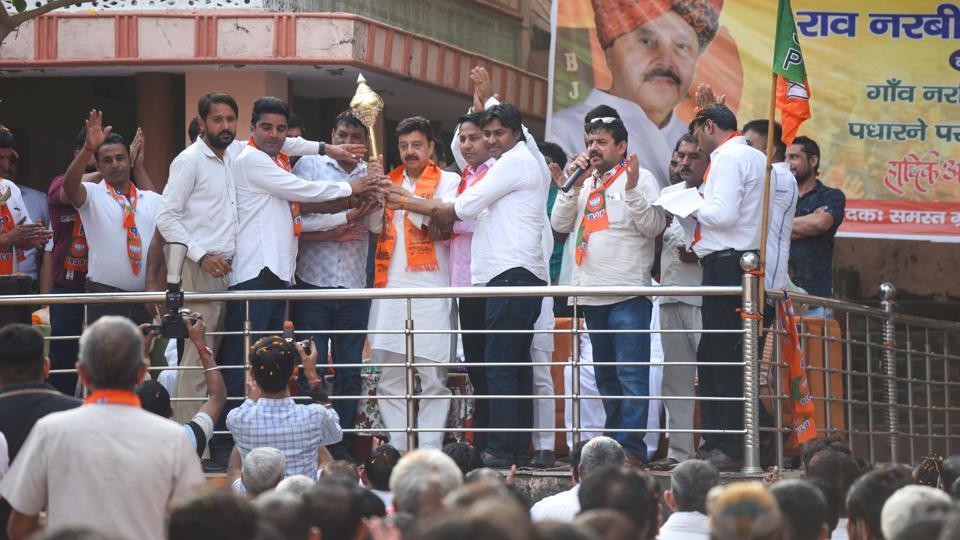
Rao Narbir Singh’s condominium outreach
Rao Narbir Singh, the BJP candidate from Badshahpur, is visiting condominiums with the help of RWAs to engage with urban middle-class voters. Singh’s campaign promises to address key issues such as improving road infrastructure, resolving water and power shortages, and bolstering residential security. Drawing on his previous tenure, Singh emphasised his contributions to road development and better connectivity in the region, pledging that these issues will remain a top priority if he is re-elected.
Singh is also holding rallies in rural areas. He has promised to develop key infrastructure such as roads, healthcare, and public amenities, and vowed to provide opportunities to the youth through skill development initiatives.
Singh criticised the Congress’s governance record, saying, “Under Congress, Haryana fell behind in providing jobs and growth opportunities. Between 2004 and 2013, only 4.62 million formal sector jobs were created in the state. In contrast, under the BJP government, 16 million formal sector jobs were generated. Congress neglected youth employability, while we, through state initiatives, have led Haryana to become one of the top contributors to India’s workforce.”
He also highlighted findings from the 2024 India Skills Report, which noted that 76.47% of graduates from Haryana are employable, with the state leading in employability skills such as computer literacy, critical thinking, and English language proficiency.
Mukesh Sharma promises world-class infra
In Gurgaon, BJP candidate Mukesh Sharma has held public meetings in areas such as Ashok Vihar, Sushant Lok, DLF Phase 1, and Surat Nagar and spoken about his vision for a corruption-free government, increased women’s safety through dedicated police stations, and the creation of government jobs without bureaucratic delays.
Sharma said that his vision for Gurgaon includes world-class infrastructure such as roads, flyovers, and advanced healthcare facilities like PGI. He has pledged to upgrade education infrastructure, promising new computer labs and improved schools.
On Sunday, Manohar Lal Khattar reached Gurgaon in support of Mukesh Sharma and addressed the public, urging them to vote for Sharma.
Khattar accuses Congress of being anti-Dalit
Union Minister Manohar Lal Khattar lashed out at Congress during a rally in Gurgaon on Sunday, calling the party “anti-Dalit” and a “grand fraud.” Addressing a gathering organised by the Punjabi community, Khattar pointed to various instances from Congress’s rule, such as the Mirchpur, Gohana, and Bhagana incidents, as evidence of the party’s mistreatment of Dalits. He accused the former Congress government, led by the Hooda family, of looting Haryana and disrespecting marginalized communities. Khattar further alleged that internal conflicts within the Congress party, including caste-based slurs aimed at senior Dalit leaders like Kumari Selja, reveal the party’s deep-seated bias. He vowed that the BJP would show Congress “stars in the daylight” in the upcoming Haryana Assembly elections.
Khattar also highlighted the BJP’s move to appoint Nayaab Singh Saini, a Dalit leader, as the chief ministerial candidate, showcasing the party’s inclusiveness and strong organizational structure. He pointed out that Ashok Tanwar, a former Dalit Congress leader, had to leave the party due to its discriminatory practices. As part of his attack on the opposition, Khattar emphasized the disunity within Congress, with multiple factions vying for control, and criticized Deepender Hooda for using disrespectful language towards him and the Punjabi community.


