
 E-Paper



Haryana govt to consider natural drainage features while developing urban areas
The Haryana government plans to consider natural drainage features and contours in the development plan of urban areas to reduce urban flooding.

 Prefer HTon Google


The Haryana government has decided to give due consideration to natural drainage features and contours while creating the final development plan of an urban area in order to ensure that instances of urban flooding are reduced, officials aware of the matter said on Monday.
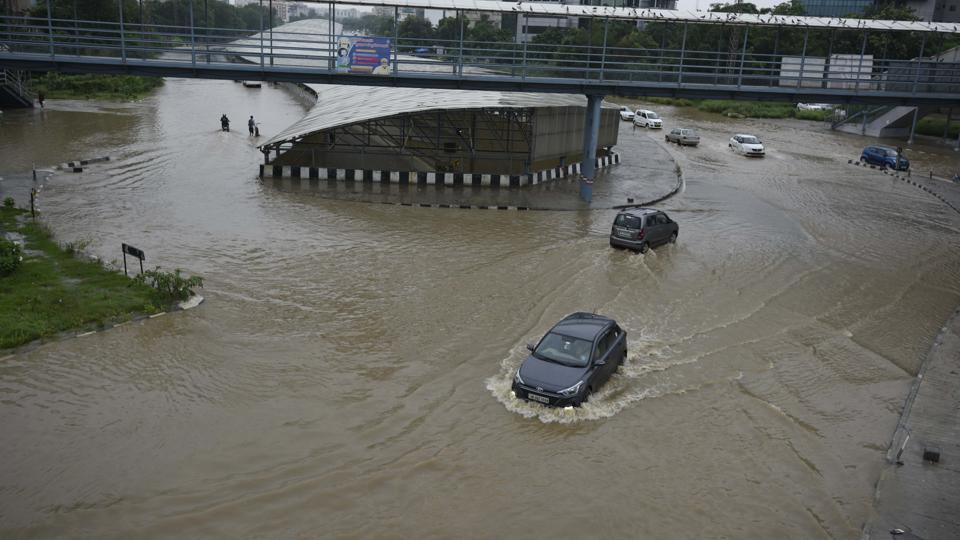
Arun Kumar Gupta, the additional chief secretary of the department of town and country planning (DTCP), in an order issued on December 22, said that “it has been decided henceforth, while preparing development plans, the natural drainage features shall be given due consideration by ensuring contours-based planning, so as to avoid floods in urban areas”.
Waterlogging and flooding are a common occurrence across Haryana’s cities — for example, last monsoon, Gurugram, Faridabad, Panchkula, and Ambala all witnessed heavy waterlogging.
The order further said that DTCP will also seek inputs from the irrigation department to prevent incidents of urban flooding, and that adequate measures will be taken in future to ensure that no waterlogging occurs in areas proposed for urbanisation.
It was also observed that the present mechanism to prevent urban flooding was found inadequate.
“We are presently preparing the final development plan of Pataudi and have taken into account the topography, flow of seasonal rivers, water flow, catchment areas and related issues. This planning ecosystem will ensure that urbanisation happens in areas, which are not prone to flooding and are not low lying. The building permissions and licenses will be issued taking into account these factors. Also, cities won’t have to simply depend on mechanical pumping to transfer flood water to drains and lakes but it can happen naturally based on gravity,” said a senior planning official based in Gurugram, on condition of anonymity.
Experts, meanwhile, said that contour planning and checking the topography has always been a part of the town planning process, but the focus has been lost at the time of execution. “All these factors are included in town planning but it is at the time of execution that these issues are lost,” said Rajvir Singh, former chief town planner, Haryana.


