
 E-Paper



‘Illegal dumping site’ emerges near Sultanpur National Park in Gurugram
The site is located just three kilometers from the park’s boundary in the revenue estate of Garhi Harsaru and falls under the jurisdiction of the Municipal Corporation of Manesar (MCM).

 Prefer HTon Google


An illegal dumping site has surfaced within the eco-sensitive zone (ESZ) of Sultanpur National Park, raising alarm among environmentalists, residents, and public health experts. The site is located just three kilometers from the park’s boundary in the revenue estate of Garhi Harsaru and falls under the jurisdiction of the Municipal Corporation of Manesar (MCM).
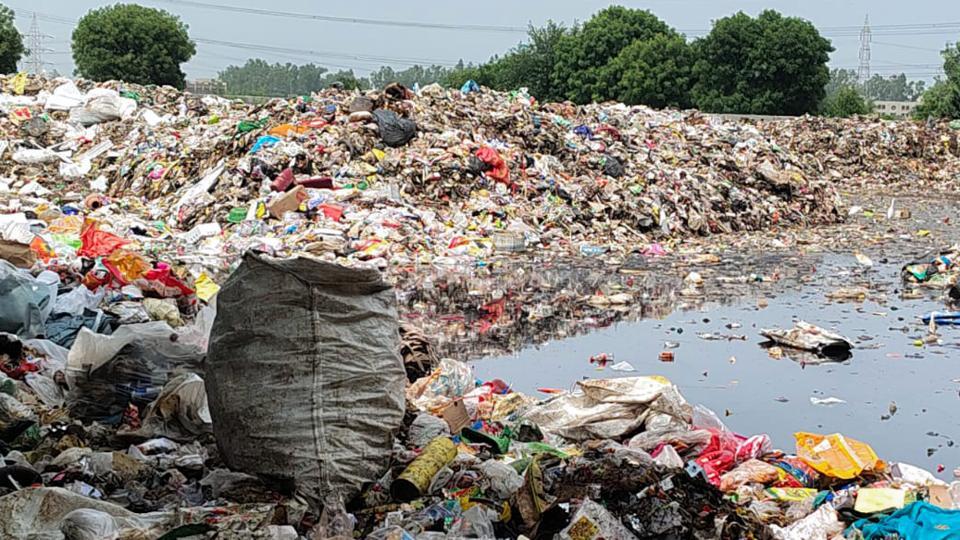
The area is not only home to schools and residential colonies but also lies close to a globally recognised wetland that hosts hundreds of migratory bird species every year. Despite the ecological importance of the region — and the fact that both the District Forest Officer (DFO) (Wildlife) and DFO (Territorial) are members of the ESZ monitoring committee — no immediate action has been taken to halt the dumping.
To be sure, an eco-sensitive zone (ESZ) is a designated buffer area around protected wildlife habitats, where activities are regulated to safeguard biodiversity and prevent ecological damage.
Vaishali Rana, a trustee of the Aravallis Bachao Citizens Movement, strongly criticised the inaction. “MCM is blatantly flouting ESZ regulations. Their inaction is a dangerous disregard for the well-being of the ecosystem and the people living here. This garbage mound will become a breeding ground for mosquitoes, spreading life-threatening diseases. The stench is unbearable, and the air quality is deteriorating rapidly. It’s a ticking time bomb,” Rana said.
She added that the dumping site not only violates the principles of the eco-sensitive buffer but also undermines years of conservation work at Sultanpur National Park.
Local residents have also expressed outrage, citing both environmental and health hazards. “We are forced to live with this garbage mountain,” said Mahavir Yadav, a resident of Garhi village. “Authorities are supposed to protect our environment, but they are the ones creating this mess. Our children play nearby, and we fear for their health every single day.”
Kunal Kumar, a college student from the same village said, “The pollution from this site is already affecting air and water quality. Respiratory problems and other illnesses are becoming more common. This is a huge step backwards for Gurugram’s environmental efforts.”
When contacted about the issue, Nijesh Manderna, executive engineer at MCM, confirmed that the location is the corporation’s designated dumping ground and is enclosed by a boundary wall. “We have received complaints about this site and have stopped dumping for the moment,” said Manderna. “Since this is within the buffer zone radius, we are searching for alternate dumping sites on corporation owned land within Garhi village. Until we find another suitable location — ideally outside the five-kilometre radius from the national park — the current site will continue to be used.”
Environmental experts warn that dumping waste within an eco-sensitive zone could constitute violations under the Environment Protection Act, 1986, and guidelines laid down by the Ministry of Environment, Forest and Climate Change (MoEFCC). They also point out that Sultanpur National Park is a critical habitat for over 250 bird species, including endangered and migratory species protected under the Wildlife Protection Act, 1972.
The site’s proximity could result in contamination of water bodies and irreversible damage to the wetland ecosystem.
With the ongoing monsoon season, concerns are mounting that the waste could leach into groundwater and spread vector-borne diseases. Activists have called for immediate intervention from the Haryana State Pollution Control Board, the forest department, and the National Green Tribunal (NGT).


Stay updated with all the Breaking News and Latest News from Mumbai. Click here for comprehensive coverage of top Cities including Bengaluru, Delhi, Hyderabad, and more across India along with Stay informed on the latest happenings in World News.


