
Sign in

MCG mandates metal barricades at Gurugram work sites to curb dust pollution

Projects have 15 days to comply. Violators risk stop-work notices, sealing, utility disconnections, environmental compensation and blacklisting.

Published on: Jun 25, 2026, 04:00:02 IST
Share
Share via
  • facebook
  • twitter
  • linkedin
  • whatsapp
Copy link
  • copy link

The Municipal Corporation of Gurugram (MCG) on Wednesday mandated corrugated galvanized iron (GI) or metal sheet barricading at all construction, reconstruction, demolition and excavation sites to curb dust pollution and improve air quality.
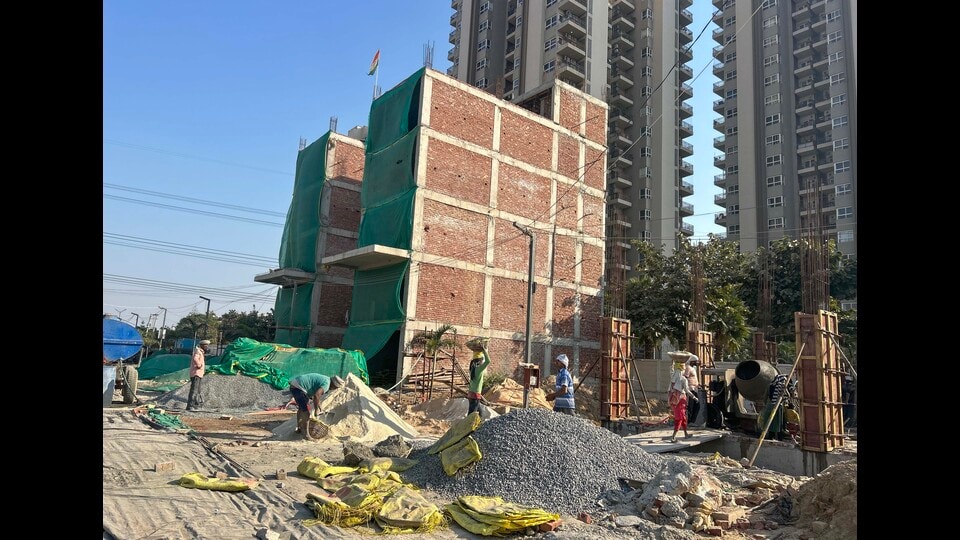
Buildings must use full-height dust screens, while a dedicated enforcement cell will address complaints within 24 hours and monitor compliance. (HT Archive)

The order, issued by MCG commissioner Pradeep Dahiya, follows directions from the Commission for Air Quality Management (CAQM) and provisions under the Environment (Construction and Demolition) Waste Management Rules, 2025. Officials said dust and fugitive emissions from construction activities are major contributors to pollution in Gurugram and the National Capital Region (NCR).

Under the guidelines, no construction or demolition activity can begin or continue unless the entire site perimeter is enclosed with corrugated GI or metal sheet barricading before work starts and throughout the project period. Temporary fencing, tarpaulin, cloth, tin sheets or mesh screens cannot be used as substitutes, said MCG officials.

Barricading must be made of opaque galvanized iron or colour-coated corrugated metal sheets, with a minimum thickness of 0.50 mm and be fixed to a rigid steel framework, the order states.

“Construction sites with a plot area of 500 square metres and above must have barricades at least three metres high, while other sites must maintain a minimum height of 2.4 metres. Along boundaries adjoining occupied buildings, schools, hospitals or busy roads, barricades must be 3.6 metres high or higher, depending on pollution-control norms,” said Dahiya.

MCG has also mandated full-height dust screening for structures under construction or demolition. Buildings must be covered with dust-screening fabric or green netting on all exposed sides. No structure taller than one storey will be allowed to continue construction without such screening, while demolition work can begin only after the structure is fully covered.

The corporation has directed site operators to maintain barricades properly, prevent encroachment on public roads and display project details, including builder’s name, building plan sanction number and contact details of the person responsible for dust control.

To ensure compliance, MCG will establish a dedicated dust control and enforcement cell headed by a nodal officer. Citizens can report violations through a dedicated complaint mechanism, with authorities required to act within 24 hours.

Officials said violators may face stop-work notices, environmental compensation, penalties, sealing of premises, disconnection of water and electricity connections and blacklisting of contractors or developers. Ongoing projects have 15 days to comply with the order.

  • Leena Dhankhar
    ABOUT THE AUTHOR
    Leena Dhankhar

    Leena Dhankhar is Senior Editor and Bureau Chief, Gurugram, at Hindustan Times, where she has spent over 17 years chronicling the transformation of one of India's fastest-growing urban regions. From starting her career as a crime reporter to leading the Gurugram bureau, her journalism has been defined by investigative reporting, in-depth storytelling and an unwavering focus on public interest. Over nearly two decades, she has reported extensively across crime, politics, civic governance, elections, real estate, environment, courts, sports, education and entertainment, covering Gurugram, Faridabad, Nuh and Palwal. Her reporting has exposed several major scams and systemic failures, including insurance frauds, waste management irregularities, illegal arms manufacturing units in Nuh, illegal mining in the Aravallis, organised crime networks and governance lapses affecting millions of residents. Known for her investigative work and exclusive stories, Leena has reported on high-impact national issues, including the Nicaragua charter flight carrying Indian migrants that was turned back amid allegations of human trafficking, exposing the growing network of illegal immigration rackets. Her work has also focused on gang wars, prison administration, juvenile crime, women and child protection systems, the functioning of the Juvenile Justice Board and Child Welfare Committee, and environmental challenges such as pollution, waterlogging and deteriorating civic infrastructure. Beyond hard news, Leena has extensively documented Haryana's rich heritage, forests and wildlife, bringing attention to the state's historical landmarks, biodiversity, conservation efforts and ecological challenges through immersive reportage and feature writing. Her journalism has consistently gone beyond breaking news. She has documented Gurugram's rapid urbanisation through long-form narratives and enterprise reporting on issues ranging from pothole-ridden roads, flooding and waste management to the changing social fabric of India's Millennium City. She also writes widely read feature columns, including The Outsider, Changemaker, and Concern for Gurugram, profiling people, places and ideas shaping the city's identity. Leena is the author of Gurugram School Murder, published by Juggernaut Books, a deeply reported account of one of India's most high-profile school murder investigations. She is currently working on her second book, an investigative work exploring some of India's most significant scams and fraud investigations. Beyond print journalism, she has expanded her storytelling through public speaking and digital media. She is a TEDx speaker and has produced podcasts exploring Gurugram's transformation, civic challenges and untold stories. Her work reflects a commitment to narrative journalism that combines rigorous reporting with compelling storytelling. A law graduate with an MBA in Human Resources, Leena brings a multidisciplinary perspective to her reporting, particularly on governance, public policy and legal affairs. She has travelled extensively across India to pursue investigative assignments, often reporting from remote locations and conflict-prone areas in search of stories that matter.Read More

Catch every big hit, every wicket with Crickit, a one stop destination for Live Scores, Match Stats, Infographics & much more. Explore now!.

Stay updated with all the Breaking News and Latest News from Mumbai. Click here for comprehensive coverage of top Cities including Bengaluru, Delhi, Hyderabad, and more across India along with Stay informed on the latest happenings in World News.