
 E-Paper



MCG set to fragment Gurugram into 5,000 sqm blocks to improve sanitation service
City to be divided into 5,000 sq m zones with one sanitation worker each as drone and GIS mapping is used to track cleaning responsibilities.

 Prefer HTon Google


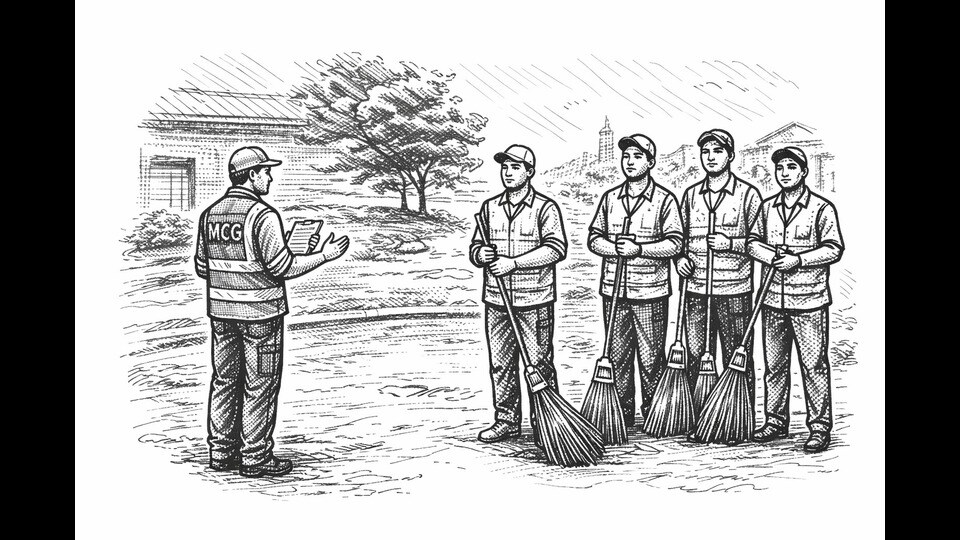
The Municipal Corporation of Gurugram (MCG) is planning to introduce a new sanitation system under which the city will be divided into 5,000 square metre blocks, with one sanitation worker assigned to each block, officials said.
Officials said drone mapping conducted in August 2025, along with geographical information system (GIS) mapping, is being used to carry out block-level mapping of the city. The GIS mapping exercise is expected to be completed by the end of March. According to official data, the total area under the MCG is 298.429 sq km.
According to officials, the total estimated number of blocks to be created has not been finalised yet as the mapping exercise is still underway. They added that the block-based sanitation system is planned to be rolled out from this year once all necessary approvals are obtained. No details regarding the budget allocation for the new sanitation plan have been shared so far, officials said.

Under the proposed system, one sanitation worker will be responsible for road sweeping in each designated block. Officials said poles from node to node will be painted or marked with signage to indicate where a block begins and ends so residents can identify the areas assigned to sanitation workers.
The MCG currently has around 2,900 workers engaged in road sweeping across the city. “We have submitted a proposal to the state government seeking approval for 5,000 sanitation workers for Gurugram,” said Yash Jaluka, additional commissioner, MCG. Officials said the proposal has recently been submitted and is awaiting approval from the state government.
“This plan is being initiated to improve sanitation monitoring and ensure greater accountability. With poles being marked, residents will be able to identify where a block begins and ends. The corporation will also make it publicly visible which sanitation worker is assigned to which block so that residents are aware of the responsibility,” he added.
Currently, road sweeping in Gurugram is carried out manually as well as through machines. In January this month, the Urban Local Bodies (ULB) department approved an extension till March for six private agencies engaged in manual road sweeping after services were disrupted due to delayed payments.
The six agencies were hired in September 2023 on a two-year contract to carry out manual road sweeping, including special cleaning arrangements for tourist and high-footfall areas; night sweeping when required; and routine sweeping.
“Currently, the road-sweeping tender does not specify manpower, so even if contractors provide 1,900 workers, the corporation cannot object if only 1,000 show up,” said Jaluka. “However, the new tender and the proposal submitted to the state government now clearly define the required manpower. With the proposed plan, sanitation will be monitored closely, and since the number of workers will increase and they will be allotted their respective blocks, things will be streamlined,” he added.
According to the MCG’s city action plan, the city requires 38 large-sized mechanical road sweeping machines (MRSMs), but only 18 are currently available, leaving a shortfall of 20 machines. Officials said efforts will be made to procure additional machines in the coming months to bridge the gap.

Stay updated with all the Breaking News and Latest News from Mumbai. Click here for comprehensive coverage of top Cities including Bengaluru, Delhi, Hyderabad, and more across India along with Stay informed on the latest happenings in World News.


