
 E-Paper



Cages, camera traps in place to trap ‘tiger’ in Rehmankheda
Teams set traps near Lucknow after locals reported a tiger sighting. Efforts focus on locating the animal safely before confirming its identity.


Cages and camera traps were installed and teams were deployed to track a ‘tiger’ that was reportedly seen a day before by locals in Rehmankheda — where a tiger stayed put for 108 days in 2012—near Lucknow.
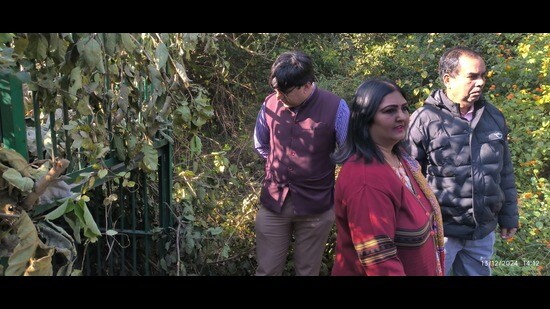
“Local reported that a tiger killed a blue bull (nilgai). We have set up one cage and two more will be in place soon, along with camera traps. The pugmarks, whose pictures we’ve received, suggest they could be of a tiger but a confirmation can only be given once we get a picture via camera traps,” said Renu Singh, the chief conservator of forests, Lucknow division.
“No one has actually seen the tiger. The entire arrangement has been done on the basis of the information provided by locals. Three teams have been deployed to monitor any possible activity of the animal on the ground,” said Sitanshu Pandey, the divisional forest officer of Awadh range.
According to reports, at least 20 kg meat was missing from the blue bull’s carcass. The animal is believed to have reached Rehmankheda via Behta Nallah, which is near Central Institute for Subtropical Horticulture. “We have requested the institute’s director to alert the staff,” said Singh.
Apart from the gadgets on the ground and field staff, thermal drones would also be put to use from Saturday. Officials said. This aerial equipment was used effectively in Bahraich where wolves had terrorised locals weeks ago.
“Once we are sure that it is a tiger, our strategy will change to rescuing the animal. Till then, our aim is to locate the animal and keep the locals safe,” said Singh.
People have been asked to stay indoors and inform forest staff in case they found any hint of a wild animal lurking around.
Officials said they would wait for the animal to turn up over the next few days, and further decision would be taken only when the camera traps the ‘beast’ and the place is safe for both the animal and humans.
“We have to ensure the safety of the animal too. It might have wandered into the area but we need to make sure that it either returns back to its world or is rescued safely,” said Singh.
The Rehmankheda tiger rescued in 2012 was later shifted to Dudhwa Tiger Reserve.


