
 E-Paper



Hulas Khera wetland in Lucknow’s Mohanlalganj to be ecologically restored
A learning visit to prepare the restoration plan was organised by UP forest department in partnership with BBAU’s department of environmental Science and WaterAid, India

 Prefer HTon Google


LUCKNOW The Hulas Khera wetland (also known as Karela Jheel) in Lucknow’s Mohanlalganj tehsil will be ecologically restored and developed as a community reserve. A learning visit to prepare the plan was organised by the UP forest department in partnership with the department of environmental Science, Babasaheb Bhimrao Ambedkar University (BBAU) and WaterAid, India.
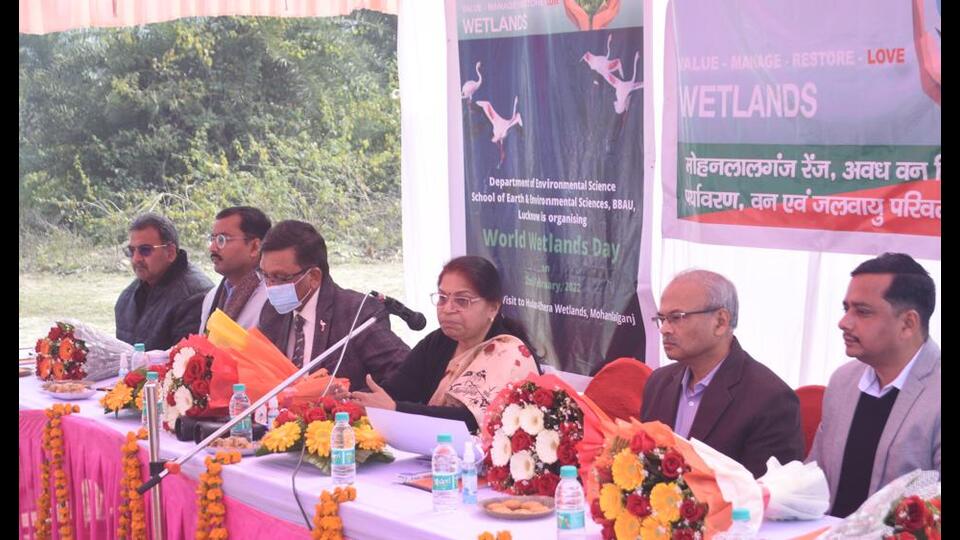
Chief guest of the programme, Mamta Sanjeev Dubey, principal chief conservator of forests and chief wildlife warden of UP, stressed on the need for conserving the wetland ecosystems at Hulas Khera and developing it as an eco-tourism spot. “Wetlands are nesting sites of many endangered and rare birds, including those coming from outside India,” she said.
A restoration map prepared by BBAU was released by her. Later, an interaction session was organized with local residents, farmers, research scholars and officials from the forest department for developing a restoration plan for this wetland. The event was presided over by Kamlesh Kumar, additional principal chief conservator of forests (tiger project) and Neeraj Kumar, chief conservator of forests (eco development), UP.
Ravi Kumar Singh, divisional forest officer, Lucknow said wetlands are protected under Wetlands Rules, 2017, and a notified wetland gets legal protection against encroachment, dumping of waste, and discharge of sewage.
The restoration project would be undertaken by the forest department with the assistance and inputs from BBAU and the local community. Walking trails, boating and other attractions would be also added for birders and nature enthusiasts.
Talking about the geological history of the landscape, Prof Venkatesh Dutta of BBAU said the wetland was once a part of the Sai river system, which changed its course leaving the oxbow lake of around 125 acres.
The area became an ecological hot spot for birds and aquatic animals. Later, due to land use changes and farming activities, some parts of this wetland were lost. He emphasised the need of making this wetland a community reserve and water sanctuary for protection and conservation.
Prof Naveen K Arora of BBAU said due to rapid urbanisation, climate change and intensive agriculture, an imminent threat was looming over these freshwater reserves. “Globally, around 76% of these wetlands are under threat of extinction, and we are losing them every year by a huge margin,” he added.
World Wetlands Day is observed on February 2 every year to raise global awareness about the importance of wetlands, not only for people but planet Earth as well. The day also marks the date of the adoption of the Convention on Wetlands on February 2, 1971.
Out of nearly 2,400 wetlands of international significance, nearly 47 are in India and we call them Ramsar sites. They are among the major protected sites globally. With 10 Ramsar sites in the state, UP holds the record of maximum number of such sites in the country.


