E-Paper



Left in ruins, forgotten ‘heritage sites’ call for attention
Lucknow's historical structures like Rifa-e-Aam Club and Irshad Clock Tower are in ruins, neglected despite efforts for preservation by authorities.

 Prefer HTon Google


What makes Lucknow special is the presence of a great many old structures that have witnessed numerous historical events. While many of them are preserved by the Archaeological Survey of India (ASI), Hussainabad Allied Trust (HAT) and similar bodies, many others continue to lay in ruins despite their architectural splendour.
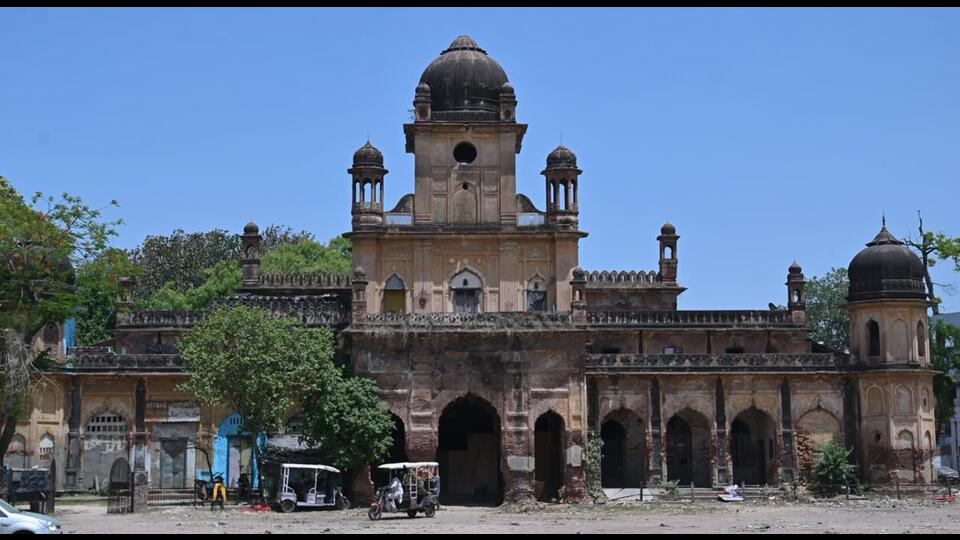
Rifa-e-Aam club, Wazirganj
The ‘Rifa-e-Aam’ Club continues to wilt under the ravages of time. Most of its parts are decaying and a portion of it has been encroached by locals, who say they have been living there for ages. While a major part of the area has been turned into a parking garage, scrap has been dumped in its corridors. The area has hosted many weddings. “Neither the ASI nor the state archaeology department owns the structure. Its ownership is unknown,” said Aftab Hussain, the superintending archaeologist at ASI, Lucknow. “We’re trying to bring it under ASI so that it can be preserved,” he added.
Irshad Clock Tower, Wazirganj
The 55-ft tall clock tower represents a bereaved father’s love for his son. It is currently lying defunct even after several efforts of revival. The clock remained functional till about 20 years ago when it finally went silent. A small park named Hamid Park surrounds the structure which too remains neglected. “It was constructed by Khan Bahadur Syed Hamid Husain Khan about 73 years ago in memory of his son Syed Irshad Husain Khan, who died at the young age of 30 in 1949. The clock was imported from England and was installed in the tower,” said Prof. Syed Ali Hamid, a descendant of Syed Hamid Husain Khan. “We tried to repair the tower quite a few times. Experts from Bareilly were called in the 1980s and it was made functional. However, it hasn’t been working for a long time,” said Prof Hamid.
Tomb of Janab-e-Alia, Wazirganj
The tomb of Janab-e-Alia, the Hindu Wife of Nawab Shuja-ud-Daula, is lying in ruins. Also known as Maqbara Alia, decades of neglect have left the mausoleum in bad shape. Locals have encroached the the 18th-century edifice from all sides. Begum Alia was believed to have been instrumental in the construction of the 350-year-old Hanuman Temple in Aliganj after her wish for a child was fulfilled and since then people have celebrated Bada Mangal every year. The tomb was erected by Alia’s son Nawab Saadat Ali Khan. Although it is an ASI-protected site, the encroachments have made the structure’s state dismal. “We have written to the higher officials and its preservation will resume from the new financial year,” said the ASI official.
Farhat Baksh Kothi, Chatar Manzil, Qaisarbagh
Situated on the Chatar Manzil premises on the banks of river Gomti, Farhat Baksh Kothi was constructed by French major-general Claude Martin in 1971. With plasters falling apart, the bricks of the building can be seen withering due to atmospheric effects. Even though the structure looks maintained from the outside, the walls of the building are decaying and seek immediate attention. “The building earlier belonged to the state archaeology department, but now it has been delisted and handed over to the district administration,” said Renu Dwivedi, the director of UP State Archaeology department. A heritage hotel is likely to come up there.