
 E-Paper



Don’t mistake the noise around BRICS for impact
What does India want BRICS to be? Who does it benefit? If hypothetically, BRICS becomes a pole against the US-led order, would that be in Delhi’s interest?

 Prefer HTon Google


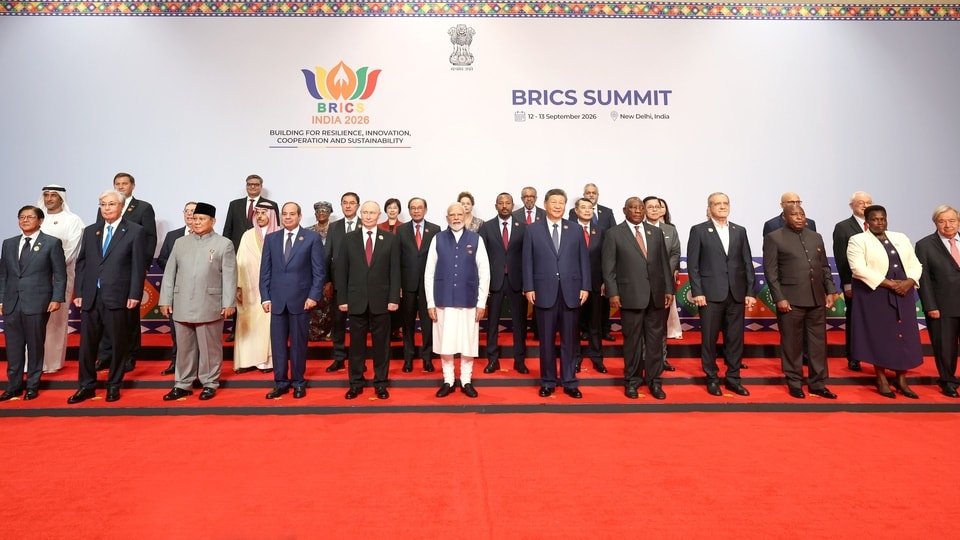
The 2026 Delhi summit of BRICS has been under a spotlight this weekend, and things under a spotlight tend to look bigger and brighter than they actually are. Eleven members, a dozen invitees, Chinese President Xi Jinping visiting India after seven years, Russian President Vladimir Putin and Iranian President Masoud Pezeshkian sharing a table with crown prince of Abu Dhabi — this assembly of heavy weights in a world in turmoil has once again generated speculations that it could emerge as a counter pole to the US. The media commentary has generally tended to portray the summit as a moment of great geopolitical consequence. In reality, the summit is far more modest, and the Indian agenda, quite realistically, reflects that.
What does BRICS do? Mostly, it is a messaging platform. Countries use it to signal mainly to the US and the West. Where a member can negotiate with Washington, it negotiates, bilaterally and quietly. Where it does not agree, cannot agree, or will not agree, it comes to a forum like BRICS and makes a polemical statement.
They do have rhetorical value. But, they do not have much material value, because such statements, of which we find plenty in BRICS declarations over the years, are not backed by rules, force, or any consequence for the country it is aimed at.
Also read: 'Put past behind us': Iran, UAE's bonhomie ahead of key meeting with Gulf states over Hormuz
The grouping gives leaders who do not otherwise meet much, a place to talk about the world, in the main forum and on the sidelines. Views get exchanged and, sometimes, conflicts get managed, and hard security conversations take place. But on the margins. And they are helpful.
But that doesn’t make it is an alternative pole that will recast global governance, push back against the US-led order, or produce a currency to rival the dollar. A grouping whose foreign ministers could not manage a joint statement on the Iran war is unlikely to emerge as a pole.
Do they actually, together, want to create a counter pole to the US? India wants to work with the US, with US President Donald Trump or without him. China wants a mutually beneficial economic relationship, and Xi will be in the US for a summit with Trump later this month. While Russia has the most reason to break with the US-led order, Moscow spent this month hosting Trump’s envoys, and may hate a China-led order as much as it hates the US-led order.
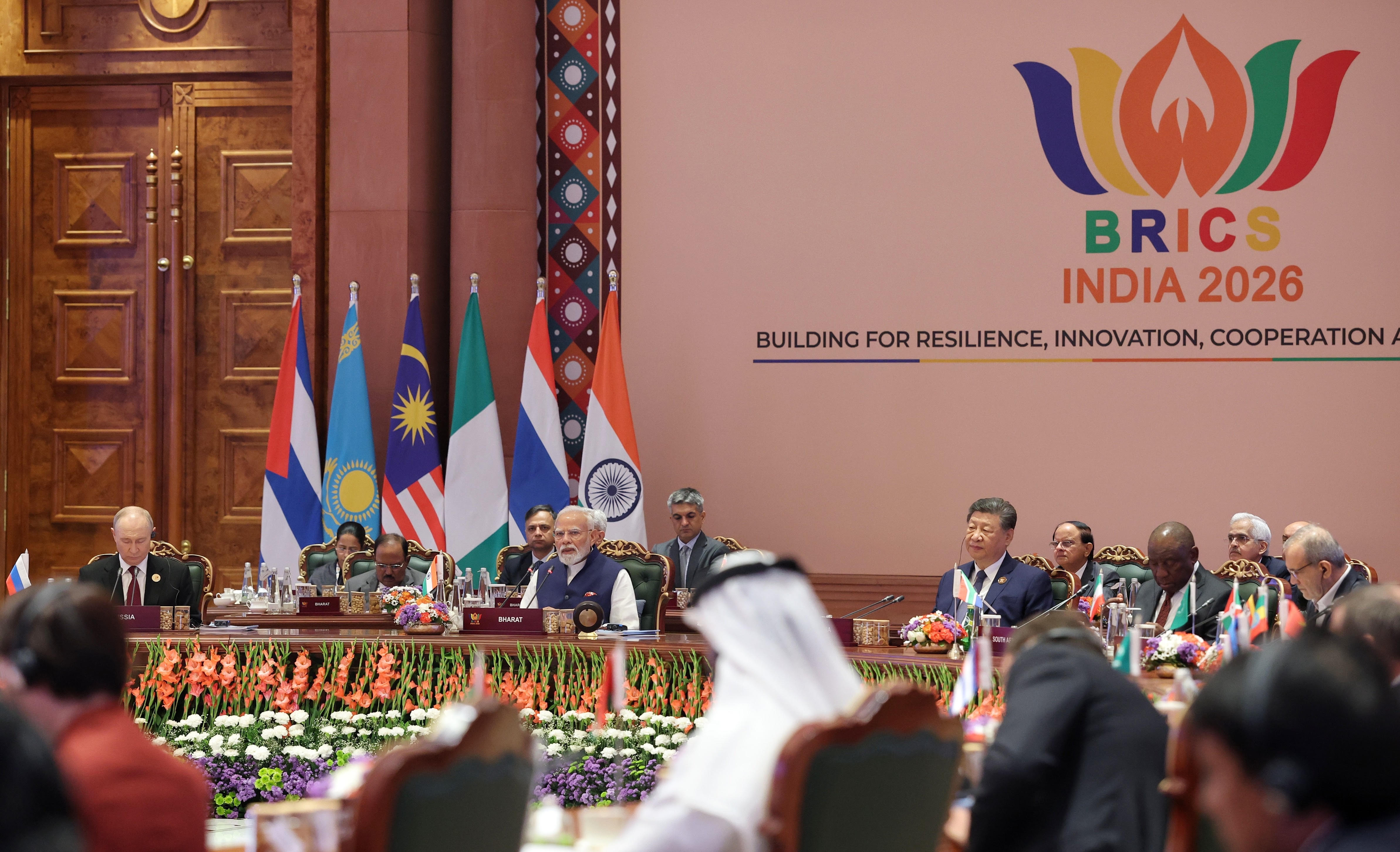
BRICS, at best, is a pressure group. Its members are inside the US-led order, despite their varying degrees of disagreements with it, and they use the grouping to put pressure on the US for their individual gains — rhetoric in public and negotiations in private. It also does not qualify to a lobby. A lobby argues for its members. BRICS members do not argue for one another; they argue for themselves.
It doesn’t address the security concerns of its members either. The reason behind its non-security identity is because of how the grouping came about. NATO, the Shanghai Cooperation Organization, and Quad were set up with security being a part of their purpose, albeit in differing degrees. BRICS, on the other hand, began as an investment bank’s acronym for four large emerging economies, and the four governments picked it up, meeting first over lunch on the sidelines of the UN General Assembly in 2006 and holding a first summit in 2009 in the wake of the financial crisis. Economic weight, not security, was the criterion for membership. The grouping has a political and security pillar on paper, but there is no security architecture, no commitment of one member to another and no mechanism that would let one member count on the rest. Had it ever developed a security dimension, it might have carried more weight.
While it is true that Trump believes BRICS is a challenge to American power, that challenge exists more in his fantasies than anywhere else. But, Trump’s fantasies have done more to shape the context of this summit than any leader who attended it. Because of the tariff threat he has held over the grouping, India kept de-dollarisation debate off the table, describing local currency settlement as mere diversification. Can a grouping that softens its own communique to avoid a tariff be a pole? It is a group of countries that know where power still sits and use the forum to negotiate with that power. BRICS can bring focus back on things that great power rivalry distracts from the global agenda: supply chains, food and energy security, development finance, digital infrastructure, climate, health. Indeed, India’s chairmanship has been built around these questions, and rightly so.
So, what does India want BRICS to be? Who does it benefit? If hypothetically, BRICS becomes a pole against the US-led order, would that be in Delhi’s interest?
A strong BRICS would put India on the adversarial side of the US and its allies, at a time when India’s most important relationships are with them.
A strong BRICS would also carry higher stakes within the grouping, and higher stakes produce more interests, factions and politics inside the grouping. India is not the most influential State in BRICS today, and it would not be in a stronger BRICS either. And a strong BRICS, in the end, could potentially contribute to the creation of an order in which China would be the most consequential power.
BRICS is useful for hedging, and for keeping adversaries close, especially when friends are acting up. It is a messaging platform and a pressure group which brings leaders with very different views into the same room, where some of those differences get talked through, if not resolved.
There is nothing wrong with more socialisation among these leaders. What works for India then is a BRICS that is neither strong nor weak, that talks a lot and does a little. That leaves India free to pursue its ambitions elsewhere.
The theory of BRICS as a grand counter pole lives only in the commentary around it. Not in reality.
Happymon Jacob is founder and director, Council for Strategic and Defense Research, and editor, INDIA’S WORLD magazine. The views expressed are personal


