
 E-Paper



Saharanpur mosque demolition: Well found at collectorate may date to medieval period, ASI assesses
Manoj Kumar Yadav of the state archaeology department said the team’s primary objective was to determine the antiquity and nature of the structure and correlate it with historical records. “Our primary objective in visiting here was to determine the antiquity of the structure found there. Secondly, we wanted to understand the nature of the structure itself. We also aimed to correlate it with history to understand what it relates to,” Yadav said.

 Prefer HTon Google


A debris-filled well unearthed at the Saharanpur Collectorate premises has prompted a historical assessment, with the Archaeological Survey of India (ASI) and the Uttar Pradesh state Archaeology department officials inspecting the structure on Monday to determine its age, construction and possible historical significance, two days after a mosque at the site was demolished following a court order.
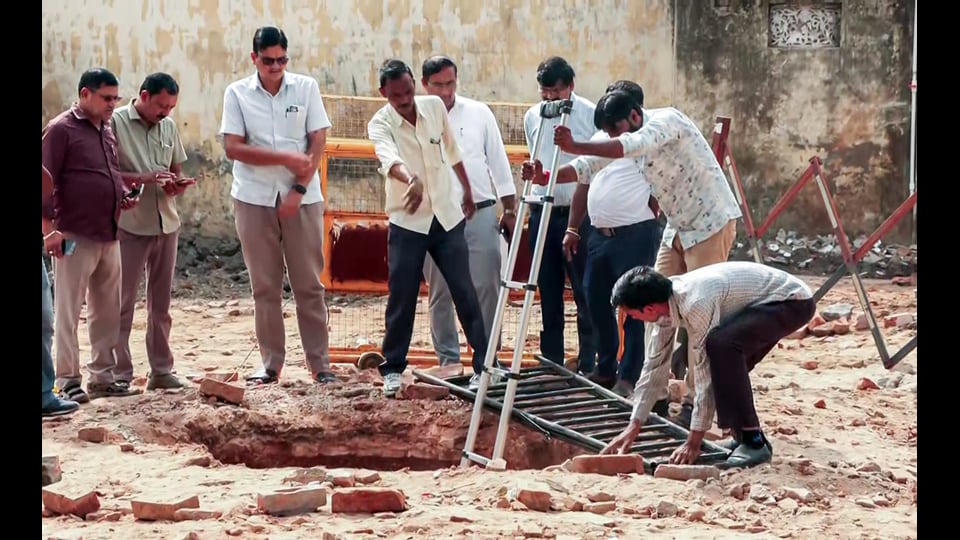
The inspection was conducted under heavy police security, with the area surrounding the structure barricaded to restrict access.
Manoj Kumar Yadav of the state archaeology department said the team’s primary objective was to determine the antiquity and nature of the structure and correlate it with historical records. “Our primary objective in visiting here was to determine the antiquity of the structure found there. Secondly, we wanted to understand the nature of the structure itself. We also aimed to correlate it with history to understand what it relates to,” Yadav said.
During the inspection, officials identified the structure as a well filled with debris. It is approximately 20 feet high and has a diameter of nearly three feet.
“The structure is made using Lakhori bricks. The binding mortar used is a lime-surkhi mixture, and at a depth of three feet from the top surface, there is a thin layer of lime plaster,” he said.
According to Yadav, structures built using similar construction techniques are commonly found in the Upper and Middle Ganga Valley regions and generally date to the later medieval period (approximately the 5th century to the late 15th century). He said further examination and historical correlation would be required to establish the precise age and significance of the well.
The inspection came two days after the demolition of a mosque located inside the Saharanpur Collectorate premises in the early hours of Saturday. The demolition followed a court order upholding its removal.
On September 4, the district Judge’s court dismissed an appeal filed by the mosque committee and upheld an earlier order issued by the city magistrate.
The city magistrate’s court had ordered the demolition on July 17, along with compensation of approximately ₹6.41 crore, citing alleged encroachment and misuse of government land.
Authorities said the demolition was carried out in compliance with the court’s directions and prescribed legal procedures.
Notably, the management committee of the demolished mosque submitted an electricity bill dated January 1, 1911, before the court, arguing that the document showed the mosque was more than a century old, was registered with the Sunni Waqf Board and predated the establishment of the present Collectorate complex.
The committee contended that the mosque’s historical existence meant it should not be treated as a recent illegal encroachment.
Officials, however, disputed the timeline, saying electricity was introduced in Saharanpur only in 1912 and questioning the authenticity of the 1911 electricity bill.


