E-Paper



Uttar Pradesh government issues draft policy to promote green hydrogen production
The move is a precursor to rollout of the final policy that would aim to make Uttar Pradesh a 100% green hydrogen/ammonia consuming state by 2035.

 Prefer HTon Google


The Uttar Pradesh government has issued the draft Green Hydrogen Policy-2022 while inviting public comments and suggestions for the same.
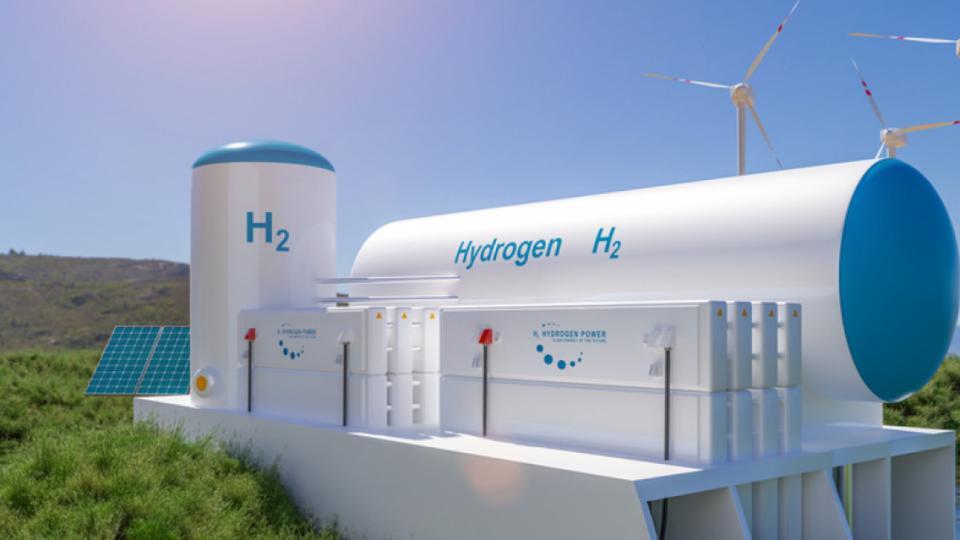
The move is a precursor to rollout of the final policy that would aim to make Uttar Pradesh a 100% green hydrogen/ammonia consuming state by 2035. Turning the state into a leading green hydrogen/ammonia producer is another objective.
The policy would also promote green hydrogen/ammonia production, market creation and demand aggregation.
“The state envisions to promote green hydrogen/ammonia as the foundational pillar for the green energy transition in UP and make the state ready for a net-zero economy in the future,” says the draft policy that was put in the public domain by the Uttar Pradesh New and Renewable Energy Development Agency (UPNEDA), the nodal agency for the purpose.
The policy will focus primarily on two major hydrogen/ammonia demand centres in Uttar Pradesh – nitrogenous (N) fertilisers and the refinery sector. It will also cover other emerging industries and applications of green hydrogen in the future.
“In the policy period of five years, the Uttar Pradesh Green Hydrogen Policy 2022 envisions reducing green hydrogen cost to 2.0 USD/Kg and make efforts to decline it further to 1 USD/Kg in long-term, achieving 20% green hydrogen blending in total hydrogen consumption of the state by 2028 for existing fertiliser and refinery units, reaching 100 percent by 2035,” the draft policy says.
The current hydrogen demand in the state, according to the draft policy, stands at around 0.9 million tonnes per annum (MTPA), primarily used in the nitrogenous fertilisers. Plus, there is some demand in the refinery sector. Future demand for hydrogen, it adds, is subject to the expected growth in the hydrogen consuming sectors.
Incentives provided in the “Industrial Investment and Employment Promotion Policy 2017”, such as exemption of stamp duty, tax reimbursement, capital interest subsidy, infrastructure interest subsidy, electricity duty will be applicable to new green hydrogen/ammonia investments and expansion of existing fertiliser units in the state.
Besides, the policy seeks to provide financial, infrastructural, operational and many other incentives to attract investment in green hydrogen.
“Production of green hydrogen/ammonia or based products shall be considered under the ambit of the ‘Make in UP’ programme, and the existing incentives will apply,” it points out.
The policy also seeks to set up a “Green Hydrogen Ecosystem Fund” with a vision for raising a corpus through green cess, which shall be instituted to support small infrastructure projects and ecosystem development.
“The cost of green hydrogen is the major constraint in its adoption,” the draft policy observes.
“Currently, the cost of green hydrogen in UP ranges from 2.8 USD/Kg (using Round the Clock (RTC) renewables) to 7.0 USD/Kg (using power from a standalone solar plant in the state). There is a need to encourage innovation to reduce the cost over time,” it adds.