
 E-Paper



With new-age firing ranges, UP Police training set to get precision push
The force will get 12 containerized tubular firing ranges; mobile, high-safety indoor systems to boost shooting proficiency, reduce training gaps


In a significant push to modernise firearms training, the Uttar Pradesh government has sanctioned ₹18.66 crore for installing 12 containerized tubular firing ranges (CTFRs) for the state police, senior home department officials confirmed on Monday.
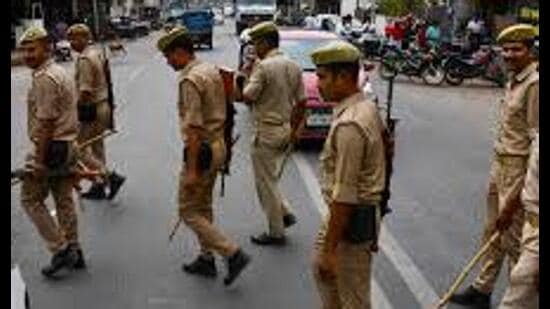
They said the approval aims to address the shortage of functional firing ranges and upgrade police personnel’s shooting proficiency through safer, standardised and technology-enabled infrastructure.
According to the government order issued on Friday (February 27, 2026), administrative and financial clearance has been granted for setting up one CTFR unit each in 12 districts — Shahjahanpur, Sambhal, Baghpat, Aligarh, Basti, Mirzapur, Meerut, Agra, Jhansi, Ayodhya, Noida (Gautam Buddh Nagar) and Azamgarh. Each unit will cost approximately ₹1.555 crore.
The installation of 12 CTFRs marks a structural shift in how firearms training infrastructure is deployed in Uttar Pradesh. Beyond infrastructure expansion, the initiative signals an administrative acknowledgement that effective policing depends not only on manpower and weapons, but also on consistent, professional-grade training. If implemented on schedule, the project could serve as a scalable model for other states seeking cost-efficient and safe alternatives to traditional firing ranges, said the officials.
A senior police official explained that a CTFR is a prefabricated, modular indoor shooting facility housed within a specially engineered container structure. Unlike conventional open firing ranges, CTFRs are compact, portable and designed for installation within limited premises such as police lines or district headquarters.
He said these ranges are equipped with bullet containment and trapping systems, soundproofing and ventilation mechanisms, controlled lighting and target systems, safety shields and ballistic protection panels and pollution-control features to manage lead and residue. He further stated that the tubular design ensures safe projectile capture, eliminating the need for large open land parcels typically required for traditional firing ranges.
Police sources have long flagged the lack of adequate firing infrastructure across districts. Many units rely on makeshift or distant ranges, resulting in irregular practice sessions, limited ammunition utilisation for training, reduced weapon handling confidence and delays in refresher courses.
With policing increasingly requiring quick, calibrated and legally defensible use of force, regular and scientific firearms training has become essential. The CTFR model is expected to address these gaps by bringing structured practice facilities directly to district-level units.
These facilities will provide key benefits for police personnel: regular access to a standardised range will allow personnel to improve accuracy, reaction time and weapon familiarity — critical in anti-crime and counter-terror operations; the enclosed ballistic design significantly reduces ricochet risks and stray bullet hazards, ensuring safer training conditions for instructors and trainees; containerized facilities can function irrespective of weather conditions, enabling uninterrupted training schedules unlike open ranges, urban districts with land constraints — such as Noida and Meerut — will particularly benefit from compact installations; and integrated bullet traps and ventilation systems help minimise lead contamination and environmental impact, aligning with modern safety standards.
Security experts view the move as part of a broader modernisation effort aimed at improving operational readiness. With law enforcement increasingly confronting organised crime, cyber-linked criminal networks, and sporadic extremist threats, the emphasis on precision-based firearms training is seen as timely. By decentralising access to quality firing ranges, the state police leadership expects to institutionalise periodic qualification tests and skill upgrades across ranks — from constables to specialised units. The funds have been allocated under the 2025–26 state budget.


