
 E-Paper



City’s walking ecosystem falls short: Gagrani
Mumbai's walking infrastructure is inadequate, with experts urging improvements for safety and accessibility, despite BMC's efforts and funding.

 Prefer HTon Google


MUMBAI
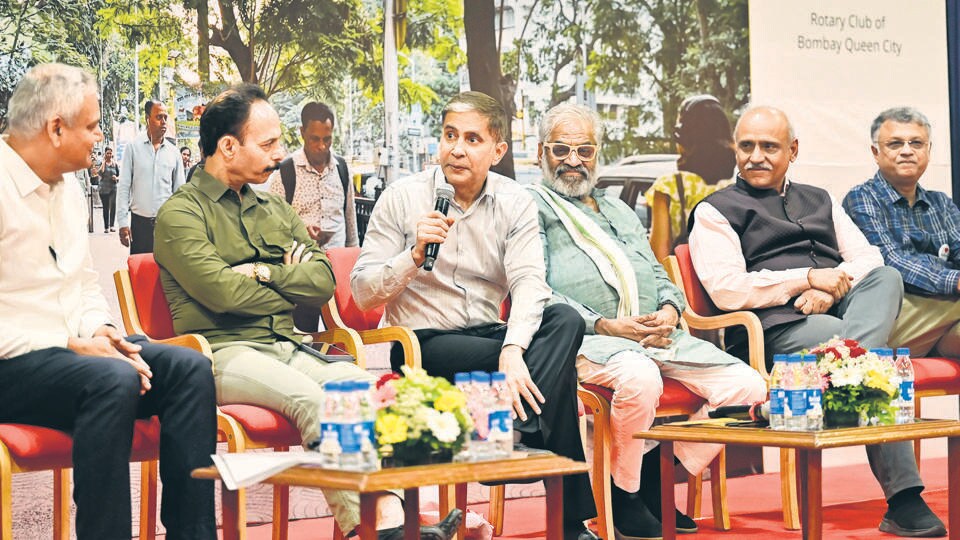
That Mumbai is not a city for walkers, despite the many collective and sustained efforts by civil society organisations and architects to impact change, was the focus of discussions held at a conclave on Friday organised by Walking Project, an NGO working towards making the Mumbai Metropolitan Region (MMR) walkable.
“There is no escaping the fact that Mumbai’s walking ecosystem is woefully inadequate, and there is a massive gap between what it deserves and what is available,” said municipal commissioner Bhushan Gagrani. “The BMC recognises this, and we are trying our best to add footpaths where they are missing and upgrade existing facilities wherever possible, particularly in the suburbs.”
The civic body has allocated ₹100 crores to make the streets walkable in its 2025-26 budget. To achieve this, Gagrani underlined while there is a need to control hawkers, “shooing them off is not a solution”. He spoke of the need to reduce their patronage. He called attention to the soon-to-be opened 8-km long promenade along the Coastal Road with cycle tracks, and the necessity of political will to get steer development towards pedestrians. “Footpaths should be useful, safe, comfortable and interesting too.”
The conclave was attended by Makrand Narwekar, former corporator, who spoke about the pedestrianization of several streets in Fort; Pasha Patel, executive chairman of the chief minister’s environment and sustainable development task force; Mickey Mehta, a FIT India Movement ambassador; and other civic society workers, business people and philanthropists who spoke about doing their bit to improve infra to help Mumbaikars walk.
However, despite what the BMC chief said, the experts that took the stage afterwards had a laundry list of complaints against the civic body’s laxity in following the rules set for footpaths by themselves.
“Walking makes up 47% -- the majority share – of travel in Mumbai; it is a basic need, and improving the walking infrastructure can have a huge impact on quality of life,” said Vedant Mhatre, co-convener of the Walking Project. “But sadly, the conditions in the north of Mumbai are abysmal. Footpaths are narrow; traffic islands where those walking can wait safety are beautified and blocked; ad-hoc material is used to build footpaths that do not last; pedestrian crossings have been reducing as medians have been beautified; parking eats up a lot of space: all points that are done in violation of the BMC’s own policy.”
An architect who has worked on many patches of footpaths in collaboration with the BMC, Pankaj Joshi, principal director Urban Centre, pointed out, “Contrary to public opinion, it is cars parked that occupy most footpath real estate, not hawkers. At many places there are no footpaths, because where will cars park? The BMC’s working policy is one that prioritizes pedestrians last.”
The conclave saw two panels; the first, on policy issues plaguing walkability.
“There is a lot of inertia from the government’s side in implementing disability-friendly policies enshrined in the laws,” said Jasmina Khanna, a disability rights activist who forms one part of Access to Hope.
The second looked at the social cost of unwalkable cities, the impact on senior citizens, the differently abled, the poor, and children. “Walkability is not just about convenience; it’s about safety, inclusion, and dignity. It is not a minor urban issue – it decides who gets to move freely, and if not proper, it leaves out the old, differently abled, poor, etc,” said Savitha Rao, moderator and sustainability activist.

Stay updated with all the Breaking News and Latest News from Mumbai. Click here for comprehensive coverage of top Cities including Bengaluru, Delhi, Hyderabad, and more across India along with Stay informed on the latest happenings in World News.


