
 E-Paper



Delta variants still predominant in Maharashtra but sub-lineage AY.4 gaining pace
Data from centralised portal Indian Covid-19 Genome Surveillance (ICGS) revealed that last month 44% samples sequenced from Maharashtra were identified with the new sub-lineage of Delta variant—AY.4— which was higher than other Delta variants


In the second wave, a significant proportion of Covid-19 infections were attributed to the highly transmissible Delta variant (lineage B.1.617.2). Whole-genome sequencing of over 15,000 swab samples done till August shows that the Delta variant is still predominant in the state. But data from centralised portal Indian Covid-19 Genome Surveillance (ICGS), maintained by CSIR-Institute of Genomics and Integrative Biology (CSIR-IGIB), has revealed that last month 44% samples sequenced from the state were identified with the new sub-lineage of Delta variant—AY.4— which was higher than other Delta variants.
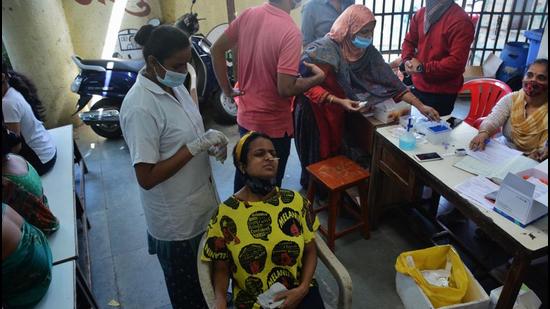
Emphasising the need for more genome sequencing (study of changes in the structure of the virus over time), medical experts said the prevalence of AY lineages might be more in the anticipated third wave.
Can AY4 lineage be a new threat?
Variants of Sars-CoV-2 that causes Covid-19 are divided into three categories—variant of interest, variant of concern and variant of high consequence. The four variants of concern have been named Alpha, Beta, Gamma and Delta. The AY.4 sub-lineage of the Delta variant was first identified in Maharashtra in April when 46 swabs tested positive for novel coronavirus infection.
In July, out of the samples sequenced, around 4% were identified with AY.4. But to everyone’s surprise, the number jumped to 44% in August, becoming the predominant sub-lineage, as per data on the ICGS portal. Since April, Maharashtra has been sending 100 samples (from all 36 districts) every month to CSIR-IGIB for genome sequencing.
The Delta variant is one of the three subtypes of the Sars-CoV-2 B.1.617 lineage. As per the Centre for Disease Control (CDC), the Delta variant causes more infections and spreads faster than earlier forms of the virus that causes Covid-19. In total, there are 12 sub-lineages AY.1-AY.12 of Delta variant. AY.4 to AY.11 are predominantly found in the United Kingdom.
At present, AY.4 is a ‘variant of interest’ but medical experts fear that it could become a contributory factor in the anticipated third wave. “It could become the dominant strain and needs to be watched closely. So far there is no indication to suggest that it is more transmissible, or more likely to cause breakthrough infections or immune escape when compared to earlier sub-lineages of the Delta variant. But monitoring its spread, and severity of disease caused will be important,” said Dr Lancelot Pinto, pulmonologist and epidemiologist from Hinduja Hospital, Khar.
The state public health department is keeping a close eye on all the international passengers. There were 30 arrivals and 30 departures of international flights under Vande Bharat mission in August.
In August, an order was issued by Maharashtra chief secretary Sitaram Kunte stating that all international passengers arriving in Maharashtra will have to carry a negative RT-PCR report even if they are fully vaccinated.
However, medical experts have raised the need to run more genome sequencing on swab samples of international passengers. “After 18 months of the infection when globally over thousand variants of Sars-Cov-2 have been reported, we need to boost genome sequencing. An RT-PCR only confirms if a traveller is carrying a mutated variant,” said T Jacob John, a virologist who was formerly with Christian Medical College, Vellore.
As AY.4 is a new sub-lineage of the Delta variant, scientists lack knowledge about its transmissibility. Experts associated with the Indian SARS-CoV-2 Genomics Consortium (INSACOG), a group of 28 laboratories in the country monitoring genomic variations, said sporadic spikes observed in various regions are due to different sub-lineages.
States like Kerala, Andhra Pradesh and Telangana are also recording a rise in AY.4 in India.
On Wednesday, a bulletin by INSACOG stated that AY.4 was the most frequently seen sub-lineage in the recent sequences from India, as well as globally.
“In terms of AY. 4, a few cases have come positive in terms of genome sequencing; we need to continue doing genome sequencing regularly, so we are aware of what is growing,” said Dr Rahul Pandit, part of the state’s Covid-19 task force.
Dr Pinto highlighted that as India has already been widely exposed to Delta variants, newer variants are going to be a constant threat, especially if such variants are endowed with mechanisms to evade immune responses to vaccines or past infection.
Delta variants are still the most dominant strain
From December 2020 till August,15,263 samples in Maharashtra have been analysed by INSACOG— the highest in the nation followed by Kerala. Data collected from its surveillance portal shows the Delta variant started becoming dominant in March when the pandemic curve was at its peak in the state. In March, 13% of the sequenced samples were identified with B.1.617.2 which gradually started increasing with the rise in Covid-19 cases. In April, 57% samples tested for the same which further shot up to 87% in May. In the following month, almost 83% samples were identified with the Delta variant and 86% in July. However, in a change of trend, in August, only 36% samples were identified with the Delta variant in the state.
“The Delta variant remains the dominant variant across the country. Maharashtra is not different. We have to be certain the Delta variant doesn’t mutate to another variant, which is a big concern amongst healthcare providers and intensivists, that we don’t have to deal with another strain of the virus. That would probably mean that the third wave would be problematic,” said Dr Pandit.
Dr Jacob said the incubation period of the Delta variant is short and symptoms generally appear within four days which increases the transmission.
The number of the Delta Plus (AY.1)— a mutation of the highly transmissible Delta variant of Sars-CoV-2 (B.1.617.2) haven’t witnessed a sudden surge like AY.4 variant. The Surveillance data shows that the positivity rate of Delta Plus has remained around 1% among the sequenced samples.
The civic-run Kasturba Gandhi Hospital that sequenced 564 samples from Mumbai in the last three weeks, didn’t find any Delta Plus variant except Delta variants. But experts claim it is too early to see it as a silver lining.
“The third wave could be of Delta or Delta plus variant; more or less, a large proportion of the population has been impacted by the Delta variant anyway. So, we should be worried about the Delta variant which is more transmissible in itself, and the Delta Plus variant which has shown traits similar to the Delta variant,” Dr Pandit.
Need for more genome sequencing
All viruses, including Sars-Cov-2, the virus that causes Covid-19, change over time. Most changes have little to no impact on the virus’ properties. The World Health Organisation (WHO) states that some changes may affect the virus’s properties, such as how easily it spreads, the associated disease severity, or the performance of vaccines.
Thus scientists are emphasising conducting more genome sequencing especially for a populated state like Maharashtra which was the major contributor to the total caseload in India. In mid-March, the state was contributing 62% of India’s daily new cases and had a share of 58% in the country’s active cases.
Medical experts said the current rate of genome sequencing is inadequate. In Maharashtra, between December 2020 and August 31, 46,36,050 people contracted Covid-19 but as the Surveillance portal shows only 15,263 samples have been sequenced in the consecutive time.
Dr Anita Mathew, infectious disease specialist, Fortis Hospital, Mumbai said every breakthrough infection, critical patients and people with reinfection need to undergo genome sequencing. “Viruses are known to mutate, so mutations will continue. There is no predictability on whether the mutation is for the better of the virus (in the form of increased transmissibility) or is detrimental to the virus (in the form of less transmissibility and virulence). Genome sequencing, therefore, is the best step ahead,” she added.
INSACOG in a bulletin said that they are conducting the highest number of sequencing from Maharashtra and Kerala.
Dr Pinto also emphasised the need for more sequencing with the fear of new variants which can evade immune mechanisms that a person has by past infection or vaccination. “Such a variant could lead to a surge in vaccine breakthrough infections and reinfections. We will need to constantly monitor such a possibility with large scale genome sequencing and correlations with severe disease and mortality,” he added.
Dr Sujit Singh, director of the National Centre for Disease Control told HT that at present, there is no new variant in India. Also, a single new variant alone can’t cause a spike in cases. “The infection will become more manageable with the increase in vaccination and presence of antibodies.
Just like other flu, Covid-19 will be there but will become easier to handle. We believe, in the next six months, we will see it’s ‘endemic’,” he said.
Stay updated with all the Breaking News and Latest News from Mumbai. Click here for comprehensive coverage of top Cities including Bengaluru, Delhi, Hyderabad, and more across India along with Stay informed on the latest happenings in World News.


