
 E-Paper



Emissions from Chandrapur power station impacts Mumbai, Goa and 7 other states: Study
Mumbai: A new research report published on Monday has found that pollution from Chandrapur’s Super Thermal Power Station (CSTPS) is impacting public health not just in nearby areas of Chandrapur and Nagpur, but also in cities such as Mumbai which are located a considerable distance away from the power plant

 Prefer HTon Google


Mumbai: A new research report published on Monday has found that pollution from Chandrapur’s Super Thermal Power Station (CSTPS) is impacting public health not just in nearby areas of Chandrapur and Nagpur, but also in cities such as Mumbai which are located a considerable distance away from the power plant. In 2020 alone, operations at CSTPS, which is Maharashtra’s largest in terms of installed capacity, resulted in emissions of 4,724 tonnes of particulate matter, 1,03,010 tons of sulphur dioxide (SO2), 28,417 tons of nitrogen dioxide (NO2) and 1,322 kgs of mercury, the report finds.
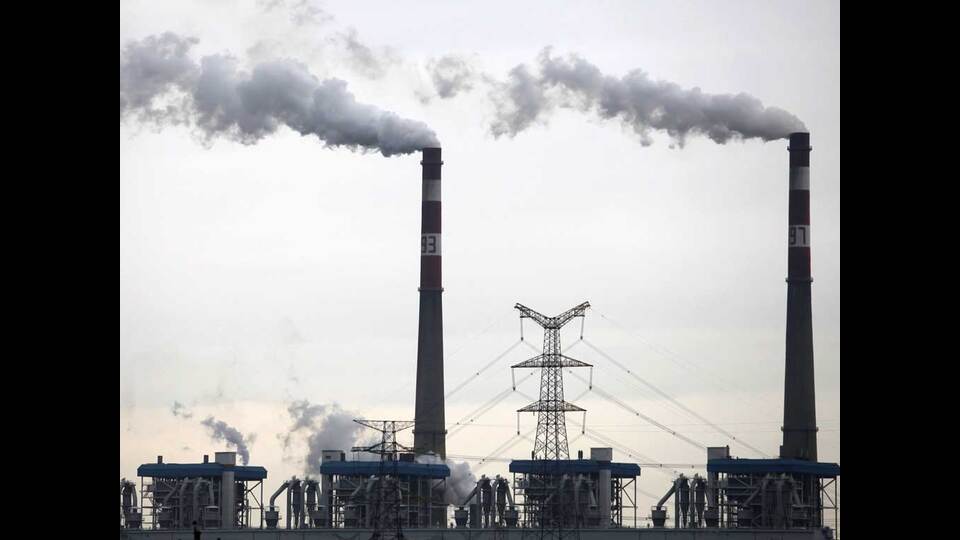
The report titled ‘Health impacts of Chandrapur coal-based power plant, Maharashtra’ was published by researchers at the Centre for Research on Energy and Clean Air (CREA). Areas affected by these pollutants include Mumbai, Palghar and Goa in addition to several districts in Gujarat, Orissa, Tamil Nadu, Kerala, Chattisgarh, Bihar and Uttar Pradesh.
Using dispersion modelling methods to simulate the movement of emission plumes away from the site, which was analysed along with data on meteorology, population exposure, and baseline mortality data from the Global Burden of Disease project, researchers were able to attribute 62 premature deaths (for the calendar year 2020) in Chandrapur district alone to pollutants which have travelled from the CSTPS site.
Similarly, 45 premature deaths in 2020 were attributed to CSTPS pollutants in Yavatmal, 30 in Mumbai, 29 in Pune and Nanded, making these the worst affected cities in terms of attributable deaths.
“Air pollution impact from the CSTPS were observed over hundreds of kilometres impacting cities like Nanded, Pune and Mumbai among other cities. The operation of the CSTPS in 2020 alone contributed to more than eight lakh sick leave days, approximately 1,900 asthma emergency room visits of which over 800 were children, deaths of at least 1,300 people, and 1,800 preterm births across central India,” CREA said in a statement Monday.
“The plant also caused more than 34,000 absence days from work in Chandrapur and > 30,000 in Nagpur in the same year. The analysis also indicates that the plant’s operation caused 69 preterm births in Nagpur and 79 in Chandrapur,” CREA’s report notes.
CREA’s analysis comes on the back of a January 2022 order by the National Green Tribunal (NGT), passed in response to a petition addressing pollution concerns arising from CSTPS operations. In its order, the NGT ruled that there have been clear violations by CSTPS in adhering to air pollution norms, and directed authorities to conduct a health impact assessment study to gauge CSTP’s public health footprint.
Sunil Dahiya, an analyst at CREA and the report’s lead author, said, “Air pollution from coal-fired power plants does not only impact people in its immediate vicinity but travels long distances, and the concentration levels put everyone at risk, especially vulnerable citizens such as children, the elderly, and pregnant women. The health of such a vast section of a population is being compromised due to the apathy from the Maharashtra State Power Generation Company (MAHAGENCO).”
More worryingly, Dahiya also said that CSTPS is just one of several operational coal-based power plants in the country that do not comply with pollution control norms and that the cumulative health impact of coal power is certainly much higher across India.
“Only about 2 percent of all India’s coal-fired TPPs are actually following the union environment ministry’s 2015 rules to mitigate pollution from power generation. MAHAGENCO especially has a history of non-compliance, which needs to change,” he added.
A viable solution, CREA’s report suggests, would be to retire the two oldest units out of the seven which are currently operational at CSTPS (which are the most polluting), along with the installation of flue gas desulphurisation (FGD) technology to reduce the emissions at the source itself.
“Installing FGD systems will reduce SO2 emissions by 92% at units numbered five to nine, and will also mitigate economic losses due to welfare loss and health burden. In 2020, more than ₹1,650 crores could have been saved if the norms were being adhered to,” said Dahiya.


