
 E-Paper



Asian Games: Anahat Singh and the challenge within
Athletes often try to downplay narratives around a high-stakes event for them. Not for India’s teen talent Anahat

 Prefer HTon Google


Mumbai: In the previous Asian Games in Hangzhou, Anahat Singh did not feature in the singles, had two Indian squash stars lead the women’s team to the podium, and dabbled for a no-pressure mixed doubles bronze. A “greenhorn,” as Saurav Ghosal, the two-time medallist of 2023 Hangzhou, put it.
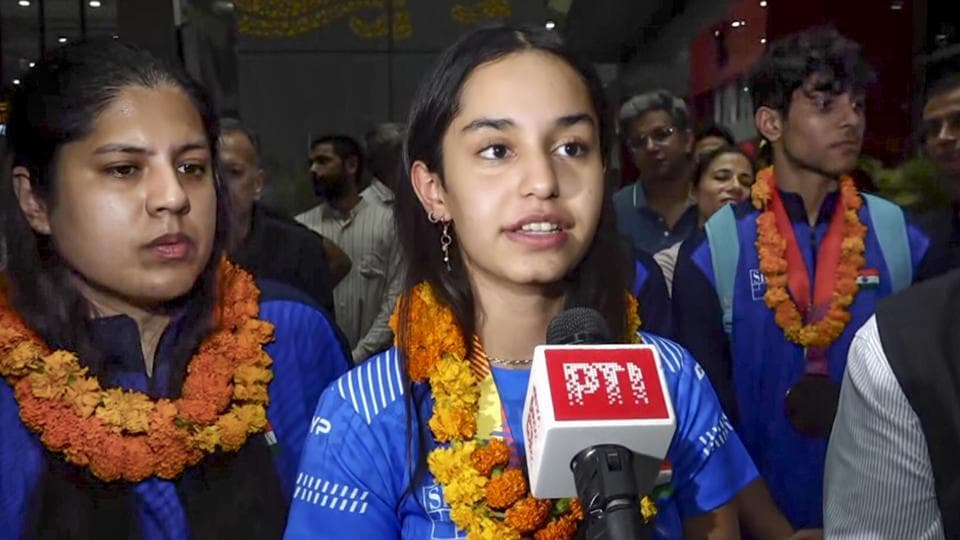
In this Asian Games in Aichi-Nagoya, Anahat is the highest-ranked player in the team at world No.20 and the third seed in singles with not just a presence but a realistic shot at the podium. A “big gun,” as Ghosal put it.
Few athletes in the country have had a more meteoric rise between the two Asian Games than this 18-year-old squash talent.
Deep Dive

Athletes often try to downplay narratives around a high-stakes event for them. Not Anahat. Soon after becoming the world junior champion in July, she told HT: “Right now, the Asian Games is the most important event of my life.”
Riding on that most important event is not just a first individual medal, but also what a gold brings along. An early spot at the 2028 Los Angeles Olympics where squash will debut.
“Winning an individual medal itself is an aim because she doesn’t have that,” Ghosal, the Hangzhou singles silver medallist who is now Anahat’s mentor, said. “But the added benefit of the Olympic spot is a great place to be in, almost two years out.
“But we have to be realistic, right? She’s not slated to win this gold. She has two very, very good players seeded 1 and 2.”
Before Anahat can think of them, she is likely to have to get past another Indian, Tanvi Khanna, in the quarter-finals. That’s when those top two seeds, Sivasangari Subramaniam and Satomi Watanabe, will come into play.
In her half of the draw is Satomi, the world No.6 Japanese who took the bronze in Hangzhou. The 27-year-old is 1-0 against the Indian, but Anahat took her the distance in a 11-6, 11-6, 2-11, 8-11, 6-11 defeat in the Sprott Tournament of Champions in January.
For Ghosal, Satomi is a better match-up compared to Sivasangari for Anahat due to their different game style.
“Satomi is someone who hits the ball flat, plays at a very high pace, a lot of shot kills and things like that,” Ghosal said. “Tactically, it’s a bit more clear cut. It’s about Anahat making Satomi play the game that she wants to play, versus the other way around. If she can execute her tactics well, she can be in a good position to win that match.”
If that were to happen – and that’s a big if – the last woman likely standing from the other half will be the top seed. Sivasangari, the Malaysian world No.5 defending champion, has been in blazing form lately. Anahat got a taste of it earlier this month, when Sivasangari brushed her aside 11-4, 11-4 in the quarter-finals of the London Squash Classic. In their only previous meeting, Anahat lost in four games at the 2025 British Open.
The 27-year-old is a tougher nut to crack tactically for the teenager because both play a similar game style, analysed Ghosal. Just that Sivasangari has done that at the top level for a lot more years.
“Anahat is someone who varies the play quite well, uses different angles, and gets quite a few balls back. Siva does the same in a lot of ways, and has had a longer time in doing it at the highest level. So, she has that edge,” said Ghosal.
For Anahat to shake that up, she will have to be braver, without being reckless. Play with a solid structure, go toe-to-toe in rallies for a period of time, find an opening, and seize it. A bit like, Ghosal said, what Novak Djokovic did against Carlos Alcaraz in the Paris Olympics final.
“He took his chances when they presented themselves, and went for it with real conviction,” the former top 10 pro said. “Anahat will have to put herself in that position, be slightly braver, go in with real conviction to rattle the cage a bit, and see where that takes her.”
A quarter-final win will take her to an assured medal, which will be a first for Anahat. And, a likely battle with two of her biggest Asian rivals for the ultimate prize at these Games, with an Olympic reward.
“A lot of things will have to go her way to make it a golden week,” said Ghosal. “But, it’s not outside the realms of possibility.”


