
 E-Paper



Jarange-Patil calls off fast, gives govt two months to meet demands
Maratha activist Manoj Jarange-Patil has called off his indefinite hunger strike after giving the Shinde government two months to provide reservation to Marathas. The government agreed to certain demands, including the withdrawal of police cases registered against Marathas during the protest. Jarange-Patil also requested the widening of the scope of the Sandeep Shinde committee to collate documents for Marathas to obtain Kunbi certificates. The government assured him that Kunbi caste certificates would be given to Marathas if they could produce documents from the pre-Independence period. A commission is also being constituted to collate data to prove the backwardness of the Maratha community.


MUMBAI: Nine days after his indefinite hunger strike put the Shinde government on tenterhooks, Maratha activist Manoj Jarange-Patil called it off by giving two months’ time to the government to provide reservation to Marathas. The protest was called off after the government agreed to certain demands, including the withdrawal of all police cases registered against Marathas during the protest.
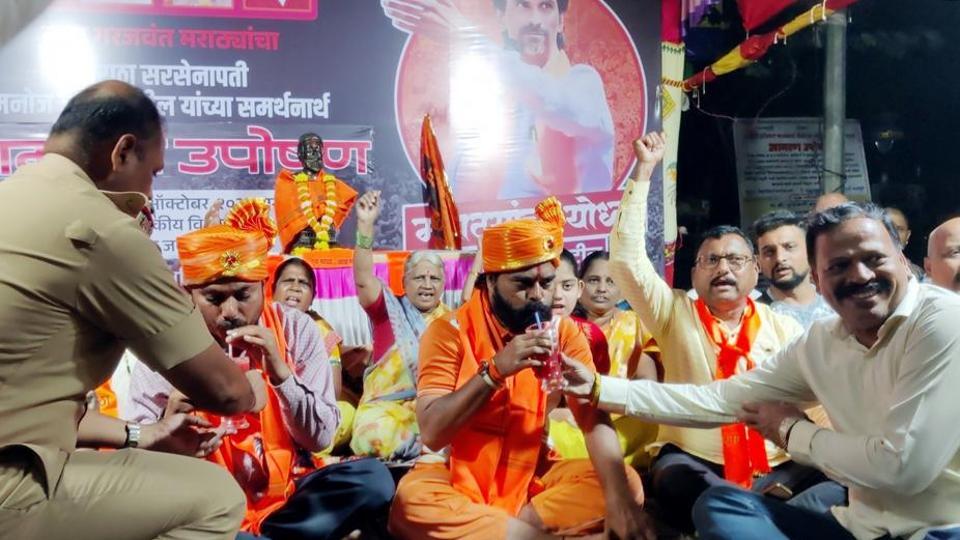
Significantly, Jarange-Patil climbed down from his key demand of blanket reservation for all Marathas across the state by including them in the Other Backward Classes (OBC) category. Convinced by the delegation, especially the two retired judges in it, that this would be challenged legally, he then demanded that the scope of the Sandeep Shinde committee be widened to collate documents that would enable Marathas across the state to obtain Kunbi certificates.
Welcoming his decision, chief minister Eknath Shinde clarified that Kunbi caste certificates would be given to Marathas across the state, provided they could produce documents that showed their families were recorded as Kunbis in the pre-Independence period. The government also told Jarange-Patil that it was constituting a commission to collate data to prove the backwardness of Maratha community, which would help restore the reservation quota that was quashed by the Supreme Court in May 2021.
Jarange-Patil announced his decision on Thursday evening after discussions with the government delegation for over three hours. The delegation comprised two retired judges—Justice M G Gaikwad and Justice Sunil Shukre—industries minister Uday Samant, agriculture minister Dhananjay Munde, employment guarantee scheme minister Sandipan Bhumare and housing minister Atul Save.
Accepting the government’s request for two more months’ time, Jarange-Patil called off his hunger strike. “But if they fail to comply with their promise by January 2, Marathas will intensify the protest by blocking the social, political, commercial and industrial nerves of Mumbai,” he said while addressing his supporters. “Marathas will show their strength on the border of Mumbai like farmers had on the border of Delhi for over a year and a half during the farm laws protest.”
The activist also demanded that the government keep the Maratha quota vacant in government jobs until a decision was taken on reservation. “Until then, there will be relay hunger strikes across the state. I urge my community members to not resort to violence and to not end their lives.” The activist seemed to be confident that on the basis of the documents collated by the Shinde committee, not only the families concerned but blood relatives and extended family members too would get Kunbi certificates.
Chief minister Shinde told media persons that his government would keep its word. “We are strengthening the Shinde committee by giving it additional manpower in each district to complete the report in two months,” he said. “Once it is submitted, the Marathas producing documents will be given Kunbi certificates. This will be done without disturbing the existing quota of other communities. Simultaneously, we are collating data to prove the backwardness of the community. It will help us in restoring the reservation quashed by the SC.”
The retired judges had a long, detailed talk with Jarange-Patil. They apprised him of the status of the legal battle and the steps taken by the state government to ensure reservation that would stand up to legal scrutiny. Justice Gaikwad—who headed the Backward Class Commission which had in 2018 had recommended reservation for Marathas—and Sukre told the activist that he should give the government more time to collect data and prove the backwardness of the community. The judges had carried documents and previous orders with them and told the activist that any step taken in haste would prove counter-productive.
Jarange-Patil insisted on a government resolution that would assure Kunbi certificates to all Marathas on the basis of the 13,500 documents the Shinde Commission had found by scanning 1.72 crore documents from the Nizam era. The delegation, however, convinced him that this would be struck down in just two days. He was also reminded how the court had quashed Maratha reservation twice.
The inclusion of the two retired judges in the delegation, the first time this had happened according to CM Shinde, is believed to have played a key role in the withdrawal of the hunger strike. “Before this, CM Shinde had spoken to Jarange-Patil many times over the last few days,” said a CMO official. “It helped in laying the ground for the dialogue between the government and the protesters. The team of legal experts convinced the Maratha community before the actual deliberation on the hunger-strike stage.”
Chandralal Meshram, retired judge and member of the State Backward Classes Commission, said the commission had not received the terms of reference for the collection of data. “We will have to survey one percent of the Maratha population to ascertain their current status,” he said. “The major responsibility will be to weed out the lacunae in the Gaikwad Commission pointed out by the SC when it quashed the reservation.”
Balasaheb Sarate Patil, one of the petitioners of Maratha reservation, said that fresh data to prove the backwardness of the community would not help and the government was just buying time. “The Supreme Court’s Indra Sawhney judgement mentions ‘exceptional circumstances and extraordinary situation of the community’ for it to get reservation,” he said. “The Maratha community does not comply with this condition, and thus a new study will not help on that front.”


Stay updated with all the Breaking News and Latest News from Mumbai. Click here for comprehensive coverage of top Cities including Bengaluru, Delhi, Hyderabad, and more across India along with Stay informed on the latest happenings in World News.


