
 E-Paper



Maharashtra votes 2024: For a state choking on pollution, eco-governance, inclusion only way out
Most of the cases in Maharashtra were violations under environmental laws such as the polluting cement ready-mix plants and construction sites

 Prefer HTon Google


When environment and crime are joined in a sentence, it is never good news for the former. In 2022, Maharashtra registered the highest number of cases in the country – 198 or roughly one in every two days – under the Environment Protection Act (1986), according to the National Crime Records Bureau (NCRB) data. Uttar Pradesh followed with about 100 cases, then Telangana and Goa made the list with barely nine and four cases respectively. Most of the cases in Maharashtra were violations under environmental laws such as the polluting cement ready-mix plants and construction sites which led to high levels of air pollution in Mumbai or random tree cutting and damage to mangroves, all of which elicited loud campaigns by citizens.
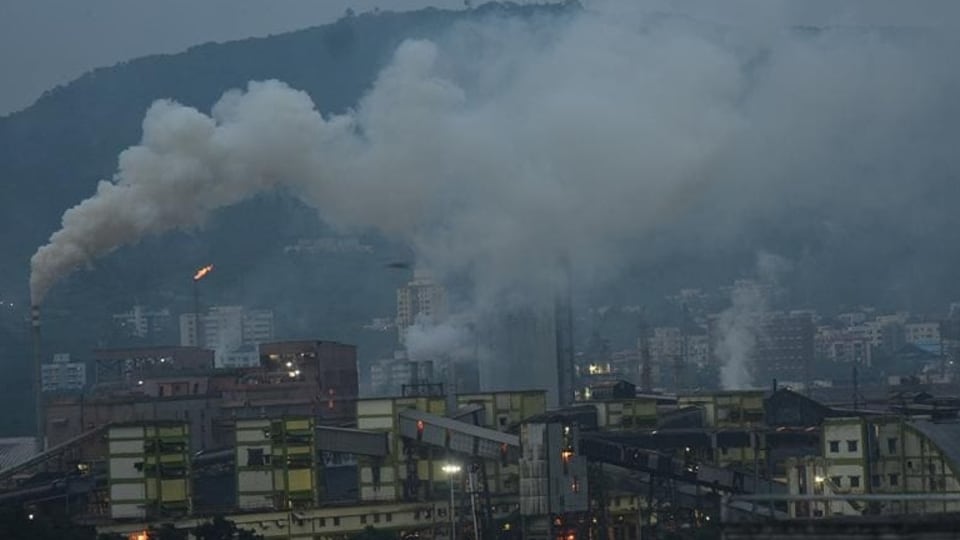
Why the Maharashtra Pollution Control Board took its time to act, till the smog enveloped the city or the trees were hacked, is the story of the ecology in the state – there is environmental abuse and destruction that the authorities are aware of or sanction themselves, but the counter action is tardy, little and does not proactively protect the environment. Most importantly, in the official and public discourse, environment or natural ecology is still posited as a binary to economic development and growth. This is no longer sustainable in the era of climate change which deeply affects lives and livelihoods. Development, whether mining in the rural Maharashtra or construction in cities, cannot be independent of ecology; ecology has to be the basis for all development.
Over the past few years, there has been growing appreciation in the corridors of power about ecology of a place and the need to protect the natural areas that range from the mighty mountains and dense forests to seafronts, rivers and lakes, there is increasing awareness of the climate change phenomenon and its overwhelming impact on people, especially on the poor and vulnerable, and there is environment education in schools and climate-related plans. Yet, Maharashtra has been found lacking on two critical aspects: environmental governance and ecological inclusion in all plans and projects.
The sharpest example is Mumbai’s Coastal Road which cost nearly ₹13,000 crores, and counting. It was constructed at a breath-taking pace at the same time that the Mumbai Climate Action Plan was being drawn up. A well-intended plan covering six key areas, it set out targets to mitigate climate impact. In 2022, when the MCAP was unveiled, the Intergovernmental Panel on Climate Change (IPCC), of the UN, stated in its report that the coastal road, in a city threatened by submergence from sea level rise due to climate change, was “maladaptive infrastructure”. But this made no impact. The MCAP and coastal road strangely co-exist.
Unseasonal rain and hailstorms have damaged crops, unprecedented high heat and intense rainfall over a short time have wreaked havoc in cities. Heat wave conditions took lives. An Indian Council of Medical Research report in 2020 showed that air pollution caused at least 1,39,000 pre-mature deaths the previous year in Maharashtra – nearly 17 percent of all air pollution-related deaths in India. In all circumstances, millions who are at the bottom of the economic pyramid and least resilient against climate events were the worst affected.
“In the last decade, Maharashtra State has witnessed a seven-fold increase of drought and six-fold increase of floods and cyclones, resulting in loss of life, crop loss, relocation and disruption of essential basic services like nutrition, health, education, and water and sanitation services. Compounded indirect impact also leads to limited access to market cash/finance, disruption in schooling, increased incidences of child labour, social and mental stresses, distress migration and most importantly breakdown in social structure and system. Climate risks undo all the gains achieved over the years on child survival, development, environment, protection and learning,” stated this paper.
As climate change makes its impact felt in different ways across the urban and rural terrain of Maharashtra, the two aspects – environmental governance and ecological inclusion – will make all the difference between minimal and massive damage to lives and livelihoods. It is people’s movements, including by the youth, that have kept ecological or climate issues in the foreground. The state government and a few city governments have just about acknowledged climate change. This has led to say Mumbai developing the MCAP or the state working out a Heat Action Plan or other plans which have laid down targets to reduce emissions and aim for net-zero.
However, climate plans are not statutory plans yet, not even in Mumbai. All cities and districts do not have such plans yet. Where Heat Action Plans or Flood Hazard Maps exist, they are independent of Climate Action Plans. In these, people’s participation while preparing the plans is sorely missing; they are made by authorities out-sourcing the work to private and international consultants who miss – intentionally or otherwise – the ground realities. Also, acknowledging and planning is just the beginning. Maharashtra has not put in place the institutional mechanisms, technical frameworks and implementation protocols that are needed to operationalise the plans that exist. The sooner the climate governance architecture is set up, the better.
There is no doubt that the state’s economy – and that of key cities – will have to adapt to climate change demands. How this is done will be important. Ecology or the proximate environment, cannot be an afterthought, a box to be ticked off, on large and small infrastructure projects or land-use changes. These will have to be determined by the ecology of the place – in other words, nature-led urban planning. Equally important is how just and equitable the transition to a more climate-friendly economy is. In the endeavour, the burden should not fall on the poor and the most vulnerable in the society.
Mumbai was the among the first cities in the world to commit to net-zero by 2070 and 42 other cities in the state have signed up for the climate accelerator programme in the next few years, but none are immune to climate-driven changes till then. Studies show that nearly 80 percent of Maharashtra’s 36 districts will see a rise in the annual mean temperature; crops will be affected by temperature changes and reduced water availability; rainfall will increase and the state’s 720-km coastline will see changes affecting fisheries; and its industries will be impacted by energy transition and technical developments.
Even something as mundane as garbage burning will raise the Air Quality Index in cities and villages making the air unhealthy. Maharashtra is among the nine Indian states in the list of the planet’s top 50 regions “at risk of damage to the built environment from eight climate change hazards,” according to the international Climate Risk Group’s study. Addressing all this calls for respecting ecology in toto and segueing economy into it. This places a huge responsibility on the state government but, irrespective of the political affiliation, it is hard to be confident.
Smruti Koppikar is a Mumbai-based independent journalist, essayist and city chronicler. This article is part of an 8-segment series about issues that are crucial to Maharashtra’s development.


