
 E-Paper



Mumbai NGO flags ‘unreliable’ air quality boards at construction sites
After an activist found lapses with SAMEER app readings, the civic body said it plans third-party audits and uses site anomalies to prompt local inspections.

 Prefer HTon Google


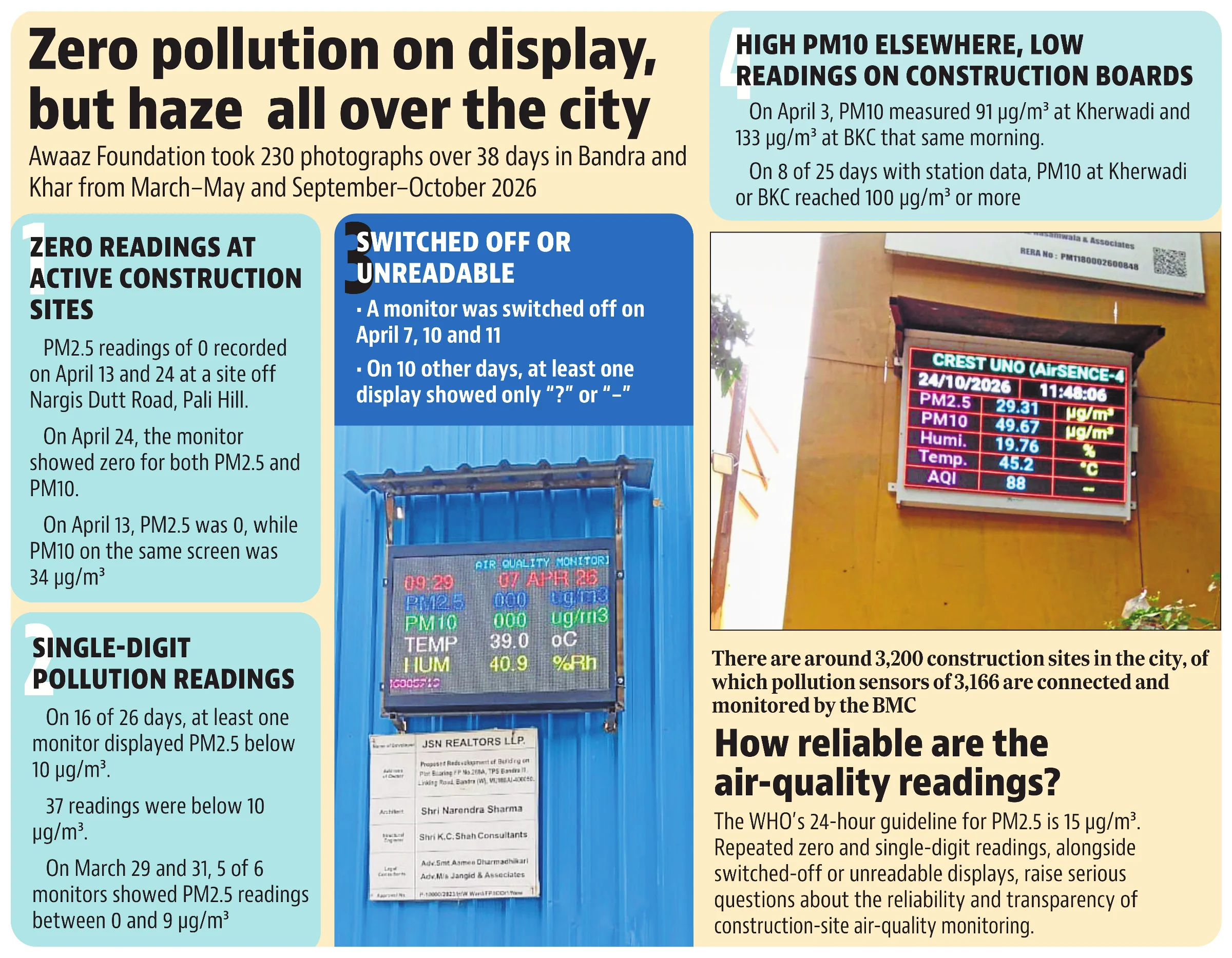
Even as high pollution levels and the heavy fog obscuring the sky have raised concerns and exacerbated health issues in citizens, an investigation by anti-noise pollution activist Sumaira Abdulali has found that many of the air quality monitoring boards put up at construction sites are at complete variance with the findings of the Central Pollution Control Board’s SAMEER app. For instance, a few of the pollution monitors were found to even display zero pollutants on the day that the SAMEER app showed a higher presence of PM2.5 and PM 10, thus raising questions about the functioning and the very purpose of these boards.
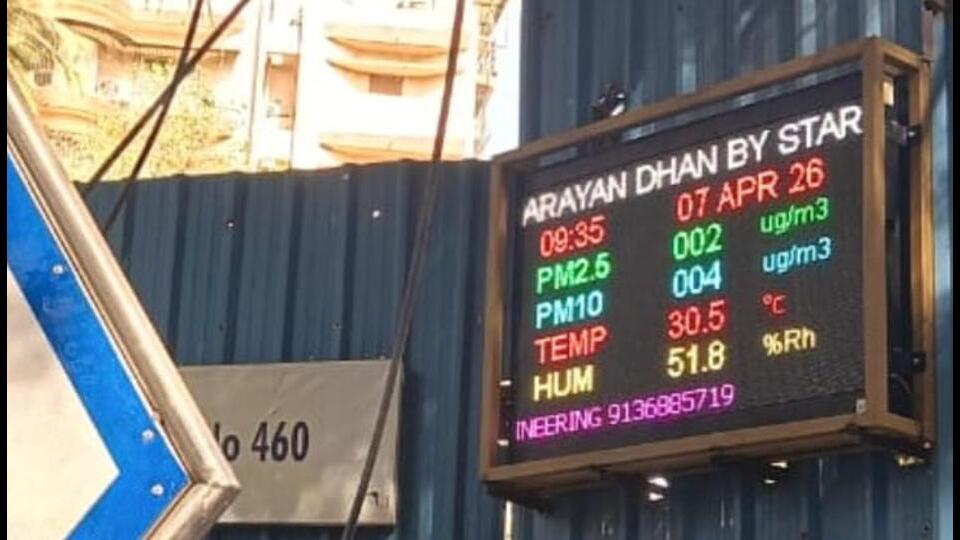
Currently, there are around 3,200 construction sites in the city, of which the air pollution sensors of about 3,166 are connected and monitored by the BMC at a central dashboard. Abdulali’s Awaaz Foundation has now demanded that the BMC do an audit of every construction site monitor, using calibrated meters, before any of its data is used. She fears that if the faulty data from the construction sites is integrated into the BMC’s own air quality monitoring mechanism, this could skew localised air quality data.
“Unless construction site data is first certified as correct, it will actually mislead the very people who rely on AQI information for their day-to-day activities: whether children and the elderly should venture outside, whether windows should stay open and so on,” she said. Apart from action against builders with faulty, misleading or switched-off displays at their sites, Abdulali also wants the BMC to provide real-time, time-stamped PM 2.5 data to citizens to help them take daily decisions and suggests that the BMC set up a dedicated website to monitor active construction sites.
Also Read | Air disaster upon Mumbai; Maharashtra govt mulls ₹300-crore mitigation plan
When contacted, the BMC said that as of now there was no plan to integrate the data from the construction sites, as it was unreliable. “Data from the 28 AQMS available on the SAMEER app is the most reliable source for citizens,” said Avinash Kate, deputy municipal commissioner (environment and climate change). “As of today, pollution monitors from 3,166 construction sites across the city are connected to a separate dashboard, which is used only to monitor air quality at these sites on a daily basis. When we find anomalies in these readings, we give the information of such sites to the local ward officers for inspection and action.”
Also Read | Mumbai air pollution: BMC cracks down on construction sites, issues stop-work notice and ₹35,000 penalty
Kate said that the environment department was just a facilitating body with no monitoring team. “That happens at the local ward level,” he said. “A team from the local ward office, including a sub-engineer from the climate change department, along with officials from the building and factory department and ward officer’s team, visit and monitor pollution at sites, issue show-cause or stop-work notices and act against polluting construction sites. If the sensors at construction sites show high readings, we ask them to undertake pollution mitigation measures. If a sensor board displays zero reading or does not seem to be working, the builder is asked to get it functional.”
Currently, the BMC collects general AQI readings from 28 air quality monitoring stations, including five from the BMC, nine belonging to the Indian Institute of Tropical Meteorology and another 14 belonging to the Maharashtra Pollution Control Board. Abdulali said that in Bandra (W), where she lives, the closest monitoring stations were at BKC and Kherwadi in Bandra East. “Why can’t the BMC set up its own air quality monitoring vans at important junctions and monitor real-time pollution levels?” she said. “For an organisation of its stature, shouldn’t this be doable?” When asked, the BMC said that currently it had only one pollution monitoring van, which it stationed only when necessary.
Also Read | ‘This is shocking’: Bombay HC says Mumbai pollution surpassing Delhi, pulls up authorities
However, with regard to the construction site boards, Kate said the BMC was now in the process of appointing third-party audits to ensure that they were functional. “These audits will check if the sensors are maintained and if the factory settings are being tampered with,” he said. “This proposal should come up at the standing committee of the BMC for approval soon. With over 3,166 construction sites sensors linked to the central dashboard, it is not feasible for us to monitor all.”
The BMC also claimed that construction sites contributed only 9% to the city’s pollution. About 30% is contributed by resuspension of road dust due to vehicular movement, 20% due to industrial emissions or fossil fuel combustion and 14% due to vehicles.


Stay updated with all the Breaking News and Latest News from Mumbai. Click here for comprehensive coverage of top Cities including Bengaluru, Delhi, Hyderabad, and more across India along with Stay informed on the latest happenings in World News.


