
 E-Paper



Partition, pushbacks, Mahmood Farooqui return to Mumbai with ‘Jashn-e-Dastangoi’
This edition will also see actor and national awardee director Aamir Bashir debut. The Kashmiri-Mumbaikar says he's both “thrilled and experiencing butterflies

 Prefer HTon Google


MUMBAI: As monsoon has kept its date with Mumbai, so has the ancient 16th-century art of Persian storytelling Dastangoi. Theatre person Mahmood Farooqui returns with a four-day ‘Jashn-e-Dastangoi’ (JeD), at Prithvi theatre beginning today.
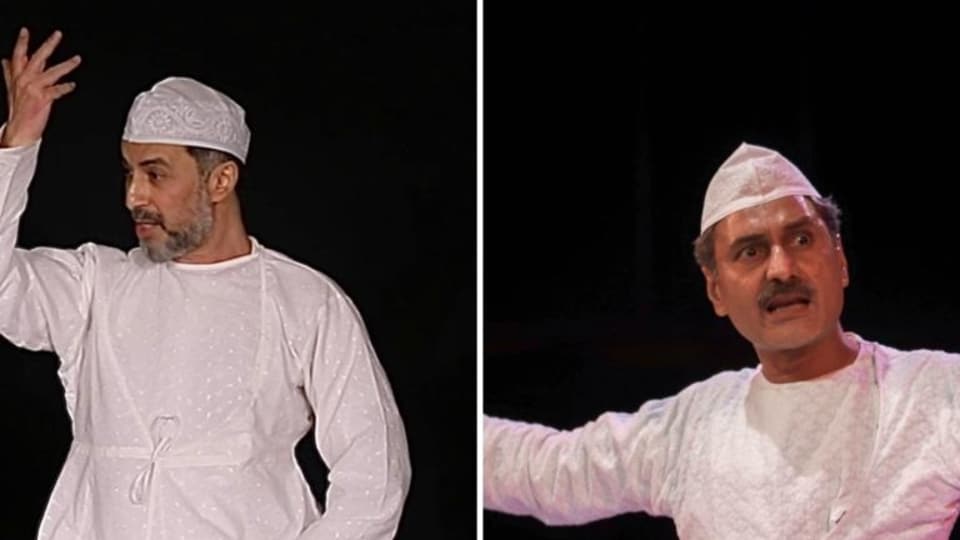
Thrilled at bringing ‘JeD’ to his “favourite” Indian city, Farooqui said, “We had a thunderous response last year which boosted my enthusiasm.” He is happy to be a part of that great tradition which has flourished here most in modern India, other than Kolkata. “Mumbai’s always had more surprising variety to offer,” he said. “Look at the spectacular result it threw up in the elections just like my home state UP. That makes performing here especially wonderful.”
This edition will also see actor, film producer and national awardee (‘Harud’) director Aamir Bashir debut. The Kashmiri-Mumbaikar is both “thrilled and experiencing butterflies”.
One of the stories, Dastan-e-Partition, deals with is the absurdity of splitting the subcontinent into two nations, which resonates with the polarisation beset in the nation today. Farooqui admits it was fait accompli. “Partition casts its shadow on so much of everything around. Whether Manto’s stories or ours Dastans on the subject – they all point to how every shock of every earth-shattering event is an echo that harks back to that subcontinental trauma of the past.” He added, “Despite its aftershocks, Partition’s immense scope of black humour is undeniable. Manto exploited it the best and we do our bit.”
He said, though it may now seem unimaginable to think of a pre-Partition South Asia, we are where we are because of it. “Yet we often live in denial. Audiences have wept copiously finding catharsis for their deep and often intergenerational trauma of displacement, separation and suffering on watching our act. This applies to most north Indian households who forget and are condemned to repeat past mistakes,” he said.
The act was written in 2007. “When you look at the all-round decline and sharpening of hate, our act appears a bit benign. But its relevance was more than obvious in our recent Delhi performance.”
Bashir has joined the team on Mahmood’s request -- an offer, he said, he has been fighting for quite some time.
“The idea of being on stage, making direct eye-contact with audiences instead of a fellow actor, like in a regular play, and not having a character to hide under made it daunting. In Dastangoi, it’s all you, baring your soul as you switch between raconteur and character,” said Bashir. He finally agreed and joined online rehearsals, which transitioned into offline only recently in Delhi. “Bashir brings a distinct flavour and sur to ‘JeD’ because of his roots in Kashmir which still pays the price of Parition,” said Farooqui.
An ode to poetess Fahmida Riaz (who had famously recited ‘Tum bilkul hum jaise nikle’ on the rising intolerance in India at a Delhi Women’s Day gathering, in 2014) which continues this thread of thought has been written by Meera, ‘JeD’ producer Anusha Rizvi’s elder sister. Interestingly it was the Rizvi family that sheltered an exiled Riaz who fled Gen Zia-ul-Haq’s persecution to India (1981) after her friend and fellow-poetess Amrita Pritam spoke to then PM Indira Gandhi.
“Meera grew up idolising Fahmida,” reminisced Farooqui. “We need many more such liminal personalities to remind us of our common heritage and struggles; to remind us that neither the ‘other’ nor we are monoliths and that even in the worst and darkest of times there’s resistance and hope. It is important to commemorate and underline that.”
The political strain carries through the Dastan-e-Rag Darbari based on Srilal Shukla’s namesake Sahitya Akademi award-winning cult satire. “I dare say nothing in its calibre of political writing exists in any other Indian language,” opined Farooqui. This 56-year-old novel had Farooqui and his co-creator and fellow performer Darain Shahidi in a pincer. “It’s amazing how closely it prefigured today’s politics including contemporary terms like Mann Ki Baat, Mahanayak and Palak Balak (trolls),” he said, adding, “Our Dastan was created at the novel’s golden jubilee in 2018 when the atmosphere in India was vastly different. So every performance put out a disclaimer for audiences not to take it as a comment on current times and reminded that the writing is of a vintage when the Congress was in power.”
Of Dastan-e-Karn, Farooqui said, “The character fascinated me since school. All of Bachchan’s poor angst-ridden young characters abandoned by mothers are Karn-inspired. My Karn relies on Persian, Urdu and even Arabic sources, reminding audiences that Emperor Akbar had the Ramayan and Mahabharata translated. My repeated retellings are constructing my own Akhand Bharat, independent of geo-politics.”
When asked of his brush with unconstitutional censorship he admitted to editing Raag Darbari, a political satire, over the years. “We also haven’t performed Dastan-e-Sedition, based on the abuse of sedition laws, or Tagore’s Ghare Baire which foretold cow politics, the plight of Indian Muslims and hyper-nationalism,” he said, admitting to walking a tightrope.
Calling the post-election change in the socio-political climate ‘a momentary respite’, he admitted to feeling “all charged-up”. “Pushbacks are possible now, even if they turn out to be what Faiz called ‘Dagh dagh ujala’.”
(‘Jashn-e-Dastangoi’ will be performed at Prithvi Theatre from June 20-23)


