
 E-Paper



Sleep deprivation major cause of accidents on Maharashtra highways: IIT-B Study
The main objective of the study was to model the response time and total braking time of drivers on national highways in Maharashtra under partial sleep deprivation compared with no sleep deprivation using a driving simulator

 Prefer HTon Google


Drivers who do not sleep adequately or sleep less than five hours are at a higher risk of causing accidents, revealed a study conducted by Dr Kirti Mahajan and Prof Nagendra Velaga of the Indian Institute of Technology-Bombay (IIT-B). The study also states that there is a physiological decline in alertness during the post-lunch hours between 2pm to 4pm and between 1am to 5am. It suggests that drivers should be more cautious while driving in these periods by adopting slower speeds or maintaining larger gaps with other vehicles on the road.
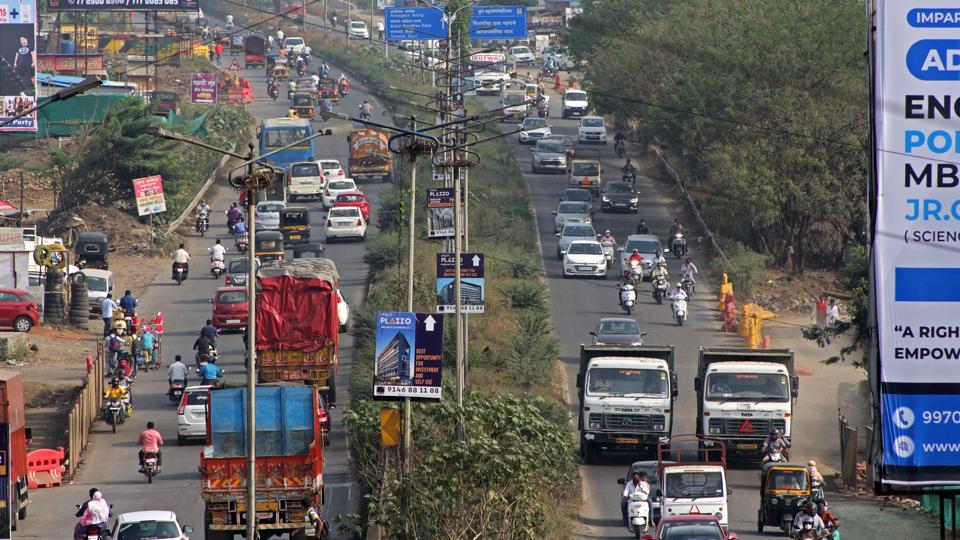
The study is pertinent considering the Royal Society for the Prevention of Crashes, 2017, in the United Kingdom, attributed 20% of crashes to driver’s drowsiness. And the World Health Organisation (WHO) states that India contributes to 11% of the 1.35 million deaths and injuries caused by road crashes worldwide.
The main objective of the study was to model the response time and total braking time of drivers under partial sleep deprivation compared with no sleep deprivation using a driving simulator. The initial response time and total braking time were analysed in two emergencies where the first condition was of pedestrians crossing a road and the second of vehicles merging into the driver’s direction of a roadway. Parametric accelerated failure time models with Weibull distribution and clustered heterogeneity were used previously to model the time to such events along with controlling for the effects of covariates.
Twenty professional taxi drivers and thirty regular drivers drove the driving simulator in a 4-lane divided rural highway representing national highways near Mumbai with monotonous driving conditions i.e., lack of changes in the roadside environment, low traffic density, wider and divided roads, states the study.
According to the study, the drivers were required to stop the vehicle as soon as they detected the pedestrians to avoid any accident. In the second event, a truck and a car started merging into the road but did not occupy both lanes. Therefore, the drivers were required to reduce their speed to allow a safe manoeuvre instead of full braking.
Changing lanes was not an option to respond as drivers were asked to keep in the left lane at all times unless indicated otherwise. Also, to maintain uniformity in the approach of the ‘parked vehicle crossing event’ for all the drivers, this event was preceded by a ‘single lane changing task’ (placed 3kms before this event in all the driving sessions). This preceding task assured that each driver would follow the ‘right-sided lane’ during this event. This event was followed by another ‘single lane changing task’ to ensure that all the drivers would resume the left-sided lane before approaching any other event in the scenarios.
The study is significant considering statistics from Maharashtra Highway Police reports 2,754 fatal accidents between 2019 to June 2021 on four national highways – Mumbai-Goa, Mumbai-Kolhapur, Mumbai-Surat and Mumbai-Agra – in which 3,012 people lost their lives. The data also revealed that from 2019 to June 30, 2021, a total of 12,850 accidents took place on the four major highways connecting Mumbai to other cities.
Police officers said even though travel curbs were in place across the country, the fatal accidents have not declined. In 2019, the four major highways reported 2,696 accidents, including 1,084 fatal ones in which 1,166 people lost their lives. In 2020, the figures did not show any vast decline despite the lockdown as 2,158 accidents took place, including 1,114 fatal accidents in which 1,215 people died. This year till June 30, the four national highways have witnessed 1,196 accidents, wherein 621 people have lost their lives.
Highway police officers said that 90% of these accidents occurred due to human error on part of heavy vehicle drivers. The most number of accidents however were reported on the Mumbai-Agra and Mumbai-Kolhapur highways, making them the most dangerous road stretches.
Researchers from IIT Bombay found that sleep loss resulted in delayed response time of drivers to take evasive action such as applying brakes, removing feet from an accelerator, or decelerating the vehicle. For example, on the sudden appearance of pedestrians on the road, the reaction time of drivers increased by 10% after one night of partial sleep deprivation. “Drivers tried to compensate for such delays with sudden aggressive braking which further increases their crash risk,” states the study.
In another emergency event where a truck started merging into the driver’s lane, drivers took 44% higher time than baseline to take any evasive action to avoid colliding into the truck, the study found.
The drivers also tried to compensate for their low alertness by adopting slower speeds when driving under sleep loss. However, the number of crashes observed during the sleep loss conditions was significantly higher than the baseline.
The study also found that drivers maintained a time gap of 0.65 to 1.08 times smaller from the leading car when driving partially sleep deprived when they were asked to follow another leading car over a stretch of 3 kilometres, and it also found that such drivers made frequent acceleration and decelerations to adjust their speed to avoid collision with the leading vehicle. The study states that there is an increase in the speed variations by 1.28 to 1.34 times during sleep-deprived sessions which increased the risk of a crash.
“The researchers observed that drivers were aware of the decline in their alertness and loss of driving controls due to sleep loss condition as they self-reported these decrements during the driving tests. Therefore, the drivers shall take constant rest breaks, caffeine, and water during long journeys on noticing any such symptoms of sleepiness or loss of alertness. Few studies suggest taking a short nap as an effective way to avoid sleepiness or regain alertness,” states the study.
The government is also improving the roadside infrastructure by building layover areas and rest stops for drivers. In another study conducted by Dr Kirti Mahajan and Prof Nagendra Velaga from IIT-B with the University of Nottingham, UK, the researchers observed that while driving in monotonous conditions, the drivers can use their in-car infotainment systems or digital voice assistants such as Google, Siri or Alexa to keep them alert.
“One of my best friend’s father was driving back to Himachal at late night with his wife after attending a wedding in Punjab. The entire trip was planned to be covered in a day because they took only one holiday to attend the wedding. Uncle had an experience of more than 25 years of driving but unfortunately, he was tired and fell asleep behind the wheel falling off from a bridge. They had a severe injury with his wife witnessing the entire accident and undergoing major surgery. The effects of sleep deprivation can be detrimental to drivers irrespective of their age, experience or a habitual schedule of adequate sleep. Currently, as far as we know there is no such regulation to curb work-rest schedule among car and taxi operators for example Maggie’s law in the State of New Jersey. Therefore, given the high accident statistics and prevalence of taxi operators and hired cabs in India it is even more necessary to take measures to curb the accident rate,” said Dr Mahajan.


