
 E-Paper



State gives push to BDD revamp, but Dharavi and Cluster Revamp projects still stuck
The projects include Dharavi revamp and cluster redevelopment projects, both of which were conceived with much fanfare but then fizzled midway, breaking the dreams of lakhs of people who were promised plush houses with improved standard of living.


While Maharashtra government is giving a push to the long-pending redevelopment of Bombay Development Department (BDD) chawls, two other projects that promised to change the face of Mumbai are stuck due to various reasons. The projects include Dharavi revamp and cluster redevelopment projects, both of which were conceived with much fanfare but then fizzled midway, breaking the dreams of lakhs of people who were promised plush houses with improved standard of living.
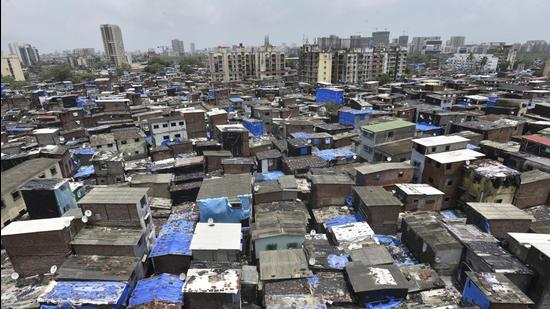
Cluster revamp project aims at comprehensive redevelopment of a cluster of old dilapidated buildings as a smaller township within the city instead of haphazard rebuilding of old structures while Dharavi project is meant to rebuild one of India’s biggest slums into a mix of residential and commercial complexes. Residents living in these dilapidated structures continue to languish, unsure of when their structures will crumble down.
Cluster Revamp project
Suresh Kale, 59, a resident of Kamathipura, shudders every time there are heavy showers. The reason: his 100-year-old building, which is supported by scaffolding, is in a dilapidated condition and local authorities have warned that it can collapse anytime. “Our buildings which are more than a century old have outlived their utility and are not repairable. They can collapse anytime,” said Kale.
Kale lives in Kamathipura, the infamous red-light area in south Mumbai; and majority of these structures are more than 100 years old.
Both residents and landlords from 700 buildings and chawls spread across 39 acres consisting of 5,000 families came together to form a cluster and invited bids from builders to undertake this scheme. However, they found no takers.
Currently, there are more than 40,000 old, dilapidated buildings across Mumbai. And the government feels more than half of them can come under the scheme.
Amin Patel, legislator from Mumbadevi which covers the area, attributed the failure due to prevailing market conditions. “Currently, builders do not have that kind of money to invest in a cluster revamp scheme,” he said.
Pankaj Kapoor, managing director of Liases Foras, a real estate research firm, seconded Patel. “Banks and other financial institutions are not finding it lucrative to fund realty projects as they are not assured of returns,” said Kapoor, adding that there are very few foreign direct investments (FDI) which are investing in real estate and even those investments are in warehousing and not in residential and commercial buildings.
Patel said the solution to this impasse was the participation of the government in these schemes. He has written to chief minister Uddhav Thackeray to appoint Maharashtra Housing and Area Development Authority (Mhada) as a nodal body and facilitate the same. “Mhada’s presence will boost the confidence of both private builders as well as residents,” he said.
Right from the time when Cluster Revamp was first mooted in 2008 as a means for a holistic revamp of the city’s congested areas, especially the island city, it has been a slow starter. According to the policy, any developer undertaking a revamp project on a minimum one-acre (4,000sqft) plot is entitled to a floor-space index of four. It was supposed to be a win-win situation where the builders make a profit, tenants get bigger flats, and the government gets its quota of free houses. But procedural delays seem to have marred the scheme.
This was aptly clear as so far just two projects have taken off — One Avighna Park by Nish Developers at Lalbaug and Saifee Burhani Upliftment Project at Bhendi Bazaar.
“One has to take approvals from multiple agencies which consumes lot of money and time. I am still struck in this project from the past 13 years and suffered monetary losses,” said Kailash Agrawal, founder of Nish Developers.
Gulam Zia, executive director of Knight Frank, a real estate consultancy firm, said cluster revamp is struck due to inherent issues. “Anyone undertaking cluster revamp has to secure consent from tenants and landlords of different buildings which is a mammoth task in itself,” said Zia, adding, “In addition, as it involves a huge area, there is a lot of money involved which no builder is ready to risk in the current situation.”
He said Saifee Burhani Upliftment Trust (SBUT) was able to sustain because it was not a professional builder but a community-based trust. “SBUT has not made a single penny but is only pumping money in this project,” he added.
Rajendra Chaturvedi, who heads Shreepati Group and has currently three huge cluster projects in places like Girgaum, Tardeo and Arthur Road, said the July 8 amendments in the cluster project will boost this scheme. “Various amendments like reducing width of roads, reducing consent to 51% from 70% as well as cutting down premiums will work wonders and we will see multiple cluster schemes in the coming months,” said Chaturvedi. “Every resident will be entitled with a new redeveloped house of at least 500sqft which will only increase proportionate to increase in the area,” he added.
Housing minister Jitendra Awhad seconded Chaturvedi’s claim. “Right from the time I took over, we have worked overnight to simplify the scheme. We want builders to take up small clusters and implement it. We have ensured that residents get bigger houses and builders can implement the schemes sans any hurdles,” said Awhad.
Dharavi Redevelopment scheme
Makhdoom Khan, 65, recalls that 17 years ago he had first heard that Dharavi, his abode since 30 years, was all set to become a plush township and he would be shifted to an apartment. Khan, who has been living in a 100sqft slum on 60 Feet Road in Dharavi — the largest slum in India — was delighted that finally he would get his own house, a dream of every Mumbaiite.
But today he is disappointed as his dream is yet to bear fruit and seems to be going nowhere. “My family is getting bigger and we cannot adjust in our small slum room,” said Khan. “We have an open gutter near our house and want to get out of this place, but Dharavi revamp seems nowhere in sight,” said Khan.
Dharavi, over the years, has also developed into a dynamic small scale manufacturing industry. Currently, it leads in garment manufacturing as well as food items. In addition, various items such as pottery, leather articles as well as recycling of plastics are carried out on a large scale. Many of the households undertake small scale work which act as support to this industry. However, there is no clarity on their status.
The Dharavi revamp project, brainchild of architect Mukesh Mehta, commenced on February 4, 2004. However, over the years, this project has been marred with controversies and constant flip-flops. In the first round of tenders, there were 101 bidders which dropped to a mere two in 2019. This last tender drew much hope as a company backed by United Arab Emirates (UAE) royals had become the highest bidder and was all set to undertake the project. However, the firm was disqualified on technical grounds.
In February 2019, Seclink Technology Corporation (STC) won the bid to transform India’s largest slum pocket outbidding Adani Infrastructure and Developers Private Limited. STC bagged this project as it quoted ₹7,200 crore, outbidding its competitor Adani Infrastructure and Developers Private Limited, who bid at ₹4,539 crore. The problem began when the then Devendra Fadnavis-led BJP government acquired the railway land and ₹800 crore was paid to the Railways. As this was not mentioned in the tenders, the attorney general’s views were sought. AG Ashutosh Kumbhakoni said fresh tenders needed to be called for, as the costs of the railway land and rehabilitation was added later and not incorporated in the original tender document. This was accepted by the Uddhav Thackeray-led state government who cancelled this tender and are in the process of issuing fresh one.
STC called the scrapping a mistake. “No one in India has that kind of funds to redevelop Dharavi like we have. We had studied the project for four years and knew the ins and outs of this project. For us, the project was more of a social cause than a profit-making venture. We aimed to first construct rehabilitation portion and give the houses to slum dwellers and only then go for constructing our sale component,” said STC spokesperson, adding “We had brought the entire ₹28,000 crore in India and were awaiting the green signal.” He said STC will take part in bidding for the project in the new tender.
Dharavi Redevelopment Committee (RDC), which represents the residents, said it has lost all hope. “We continue to languish in dirty unhygienic slums while the authorities are just playing games. There is no clarity on the revamp,” said Raju Korde, president of RDC.
Kapoor said the Dharavi revamp needs to be tweaked. “Dharavi is not a simple slum but a bustling cottage industry which needs to be protected. Just building large towers will only rob livelihood of the residents and destroy the place,” said Kapoor.
The main issue is of eligibility as residents said there are more than 200,000 hutments whereas the official figure states that only 59,165 are legal entities eligible for new houses.
Anil Galgali, a Right to Information (RTI) activist, had inquired about the expenditure incurred on the Dharavi redevelopment project, following which the Slum Rehabilitation Authority informed ₹31.27 crore has been spent on it in the past 15 years.
Galgali then wrote to Thackeray, complaining that ₹31.27 crore was a wasteful expenditure though not a single brick has been laid in the slum.
The state government insists that it will put the project back on track. Awhad says that the government will shortly float new tenders for revamp. “We want to make Dharavi a model of redevelopment,” said Awhad.

Stay updated with all the Breaking News and Latest News from Mumbai. Click here for comprehensive coverage of top Cities including Bengaluru, Delhi, Hyderabad, and more across India along with Stay informed on the latest happenings in World News.


